Please give us some details about your operation, such as what you produce and how consumers use your products.
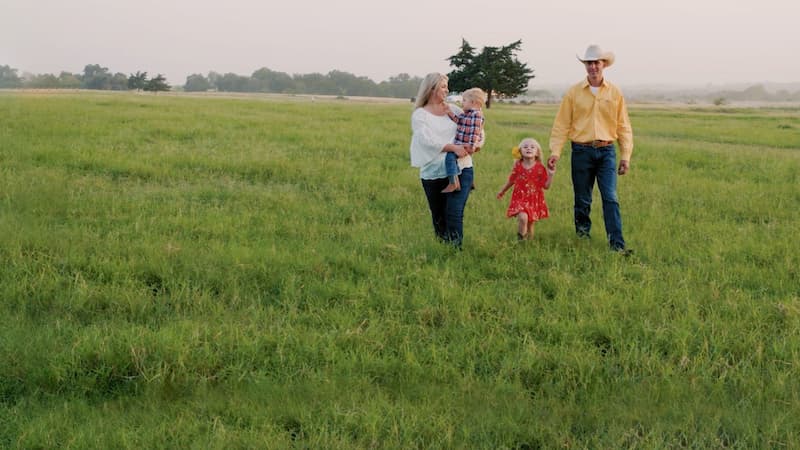
Bailey Family Farms is comprised of Stephen, Kisha, Britton (7), and John Rivers (3) Bailey. The farm began in 2006 exclusively as a sweet potato operation. Over the last three years we have expanded into a diverse operation including wheat, milo, soybeans, pumpkins and sweet potatoes. The majority of our customers are wholesale buyers that range from large grocery chains to roadside peddlers. Our sweet potatoes are sold, washed and sorted according to our customer’s specifications.
1 of 7
What’s unique about your operation?
Bailey Family Farms is unique in that we are a full-service sweet potato operation. We’re proud to grow seed plants for ourselves and other growers. We also buy, sell, wash, sort, package, store and ship sweet potatoes for ourselves as well as for other growers and buyers. This is only half of what makes our farm unique. We have a hands-on approach to every aspect of what we do. Most of the operations that do all these things do it on a larger scale with a thousand plus acres of production and large packing facilities. They have large payrolls and several managers. I feel like I can do a better and more efficient job by doing no more than I can manage personally.
2 of 7
How did you get into farming?
I am a third-generation sweet potato grower. My grandfather began his sweet potato farm in 1946. Even though my father did not farm after his college days, I grew up with a close relationship to the farm as a farm hand, working summers and spring breaks. The opportunity to become more involved came as my uncles were approaching retirement age. I was offered a 24-percent partnership in exchange for a more involved farm manager position. This was a perfect training opportunity because for 10 years I was responsible for most aspects of the farm but with my uncle close by as a mentor and guide. When my uncle retired in 2006 I decided it was time to start a new farm on my own.
3 of 7
What do you want consumers to know about agriculture, farm families and/or about what you specifically produce?
Consumers need to understand the importance of what farmers provide for our country. Many consumers can take for granted that their food supply is reliable, affordable and safe. I am proud that I grow the healthiest vegetable they can buy (the Agriculture Department ranks the sweet potato the number one vegetable in complete nutrition). I named my farm Bailey Family Farms because it is my intentions for my farm to be a way my two boys can grow up understanding how to make a honest living from the land, no matter what profession they decide to go into. The value I see in my healthy product and way of life is what I would like consumers to understand. I not only need them to purchase my products but I need their votes and support on political issues that ultimately affect my farm and influence how I operate. Too often farm issues are overlooked. Americans do not intentionally want to hurt farmers but the nature of politics can put us at a disadvantage. Typically the emphasis is on issues that affect large population centers and voting constituencies, things not typical of the rural farming areas in most of the country.
4 of 7
What should consumers know about how you take care of the land?
Consumers should know that the land is my most important resource. My increased diversification in crops was made to improve land fertility and production. In addition, I have worked extensively with Mississippi State University and its experiment stations as well as other universities. This work resulted in better and safer herbicides and insecticides as well as farming methods that reduced or eliminated the need for certain chemicals. Consumers need to understand that while organic farming is a nice option for consumers, all their food is safe and today’s American farmers use less and far safer chemicals than their predecessors.
5 of 7
What’s the best aspect of being a farmer?
The favorite part of farming to me is the relationship with Mother Nature. The challenge of making a living off the land is exciting. I feel a connection with our ancestors in farming. Even though we have advanced machinery and techniques, farming still demands respect and love for the land. The art of farming has tested man over the ages. The enjoyment and agony that it brings is timeless. Farming also provides me with a strong sense of pride; the way I farm will ensure American agriculture is sustainable for years to come.
6 of 7
What worries farmers more than their peers in other professions, such as accounting, law, medicine?
There are two main aspects to farming one should be concerned about more than other professions. The first is obvious: A farm must protect its investment through many months of varying and unpredictable weather. The environment seems to find ways to bring about obstacles that can potentially devastate the crop. It can come in the form of unusually cool or hot temperatures, wet or dry conditions, and new diseases or insects.
A second worry I believe farmers have more than their peers in other professions involves lawmakers. Generations past always had close ties to family farms. As a result most lawmakers in Washington had direct links to family farms and their needs. As urban population centers have grown, fewer and fewer Americans are growing up close to family farms. While there is nothing wrong with this the result has been fewer lawmakers with farming constituents and backgrounds. Just look at the national focus on accounting fraud, healthcare reform and the banking industry. Farming, while just as important to the economy of the United States, rarely is discussed on this scale. The result has been that issues related to agriculture, such as guest worker programs, research initiatives and farmland conservation, have been slow to have support.
7 of 7