Few Surprises in August Cattle on Feed Report
TOPICS
USDAMichael Nepveux
Former AFBF Economist

photo credit: Alabama Farmers Federation, Used with Permission
Michael Nepveux
Former AFBF Economist
The Cattle on Feed report provides monthly estimates of the number of cattle being fed for slaughter. For the report, USDA surveys feedlots of 1,000 head or more, as this represents 85% of all fed cattle. Cattle feeders provide data on inventory, placements, marketings and other disappearance.
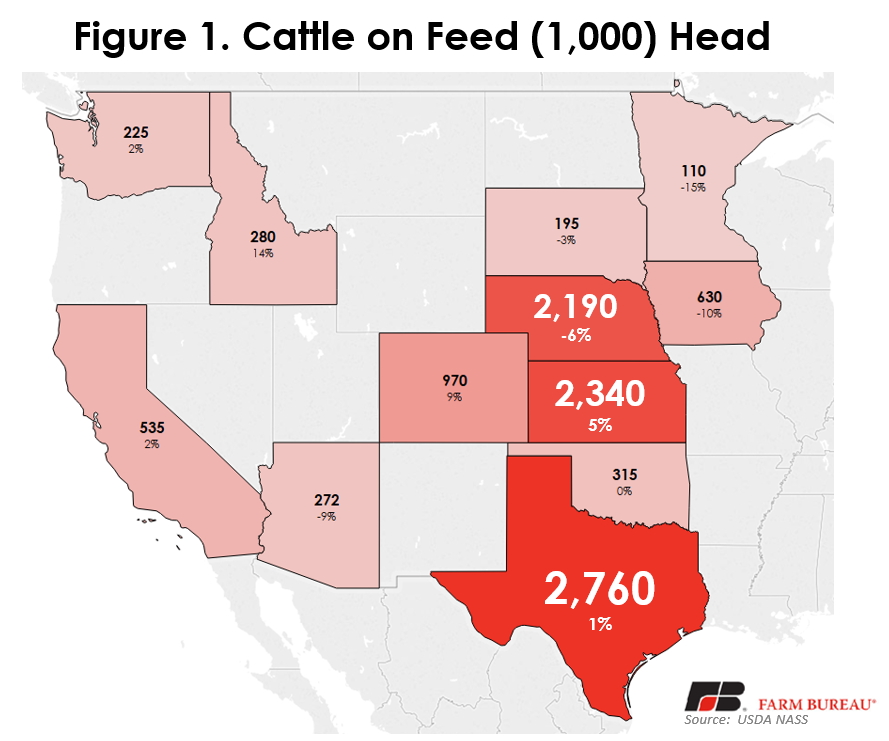
The report showed a total inventory of 11.112 million head for the United States on August 1. This increase of 0.21% is not too far outside of analysts’ expectations, which anticipated an average year-over-year increase of 0.6% in feedlot inventories.
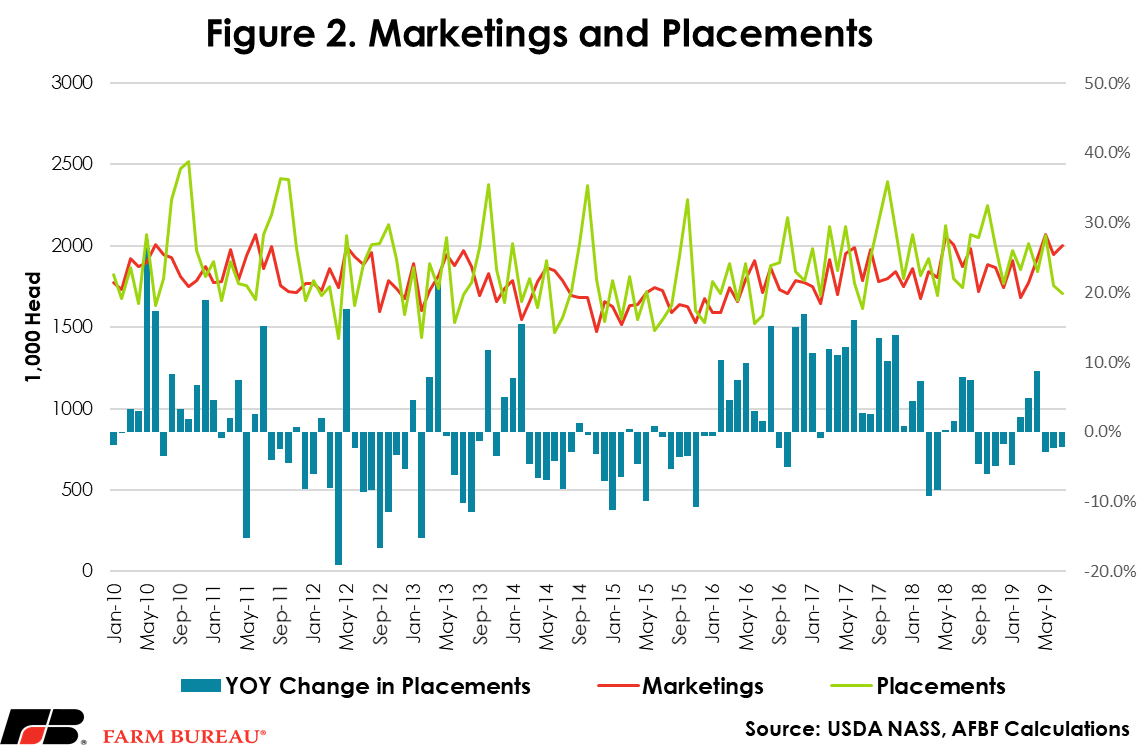
While total inventories are an important component of the report, other key factors include placements (new animals being placed on feed) and marketings (animals being taken off feed and sold for slaughter). In terms of placements this July, analysts predicted an average 0.5% decrease from July 2018. However, there was a great degree of uncertainty in analysts’ expectations for the placement number, resulting in a very large range of a 3.4% decrease to an 8.5% increase. Placements in July totaled 1.705 million head, which is 2.1% below 2018 levels and below the average analyst forecast. There were many contributing factors to the light placement numbers including historically good pasture and range conditions combined with higher feeding costs, which incentivizes keeping the animals on pasture longer and placing at higher weights. Marketings in May were 2.002 million head, up 6.9% from a year ago and in line with the average analyst expectation of an increase of 6.8%. This was partly driven by July having one more slaughter day this year relative to last year.