U.S.-China Trade Framework: What We Know Now

Faith Parum, Ph.D.
Deputy Chief Economist
Key Takeaways
- China’s list of goods covered under the new “30-for-30" trade framework includes major U.S. agricultural products such as beef, pork, poultry, dairy, corn, wheat, rice, sorghum and specialty crops, but whole soybeans are excluded.
- The roughly $30 billion figure reflects the value of products covered by the framework. Lower tariffs can help U.S. products compete, but they don't guarantee sales.
- The benefits for farmers and ranchers will depend on how far tariffs are reduced, how quickly changes take effect and whether the new agricultural working group can resolve non-tariff market-access barriers.
The United States and China have taken another step toward easing trade barriers, each identifying roughly $30 billion in goods for tariff reductions. This list comes from the newly established U.S.-China Board of Trade. For U.S. agriculture, the agreement covers a wide range of products, from beef and pork to corn, wheat, dairy and specialty crops. However, this is not a purchase commitment. Several important details, including final tariff rates, the timing of implementation and the exclusion of whole soybeans, limit how much can be concluded about its near-term impact on U.S. farm exports.
On Sept. 27, the White House released the first product lists under the new “30-for-30” framework. The two governments set lists based on 2024 bilateral trade: 1,619 U.S. products for potential tariff reductions entering China and 77 Chinese products entering the United States. The actual rate of tariff reductions is yet to determined. Both countries will need to announce reduction rates and specify how they will be implemented.
Agriculture is Prominent on China’s List
Agricultural products make up a significant portion of China’s list. Covered products include beef, pork, lamb, poultry and offal; dairy products such as cheese, butter and cream; wheat, barley, corn, rice and sorghum; fruits, vegetables, beans and mushrooms; edible oils, juices and processed foods; as well as seafood, pet food, tobacco and forest products.
China's Ministry of Commerce has said about 90% of covered products are expected to see tariffs cut to most-favored-nation (MFN) rates, the standard tariffs China charges World Trade Organization (WTO) members without a free trade agreement. That would remove the retaliatory duties added during the trade dispute but not eliminate tariffs, so competitors with free trade agreements, like Australia and New Zealand, could still pay less. Notably for U.S. agriculture, though, it would return covered products to tariff rates equal to competitors in South America like Brazil and Argentina. Specific reductions and implementation dates have not been released.
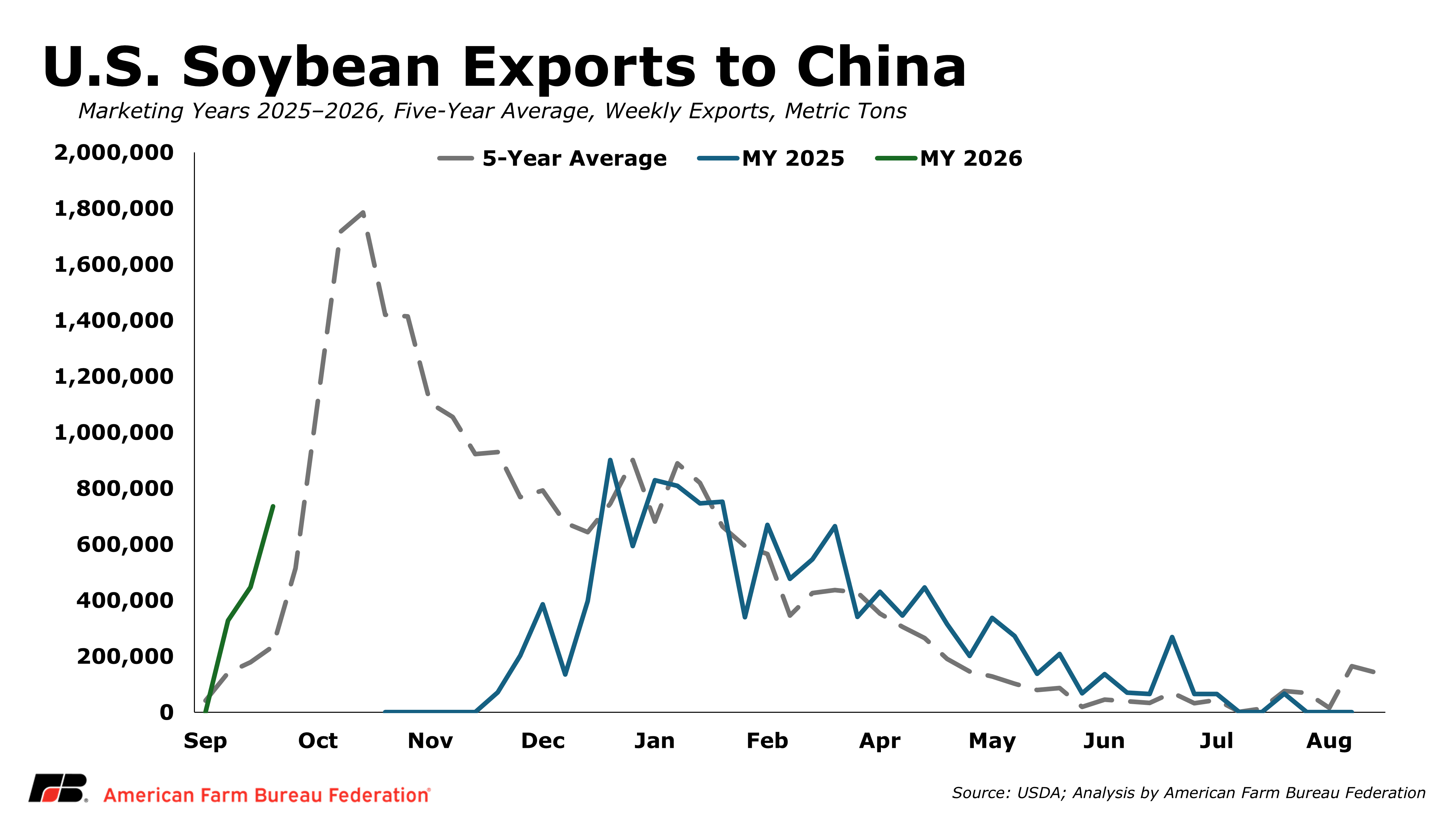
However, one notable agriculture product is left out. Whole soybeans. Soybeans have historically been one of the top agricultural exports to China, but they are not included in this round of proposed tariff reductions. Soybean oil and some other soybean-derived products are covered; however, China is primarily a whole soybean importer, owing to a mature domestic crush industry. In late 2025 and spring 2026, the administration announced separate purchase commitments with China, including at least 25 million metric tons of soybeans and at least $17 billion in agricultural purchases annually in 2026, 2027 and 2028. This latest agreement does not include any purchase commitments.
Trade Has Fallen Sharply
Historically, China has been a top trading partner for U.S. agriculture. However, that has fallen amid the ongoing negotiations and trade tensions. USDA reports that U.S. agricultural exports to China fell 66% in 2025 to $8.4 billion, dropping China to the sixth-largest U.S. agricultural export market. USDA attributed much of that decline to reciprocal tariffs and weaker Chinese demand for U.S. soybeans. USDA’s May trade forecast projected fiscal year 2026 agricultural exports to China at about $12 billion, compared with $16.2 billion in fiscal year 2025.
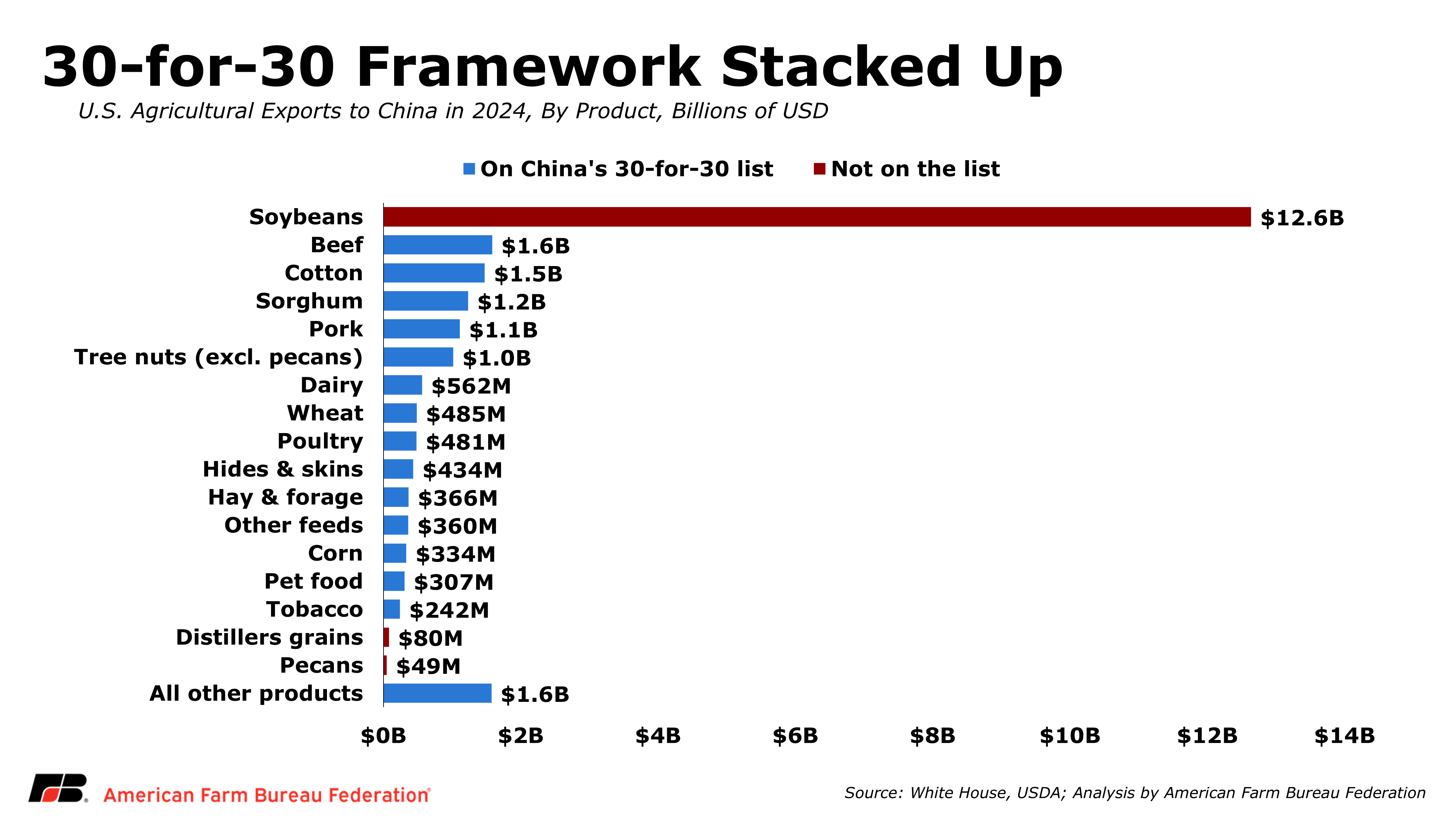
The new agreement to lower tariffs on products included in the 30-for-30 framework may improve the competitiveness of U.S. commodities. For products such as meat, dairy, grains and specialty crops, even modest tariff reductions can narrow the price gap between U.S. products and competing supplies from countries with more favorable trade arrangements.
However, there are other factors that impact trade outside of tariffs. Chinese purchases will still depend on domestic consumption, commodity prices, exchange rates, production conditions and competition from other exporters. Brazil, Australia, New Zealand and other major agricultural suppliers will continue competing for market share. In many commodities, U.S. producers also face non-tariff barriers that cannot be resolved simply by reducing an import duty.
The Agricultural Working Group
The announcement also included the creation of a working group within the China Board of Trade that will specifically focus on agricultural market access barriers. The White House described the group as a mechanism for addressing impediments to agricultural trade beyond tariffs.
Agricultural exporters routinely face sanitary and phytosanitary requirements, facility registrations, onerous biotechnology approval processes, product eligibility rules and other regulatory requirements that can limit market access even when tariff rates are competitive. Continued negotiations through a standing agricultural working group could provide a venue for addressing those barriers product by product.
What it Means for Agriculture
The 30-for-30 framework represents potential improvement in market access for U.S. agriculture, particularly livestock products, grains, dairy and specialty crops. However, the agreement does not guarantee additional purchases. The $30 billion figure reflects the 2024 trade value of goods included in the broader framework, not a Chinese commitment to purchase $30 billion of U.S. products.
For farmers and ranchers, the real test is how far tariffs fall, how quickly the cuts take effect, whether regulatory barriers are addressed and, ultimately, whether ships leave U.S. ports loaded with American farm products bound for China.