Fertilizer Supply and Affordability
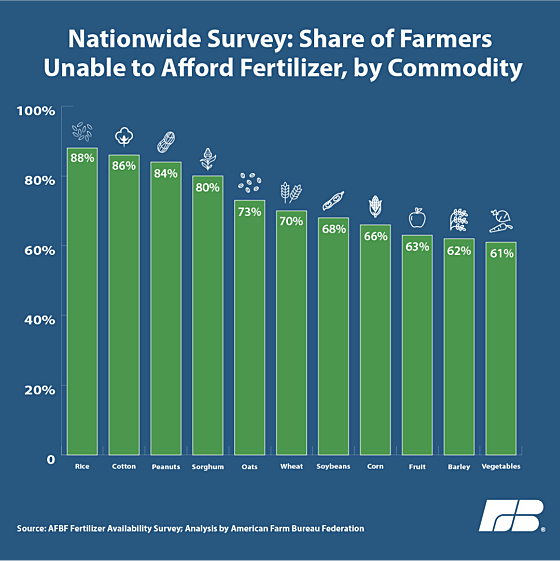
Rising supply costs tied to the conflict in the Middle East are adding strain to an already challenging farm economy. To better understand how global fertilizer market disruptions are affecting producers during spring planting, the American Farm Bureau Federation conducted a Fertilizer Availability Survey of farmers and ranchers across the country. An overwhelming majority of America’s farmers who responded to a nationwide survey say they cannot afford to purchase enough fertilizer to get them through the year.
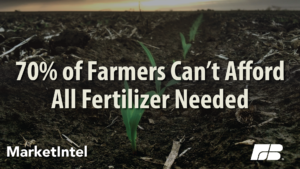
70% of respondents say fertilizer is so expensive, they will not be able to buy all the fertilizer they need. The conflict in the Middle East sent fertilizer and fuel prices soaring. According to the survey, 94% of respondents reported their financial situation has worsened or remained the same since last year, while only 6% reported improvement. Poor financial conditions going into this growing season impacted planting and purchasing decisions, and as a result, rapidly changing fertilizer and fuel market price volatility impacted farmers across the country in different ways.

The skyrocketing cost of fuel and fertilizer is creating more economic hardships for farmers who have already endured years of losses. Without the necessary fertilizers, we’ll face lower yields and some farmers will reduce acres altogether, which will impact food and feed supplies.
- American Farm Bureau President, Zippy Duvall



Nationwide Survey Results
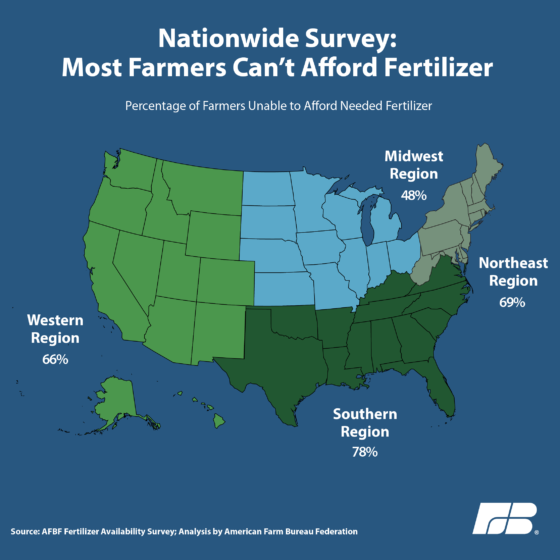
The analysis reveals that almost 8 in 10 farmers in the southern U.S. say they can’t afford all needed supplies this year, followed by the Northeast and West at 69% and 66%, respectively, compared to 48% of the farmers in the Midwest.
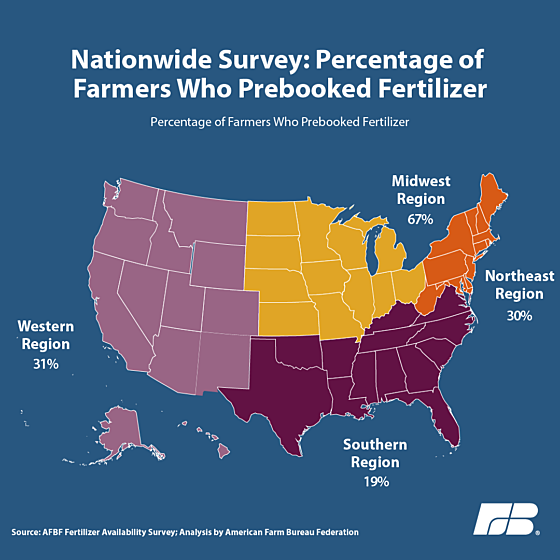
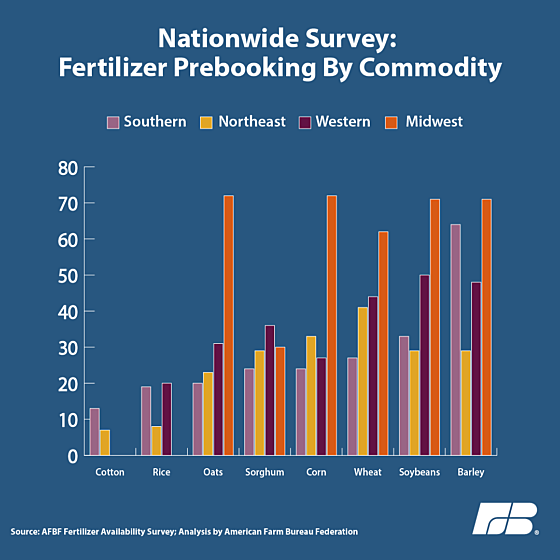
Just 19% of farmers in the South prebooked fertilizer purchases in advance of planting season. In the Northeast, only 30% of farmers prebooked, followed by 31% in the West, and 67% in the Midwest. Even with higher pre-booking rates, almost one in three Midwestern farmers still report entering the season without securing all of their fertilizer needs.
On the Ground


Nitrogen for corn has increased so much that we’re cutting back on planned acreage for 2026. Prices went up more than $100 per ton less than a week after the Strait of Hormuz closure.
- Lorenda Overman, North Carolina Farm Bureau

With the current market prices for the crops we grow and the current prices of our inputs — fuel, fertilizer, seed, chemicals – the future is uncertain for my farm, we’re in dire shape.
- Seth Tucker, Arkansas Farm Bureau

The higher cost of fertilizer will increase the price we pay for hay, which may be a death knell to the horse farmers in New Jersey.
- Judy Mazzucco , New Jersey Farm Bureau

Fuel cost, fertilizer cost, drought, low commodity prices = bad financial picture for 2026.
- Tom Boyer, Utah Farm Bureau
