What is a Small Refinery Exemption?

Faith Parum, Ph.D.
Deputy Chief Economist
- A small refinery exemption lets certain small oil refineries temporarily avoid part or all of the federal requirement to use renewable fuels, such as ethanol and biodiesel.
- When exempted obligations are not reassigned to other refiners, the overall renewable fuel requirement effectively shrinks, reducing demand for RINs and weakening the incentive to blend renewable fuels.
- For farmers, unreallocated exemptions mean weaker demand for agricultural products, particularly corn used for ethanol and soybean oil used for biomass-based diesel.
The Renewable Fuel Standard (RFS) requires minimum volumes of renewable fuels to be used in the U.S. transportation fuel supply. The program is important to agriculture because one of its objectives is to support rural economies by expanding demand for crops used to produce biofuels. Corn is the primary feedstock for conventional ethanol, while oils from crops such as soybeans, and other fats, are important feedstocks for biomass-based diesel.
But not every refinery is required to fully comply with the RFS. Qualifying small refineries can petition the Environmental Protection Agency (EPA) for temporary relief through a small refinery exemption, or SRE, if they demonstrate that RFS compliance would cause “disproportionate economic hardship.”
How Does the RFS Work?
Each year, EPA sets Renewable Volume Obligations (RVOs) for fuel importers and oil refiners to comply with the RFS. RVOs are set across four categories: total renewable fuel, advanced biofuel, cellulosic biofuel, and biomass-based diesel. These national volumes are converted into percentage requirements that determine how much renewable fuel individual refiners and fuel importers must account for based on their gasoline and diesel production or imports.
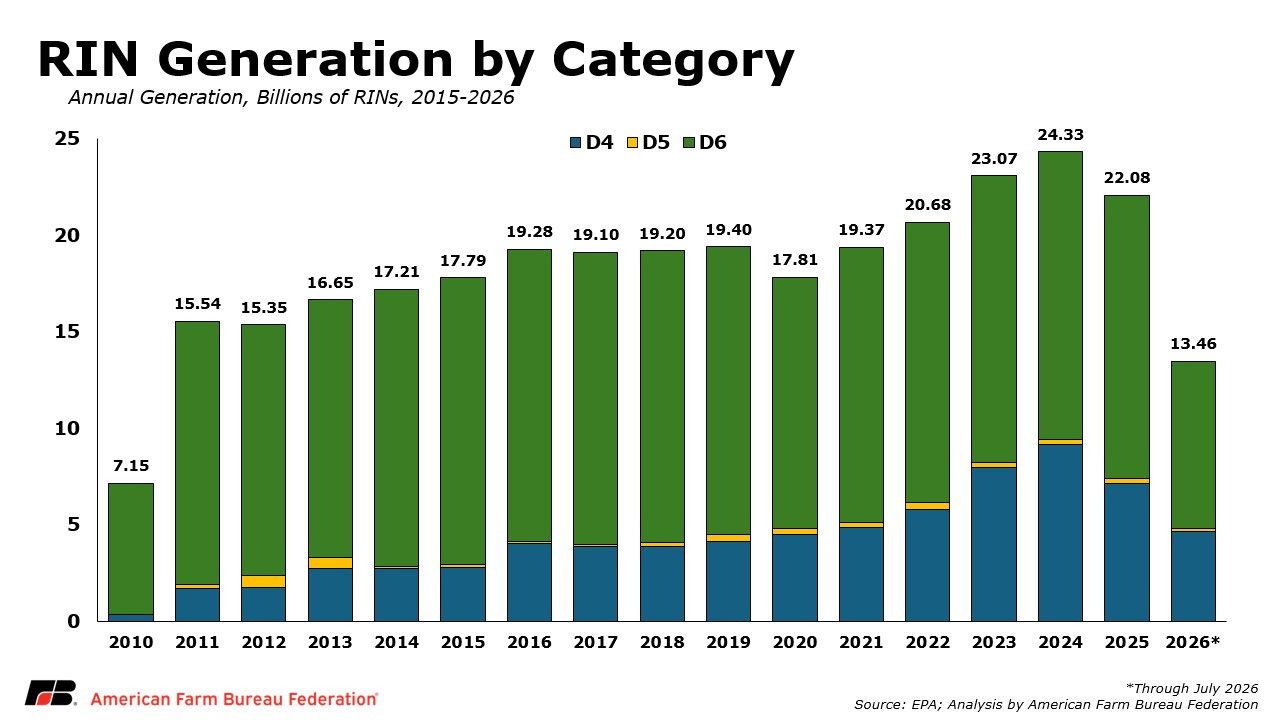
Compliance is tracked through Renewable Identification Numbers, or RINs. A RIN is generated when qualifying renewable fuel is produced or imported. Once the fuel is blended, the RIN can be separated and traded. Refiners comply by obtaining RINs through blending renewable fuel or purchasing RINs from other market participants. The RIN is ultimately turned in or “retired” to demonstrate compliance with the refinery's RVO. Different fuels generate different types of RINs:
- D4 RINs represent biomass-based diesel
- D5 RINs represent advanced biofuels
- D6 RINs primarily represent ethanol
- D3 and D7 RINs represent cellulosic fuels
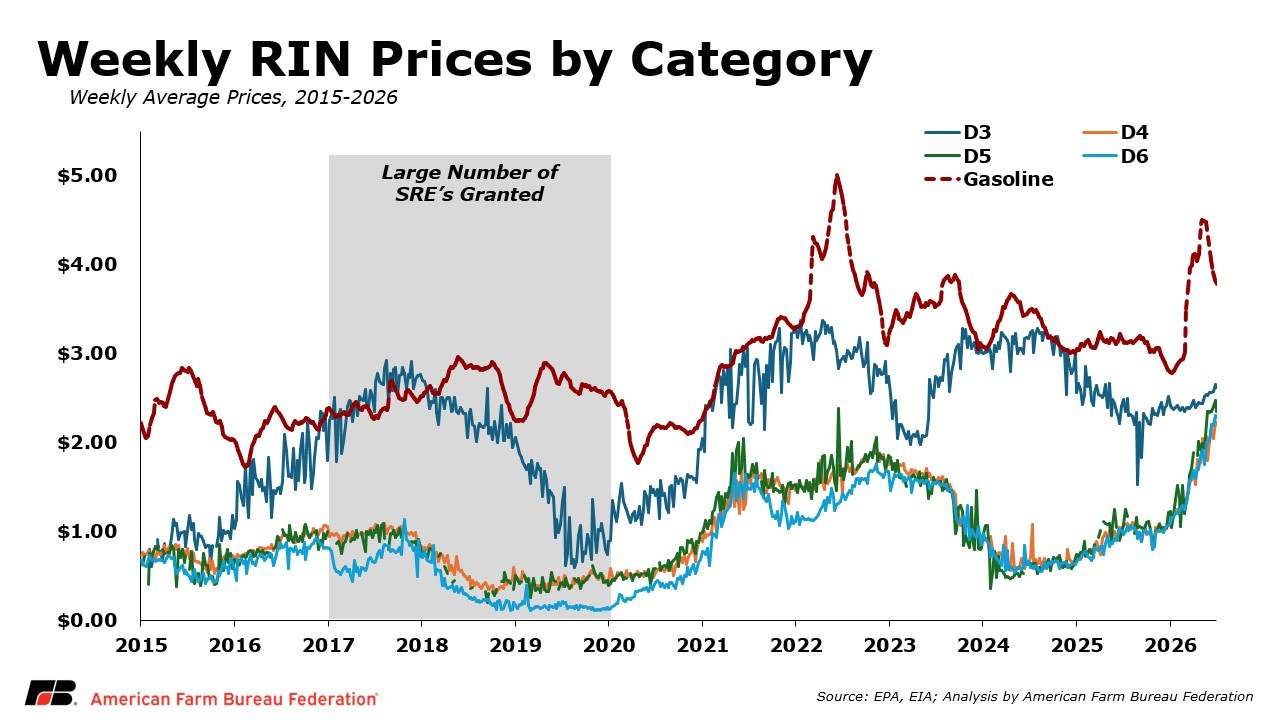
RINs trade in a secondary market, and their prices change because they balance the supply of biofuels with the amount needed to satisfy RFS obligations. When meeting the mandate becomes more difficult or expensive, RIN prices generally increase because a stronger incentive is needed to produce or consume the required renewable fuel. When compliance requirements become easier to meet, RIN prices generally fall.
Where Do Small Refinery Exemptions Fit?
The RFS allows qualifying small refineries to seek an extension of the program's original small-refinery exemption when they can demonstrate disproportionate economic hardship. When EPA grants an SRE, that refinery is relieved of some or all of its RFS compliance obligation.
That matters beyond the individual refinery because reducing an effective RVO reduces the number of RINs needed for compliance. Fewer required RINs mean lower demand for RINs, which can lower the market price of RINs.
SREs for the 2016 through 2018 compliance years ultimately exempted approximately 4 billion RINs from RFS obligations. Those exemptions effectively reduced RVOs, and RIN prices fell sharply as the market adjusted to the smaller compliance requirement. However, falling RIN prices do not mean fuel prices will be lower.
Why Farmers Care
For agriculture, the connection runs through biofuel demand. The RFS creates demand for renewable fuels because obligated parties must acquire and retire RINs to meet their thresholds. D6 RINs are primarily tied to corn ethanol, while D4 RINs are tied to fuels produced from feedstocks including soybean oils.
SREs therefore matter because they can change the size of the effective renewable fuel requirement. A smaller requirement means fewer RINs are needed, which weakens the compliance-driven incentive for renewable fuel use. That does not mean every exempted RIN translates directly into a lost gallon of biofuel or lost bushel of corn, but it does change one of the policy mechanisms supporting biofuel demand.
Conclusion
Small refinery exemptions provide relief to qualifying refineries facing disproportionate economic hardship, but when exempted volumes are not reallocated, the effects can extend beyond the refinery and into farm country. Unreallocated exemptions reduce the effective RFS requirement, lowering the number of RINs needed for compliance and potentially weakening the incentive to blend renewable fuels. For farmers, that can translate into softer demand for corn, soybean oil, and other biofuel feedstocks. Farm Bureau opposes small refinery exemptions, but if exemptions are granted, the associated RFS obligations should be reallocated to preserve overall renewable fuel demand the RFS was designed to support.