First U.S. Cases of New World Screwworm Detected

Bernt Nelson
Economist
Daniel Munch
Former AFBF Economist
Key Takeaways
- New World Screwworm has reemerged in the U.S. with multiple cases in Texas and an isolated case in New Mexico, underscoring the risk of Northward movement out of Mexico.
- Containment depends on rapid detection and reporting, which can be challenging due to the size and diversity of farms and ranches and presence of wildlife. Sterile fly supply is a key constraint with current production insufficient for the expanding outbreak.
- Daily inspection of animals is key to identifying NWS and helping to prevent the spread. Farmers and ranchers should inspect animals daily and take proactive biosecurity measures including inspecting pens, and treating wounds immediately with an approved insecticide. If a farmer suspects an infestation, a veterinarian should be called immediately to evaluate the health of the animal or herd. Infestations should be treated according to their veterinarians recommendations.
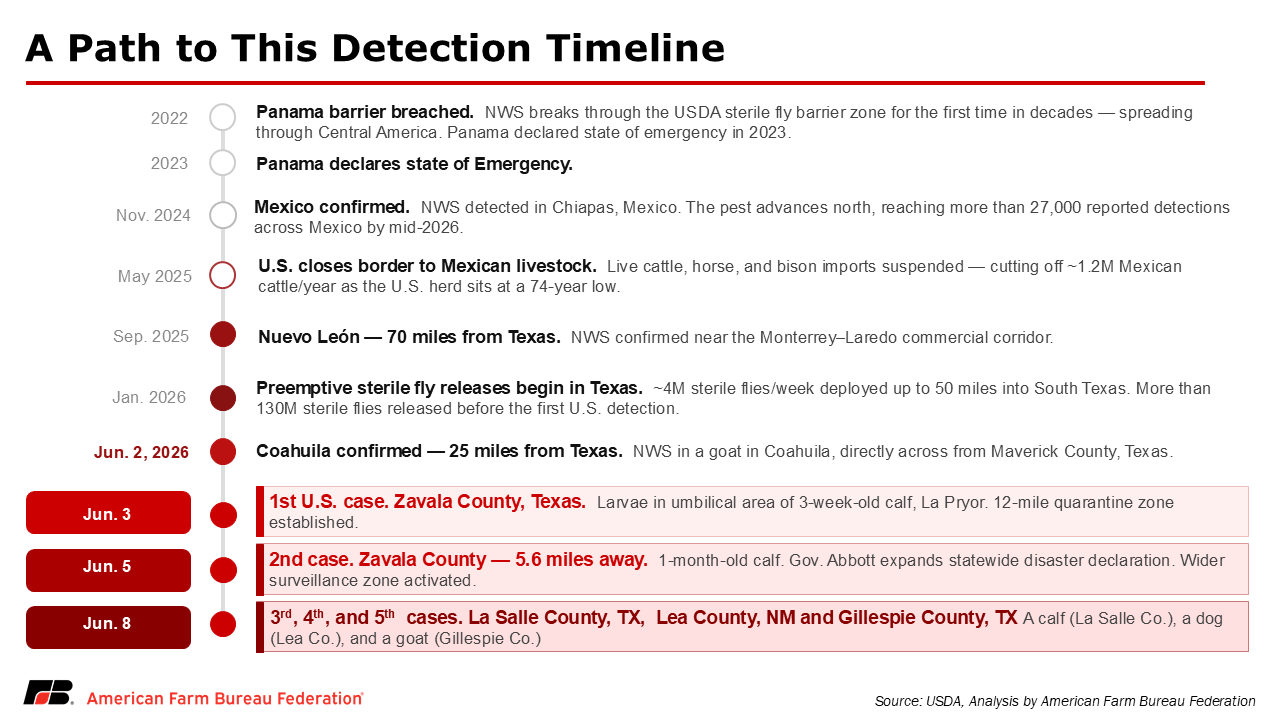
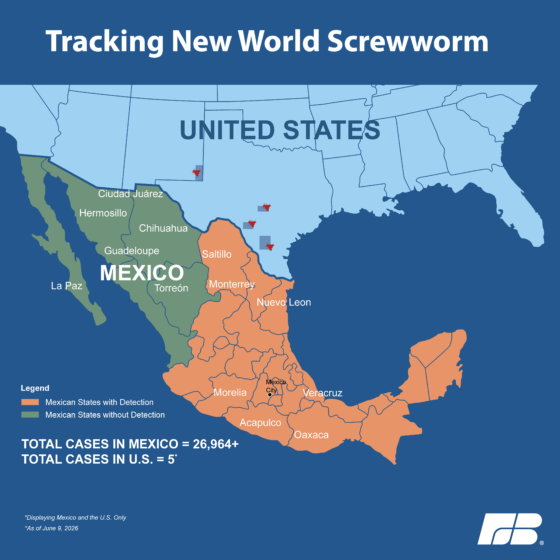
After nearly 60 years without a confirmed domestic case, USDA confirmed the first U.S. detection of New World Screwworm (NWS) in South Texas on June 3, 2026. Since then, additional detections have been confirmed in Zavala, La Salle and Gillespie Counties in Texas, as well as Lea County, New Mexico. Given the rapidly evolving nature of the outbreak, the information presented below reflects the most current information available as of June 8, 2026.
NWS is a parasitic pest that infests the living tissue of warm-blooded animals, including livestock, pets, wildlife and, less commonly, birds and people. The pest reemerged in Chiapas, Mexico, in November 2024 and has since spread northward through Mexico. While the recent U.S. cases have heightened concern among animal health officials and livestock producers, it is important to emphasize that NWS does not threaten the safety of the U.S. food supply. The United States maintains one of the safest food supplies in the world, supported by multiple layers of animal health, food safety and disease surveillance protections.
This Market Intel reviews the three current U.S. detection regions, the agricultural landscapes surrounding those detections and the animal health, surveillance and market considerations that will shape containment and eradication efforts moving forward.
From Eradication to Reemergence
NWS was first documented as a significant problem in the Southeastern United States in 1933, though it had been present long before that. In 1958, Sterile Insect Technique (SIT) was implemented to combat NWS in the Southeast and NWS was effectively eradicated in 1966. By 2000, NWS had successfully been eliminated in areas North of the Darian Gap in Southern Panama.
After more than two decades of containment, NWS reemerged in Panama and Costa Rica in 2022. As NWS became more widespread, Panama declared a state of emergency in 2023 before being detected in Chiapas, Mexico, in November 2024. Since then, the pest has continued moving northward through Mexico, resulting in more than 27,000 reported detections.
The Initial Detection and Subsequent Cases
The first confirmed U.S. case involved a three-week-old beef calf in La Pryor, Texas, in southwestern Zavala County, approximately 50 miles from the Mexico border. A rancher observed signs of distress and contacted a veterinarian after discovering larvae in the calf's umbilical area, a common wound site in newborn animals. Laboratory confirmation was received on June 3, 2026. The calf was treated and survived.
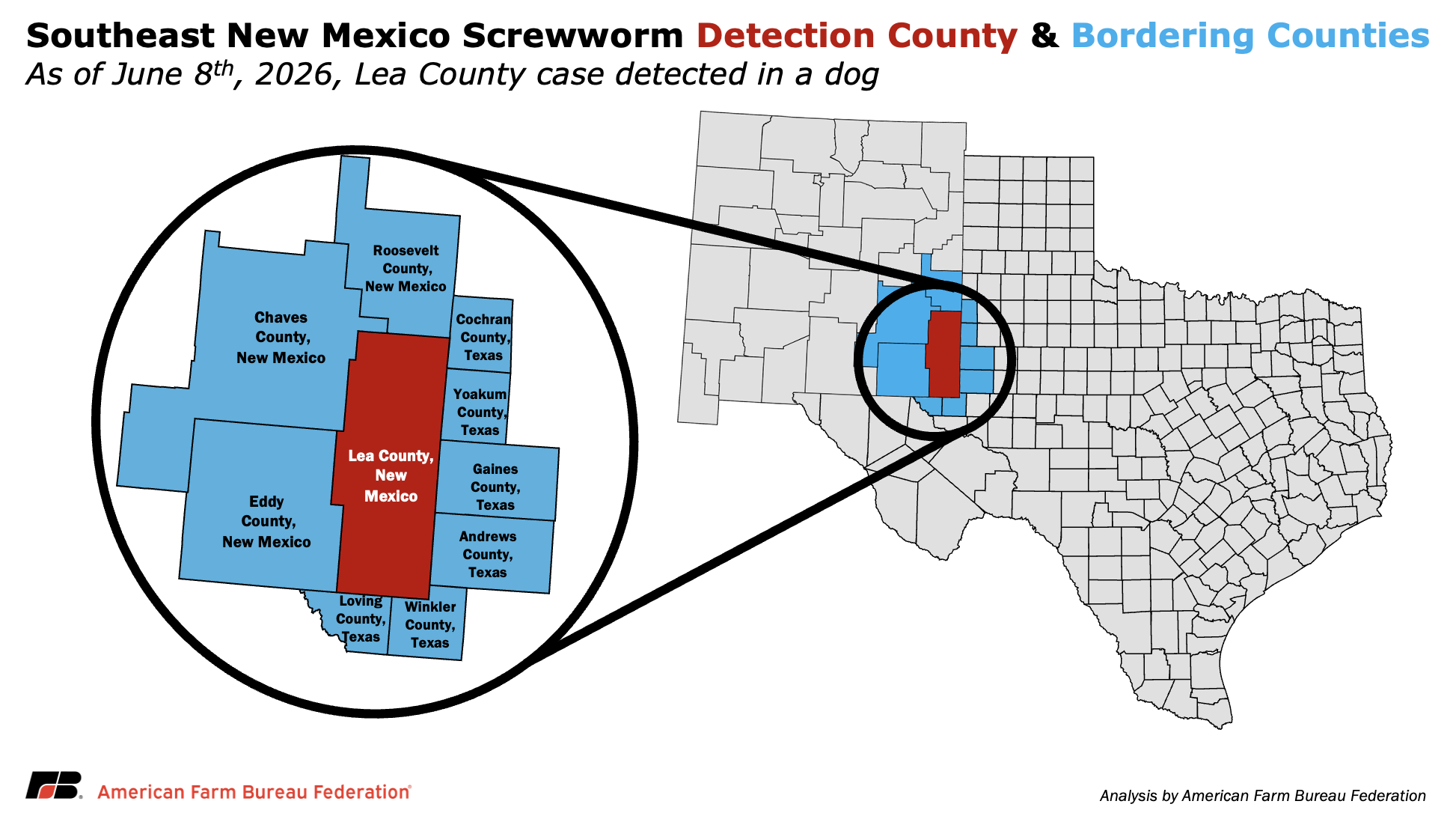
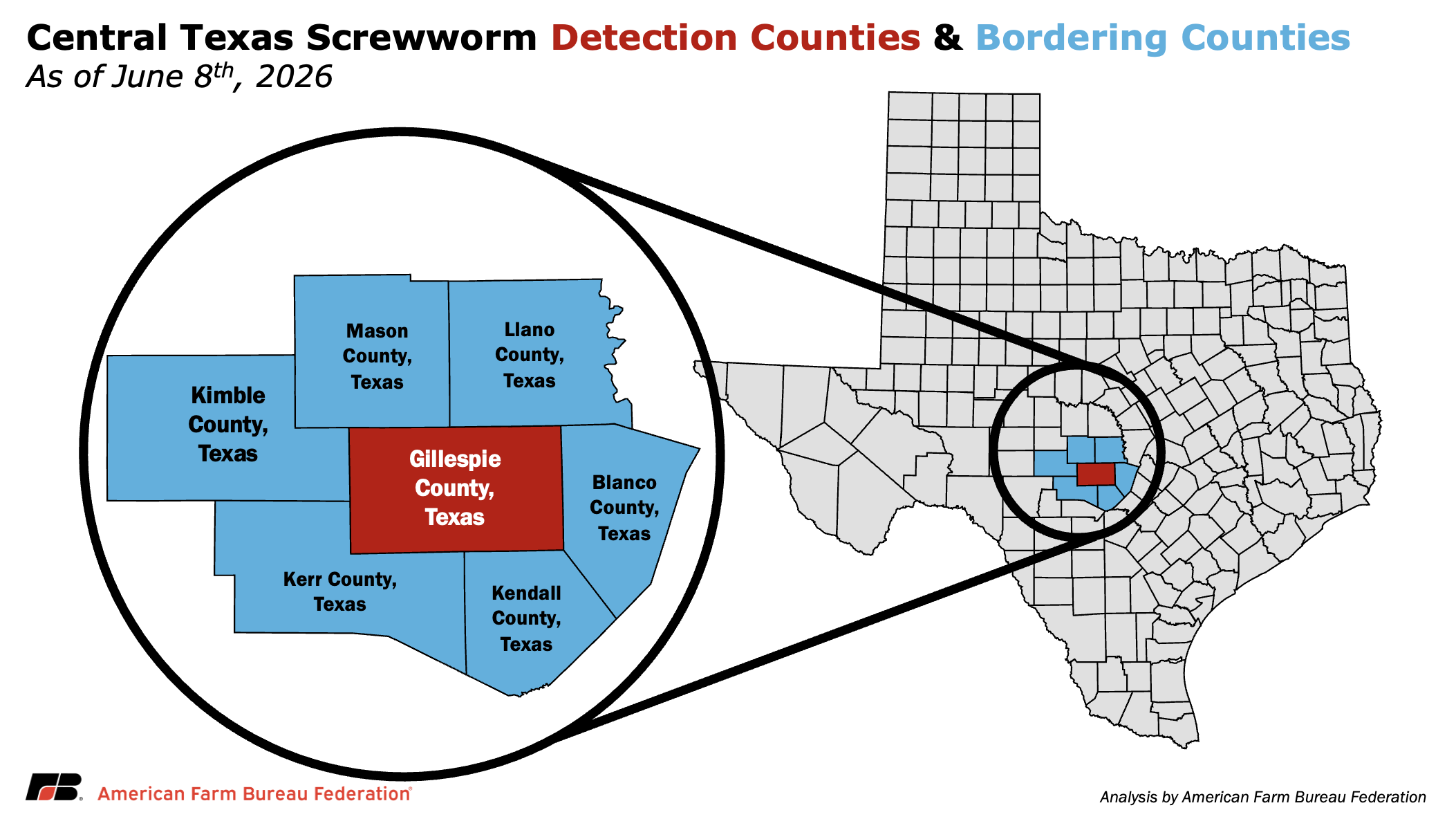
Since that initial detection, four additional cases have been confirmed in the United States. A second case was identified in a one-month-old calf in Zavala County just a few miles from the original detection site, followed by a third case in a calf in neighboring La Salle County. Both detections occurred within the South Texas surveillance zone and are consistent with concerns about localized spread in the region. USDA has also confirmed a case in a dog in Lea County, New Mexico, though the animal's travel and exposure history remain under investigation. In addition, USDA confirmed a case in a goat in Gillespie County, Texas, extending the geographic footprint of confirmed detections beyond South Texas and underscoring the importance of continued surveillance across a broader region.
Regional Agricultural Context: Southern Texas Detection Zone
Because NWS is spread by adult flies that lay eggs in wounds on warm-blooded animals, understanding the concentration and distribution of livestock operations around the South Texas detections provides important context for assessing potential risk. The current detection zone is centered on Zavala and La Salle counties and includes 10 bordering counties: Maverick, Frio, Uvalde, Dimmit, Kinney, Medina, Atascosa, Webb, Duval and McMullen. Together, this 12-county region stretches from the Rio Grande River along the U.S.-Mexico border northeast toward the San Antonio agricultural corridor, encompassing a significant portion of Texas' brush-country cattle ranching region.
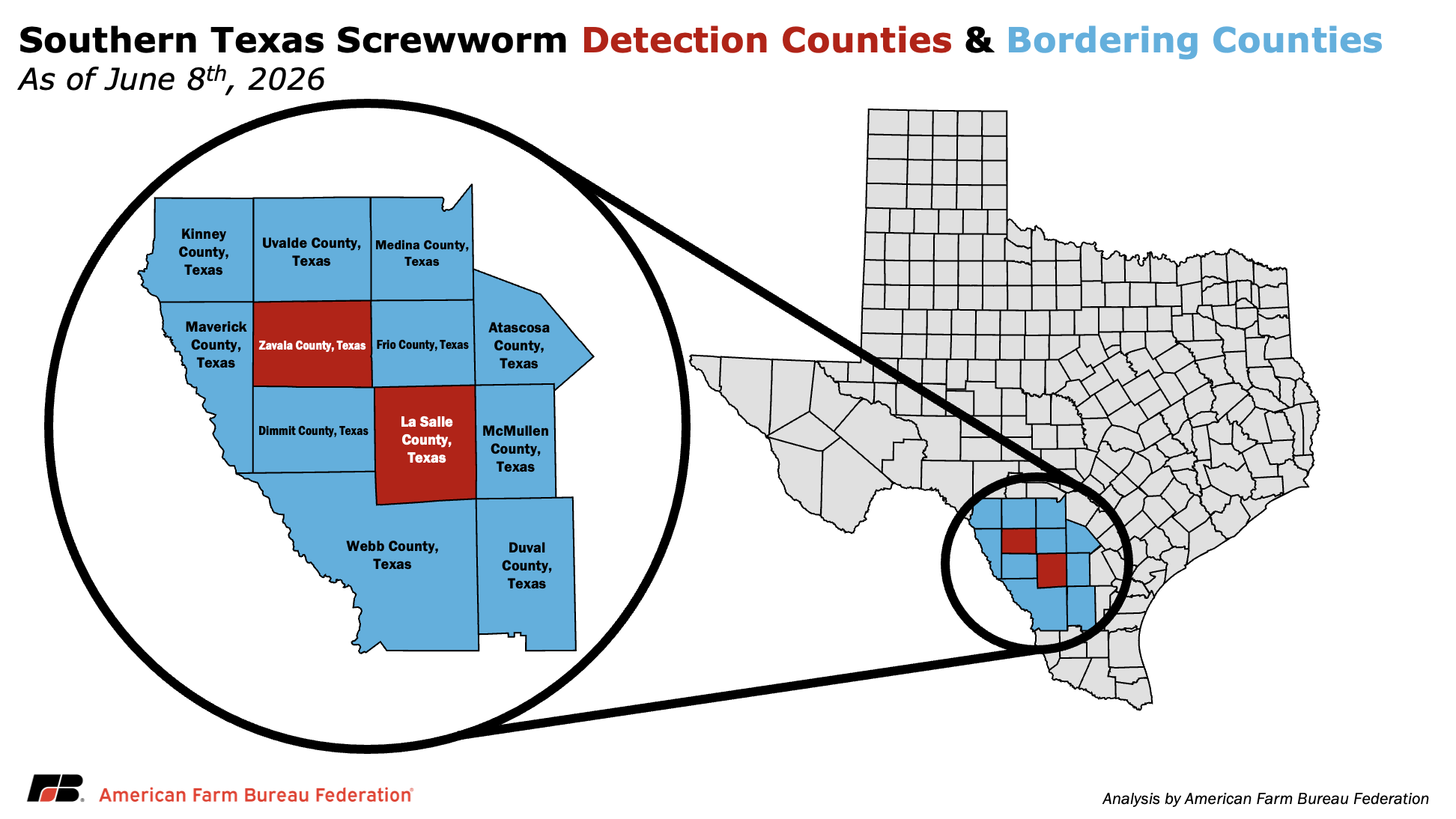
Particular attention is being paid to Maverick and Webb counties, both of which border Mexico. Maverick County shares a border with Coahuila, the state where NWS was confirmed immediately prior to the first U.S. detection. This county is home to 18,555 cattle and calves with 93% of agricultural sales tied to livestock and animal products. Webb County, home to Laredo and the nation's busiest land port of entry, contains 45,607 cattle and calves, derives 98% of agricultural sales from livestock and animal products, and includes nearly 2.1 million acres of farmland. Together, these counties sit at the intersection of livestock movement, wildlife corridors and cross-border commerce.
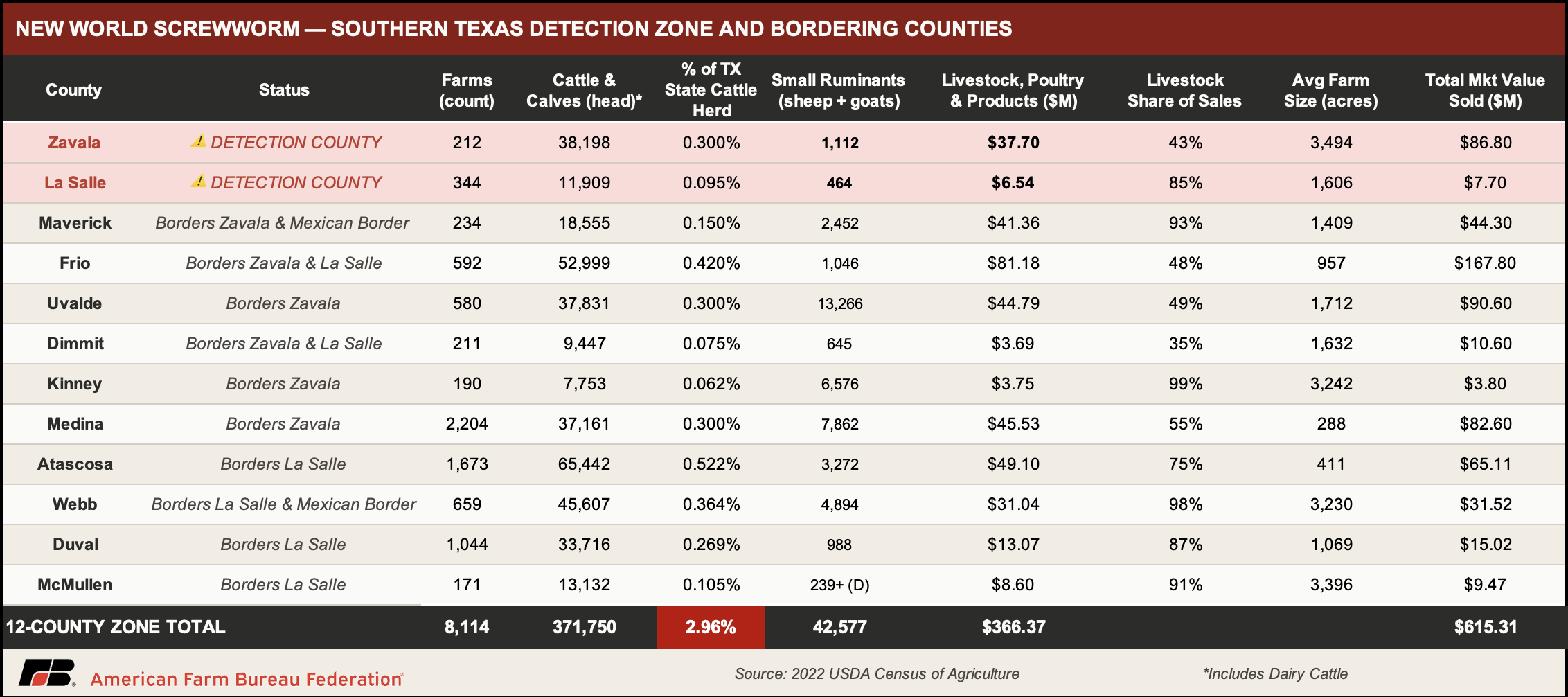
Texas consistently ranks among the nation's leading livestock-producing states. In 2024, the state generated $13.6 billion in cattle and calf sales, led the nation in animal and animal product sales at $23.4 billion and maintained an inventory of 12.1 million cattle and calves. The 12-county South Texas detection zone contains 371,750 cattle and calves, nearly 43,000 sheep and goats, and more than $366 million in livestock, poultry and animal product sales. This represents approximately 3% of Texas' cattle herd. While a relatively small share of the state's total inventory, the region's location along key livestock movement corridors, major border crossings and wildlife pathways makes it strategically important for surveillance, containment and eradication efforts.
Regional Agricultural Context: Southeast New Mexico Detection Zone
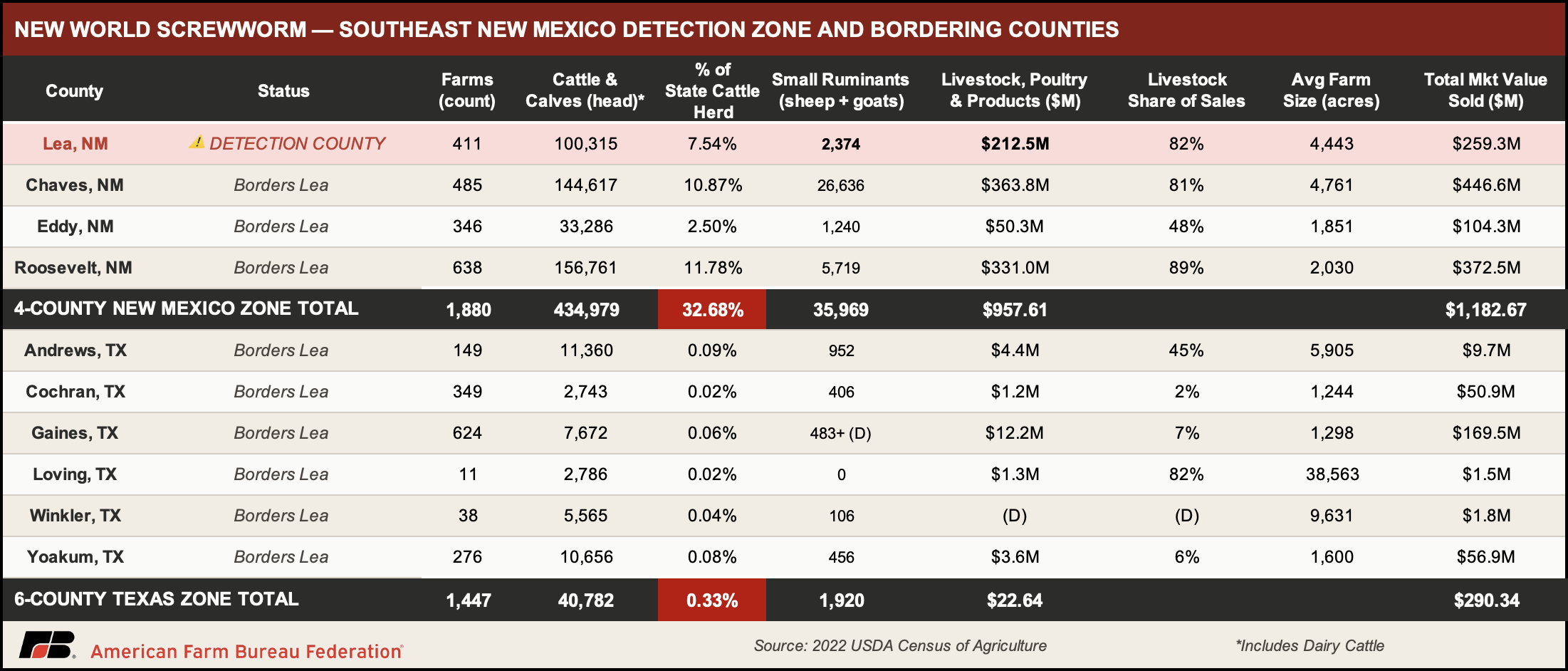
The Southeast New Mexico detection zone presents a very different agricultural profile than South Texas. While the six Texas counties bordering Lea County, New Mexico, contain approximately 40,782 cattle and calves, less than 0.4% of the Texas herd, that figure understates the livestock significance of the region. Lea County alone holds more than 100,000 cattle and calves, and the four-county surveillance area surrounding the detection site contains nearly 435,000 head, accounting for roughly one-third of New Mexico's cattle inventory.
Unlike South Texas, where beef cattle dominate the landscape, Southeast New Mexico is one of the nation's most important dairy-producing regions. Lea County generates more than $212 million in livestock and animal product sales annually, including approximately $169 million from milk production. Neighboring Chaves and Roosevelt counties add another $637 million in livestock and animal product sales, creating one of the most concentrated dairy production corridors in the Southwest.
Dairy operations differ from extensive ranching systems because animals are handled and observed daily, improving the likelihood of early detection. At the same time, routine dairy management, including calving, mastitis treatment and other animal health procedures, creates recurring wound sites that can serve as entry points for NWS infestation. As a result, a detection in a high-density dairy region presents a different set of surveillance considerations than one in the South Texas brush country.
The West Texas counties adjacent to Lea County, New Mexico, are heavily tied to crop production. Gaines County alone generated nearly $170 million in agricultural sales in 2022, with the vast majority coming from crops, including one of the state's largest cotton industries.
Regional Agricultural Context: Central Texas Detection Zone
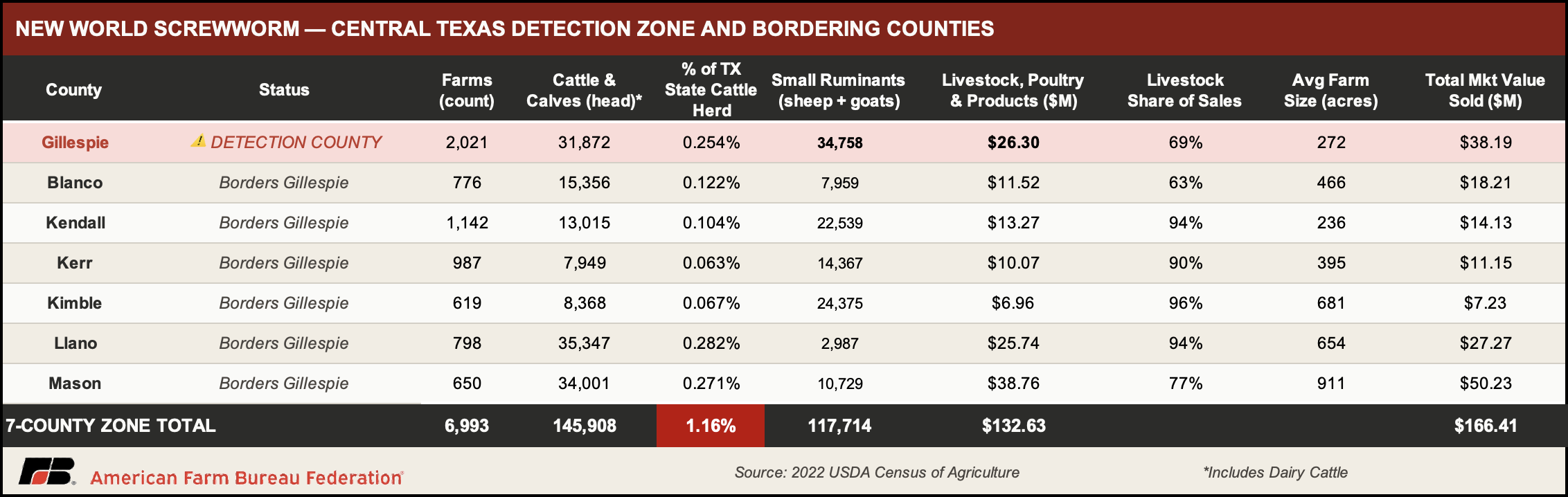
The seven-county detection zone surrounding Gillespie County contains nearly 146,000 cattle and calves, representing 1.16% of Texas's cattle herd, and more than 117,000 sheep and goats. Small ruminants outnumber cattle in four of the seven counties, making this one of the state's most concentrated sheep and goat production regions. The zone also generates more than $132 million in annual livestock and poultry sales and includes a high concentration of exotic game ranches, hobby farms and peri-urban livestock operations, creating a more complex surveillance environment than many traditional cattle-producing regions.
The Large-Farm Detection Problem
County-level inventory numbers obscure a critical operational reality. In Zavala County, 45% of farms exceed 1,000 acres; in Kinney County, 41% do. In the New Mexico detection, the challenge is even greater. Monitoring livestock across these large, often rugged landscapes can make early detection more difficult. At the same time, more fragmented areas present their own challenges. In Maverick County, only 14% of farms exceed 1,000 acres, but 22% fall in the 10-49 acre range, creating a patchwork of smaller operations that can also complicate surveillance efforts.
According to USDA and the Texas Animal Health Commission, the most important line of defense against NWS is putting "eyes on animals." Early detection depends on producers recognizing and reporting suspicious wounds. Nearly 60 years have passed since NWS was eradicated from the United States, meaning few producers actively managing livestock today have either institutional knowledge or firsthand experience identifying an infestation.
Small Ruminants and Wildlife: Additional Surveillance Challenges
While cattle account for the majority of livestock potentially exposed to New World screwworm, sheep, goats and wildlife present additional surveillance challenges. Historically, NWS infestations have been more common in small ruminants due to wounds associated with shearing, birthing and brush injuries. Across the South Texas and Central Texas detection zones alone, there are more than 160,000 sheep and goats, including several counties where small ruminants outnumber cattle. Many of these animals are managed on extensive rangeland or smaller operations where daily inspection may be less common, making early detection more difficult.
Wildlife adds another layer of complexity. White-tailed deer, exotic game species and feral hogs are abundant throughout South Texas and can also serve as hosts for NWS infestations. Unlike managed livestock, these populations cannot be routinely inspected, making them difficult to monitor and increasing the importance of surveillance efforts across both agricultural and wildlife landscapes.
Response Actions Underway and Need for Sterile Flies
USDA’s Animal and Plant Health Inspection Service (APHIS) has initiated a series of response measures designed to contain and eradicate NWS. These actions include activating the National Veterinary Stockpile, increasing sterile fly releases in the affected area (where approximately 4 million sterile flies were already being released each week prior to detection), establishing 12-mile quarantine zones that restrict the movement of warm-blooded animals without inspection, expanding trapping efforts both along the border and beyond the known dispersal area, and conducting targeted outreach to ranchers and veterinarians.
A key component of the response is the Sterile Insect Technique (SIT), the most important and proven method for eradicating NWS. SIT has been the foundation of previous successful eradication efforts, including the long-term campaign that began in 1962 and ultimately released over 96 billion sterile flies that pushed NWS back to the Darién Gap in Panama over a 44-year period. During that time, four sterile insect production facilities were operated. As eradication progressed, those facilities were consolidated into a single primary production site in Pacora, Panama, established in 2003 and operated by the Panama-United States Commission for the Eradication and Prevention of Screwworm (COPEG) capable of producing approximately 100 million sterile flies per week.
Today, sterile fly production capacity remains constrained. The COPEG facility in Panama remains the primary source of sterile flies while additional capacity is still under development. USDA has invested $21 million to convert an existing fruit fly facility in Metapa, Mexico, which is expected to produce an additional 60–100 million sterile flies per week upon completion. USDA has also partnered with the U.S. Army Corps of Engineers to construct a domestic sterile fly production facility at Moore Air Force Base in Edinburg, Texas, with an anticipated capacity of approximately 300 million flies per week, though it is not yet operational.
In addition to production, three fly dispersal facilities located in Tuxtla and Tampico, Mexico, and Edinburg, Texas, support targeted release efforts to contain and suppress NWS populations.
Despite these investments, the greatest need among stakeholders remains a significant expansion in sterile fly production to effectively combat NWS and achieve the long-term goal of re-eradication to the Darian Gap. The adequacy of current and planned capacity will ultimately depend on the scale and spread of future infestations.
Markets
While the detection of NWS is a fundamentally bullish event, it comes at a challenging time for the U.S. cattle industry. Added costs and risks associated with NWS and the threat of another severe drought year only amplify the challenges that have led to reductions in the cattle inventory. These lower cattle supplies paired with strong demand have led to record prices for cattle and beef in 2026. But the resulting higher prices are an indicator of strain on the industry rather than success. Added costs have arrived when prices are high, which provides an incentive to sell cattle that would otherwise be kept for breeding. If a mass selloff happens, it would prolong tight cattle supplies and become a massive barrier to rebuilding the cattle herd over the next few years.
The biology of NWS has direct market implications. Unlike contagious livestock diseases, NWS does not spread animal-to-animal, but rather by fly movement, potentially 6 to 15 miles a day, and through the transport of infested animals that carry flies or larvae before detection. Although a single detection does not indicate widespread establishment, containment is a labor-intensive, geography-dependent problem. Preventing further spread is critical given Texas' central role in U.S. cattle production and the broader challenges facing herd rebuilding efforts nationwide.
Cash and Futures
Cash prices have remained largely unaffected following NWS being detected in the United States. Cash prices for fed cattle were down just slightly on June 3. Following the announcement of additional cases on Monday, the 5-area weighted average for all grades of fed cattle was $257.48, up $1.52/cwt from last week’s average price of $255.95/cwt.
Feeder cattle and live cattle futures fell June 3 in response to the announcement of the potential U.S. case. Upon confirmation of the suspected case, feeder cattle futures were up over $9 for all contracts while live cattle rose $3-$7. The additional cases announced June 8 pushed contracts for both feeder and live cattle lower. This demonstrates the uncertainty-driven volatility the NWS detection adds to these markets.
Trade
Reactions of trading partners can be unpredictable. However, no major trade impacts are expected because of these initial detections. The Canadian Food Inspection Agency announced on Friday that it will temporarily restrict livestock from entering Canada from affected parts of the United States. Animals, including horses, that have been in Texas within the past 21 days will not be allowed to cross the Canadian border. At the time this article was drafted, no additional trade restrictions have occurred.
Reporting Challenges and Need for Farmer Support
A key challenge to NWS eradication is timely identification and reporting of suspected cases. There is concern that farmers and ranchers may hesitate to notify authorities due to potential consequences that include quarantine and the possibility of triggering broader quarantine zones that could affect neighboring farms and ranches.
Currently, farmers and ranchers have limited access to financial tools or support programs to offset losses associated with NWS detections. Without mechanisms to mitigate economic impacts, decision makers may be reluctant to report suspected cases due to fears of direct financial loss or broader economic implications for themselves and the surrounding community. Addressing this gap will be critical for strengthening surveillance and response efforts.
One potential solution is the development of programs that help make producers whole in the event of a reported or confirmed case. For example, similar concerns surrounding testing and reporting emerged when Highly Pathogenic Avian Influenza was detected in dairy cattle in 2024. USDA ultimately implemented an indemnity program that compensated dairy producers for milk losses and other economic damage. This approach helped reduce stigma around reporting and formed the foundation for the National Milk Testing Strategy, which has since proven effective in both detecting cases and limiting disease spread. Animals infested with NWS may recover, but treatments can be costly and quarantine zones could prevent the sale of animals that are key sources of revenue for a farm or ranch. Providing farmers and ranchers with mechanisms to withstand economic impacts from testing and reporting could have the same impacts on detecting NWS and limiting its spread.
Conclusion
The recent detections of NWS in Texas represent the most significant animal health challenge posed by the pest in the United States in nearly 60 years. While the cases remain limited in number and do not threaten the safety of the U.S. food supply, they serve as a reminder that eradication is not a one-time achievement but an ongoing process that requires vigilance, resources and cooperation.
The good news is that NWS is a pest the United States has defeated before. The SIT has a proven track record, and state and federal animal health officials have already deployed the tools that formed the foundation of the original eradication effort. Success, however, will depend on quickly identifying new cases, maintaining robust surveillance and ensuring adequate sterile fly production capacity to stay ahead of the pest's spread.
For farmers and ranchers, the most important action remains simple: inspect animals regularly and treat and report suspicious wounds immediately. Early detection not only improves treatment outcomes but also provides animal health officials with the information needed to contain infestations before they become established. The speed with which farmers, veterinarians and regulators work together in the coming months will largely determine how quickly NWS can once again be pushed south of the U.S. border.