Production Costs Expected to Reach New Highs in 2027

Faith Parum, Ph.D.
Economist
Key Takeaways
- USDA's updated cost of production estimates raised fertilizer expense projections for every major field crop for the 2026 growing season, but see relief in fuel and fertilizer prices in 2027.
- Higher production costs in 2027 are expected to be driven by higher prices for seed, chemicals, repairs, labor, machinery, and cash rents.
- Preliminary 2027 projections suggest fertilizer costs will remain elevated despite expectations for improved global supply chains. With farmers continuing to face tight margins, the persistence of high input costs reinforces the need for congressional action, including authorizing year-round E15, providing additional market assistance and passing a modernized five-year farm bill.
The latest USDA Commodity Cost and Returns report provides the first comprehensive look at how recent disruptions in global energy and fertilizer markets are filtering down to the farm level. Released after months of volatility stemming from conflict involving Iran and concerns over shipments moving through the Strait of Hormuz, and as expected, the updated projections indicate production costs are expected to be higher than previously anticipated for every major crop for the 2026 growing season. The findings align with the American Farm Bureau Federation’s recent survey of over 5,700 farmers, which found that 70% of respondents were unable to afford all the fertilizer they needed for the 2026 crop year as rising input costs continued to strain farm finances. The next update will be in November of this year.
Costs Projected to Reach New Highs in 2027
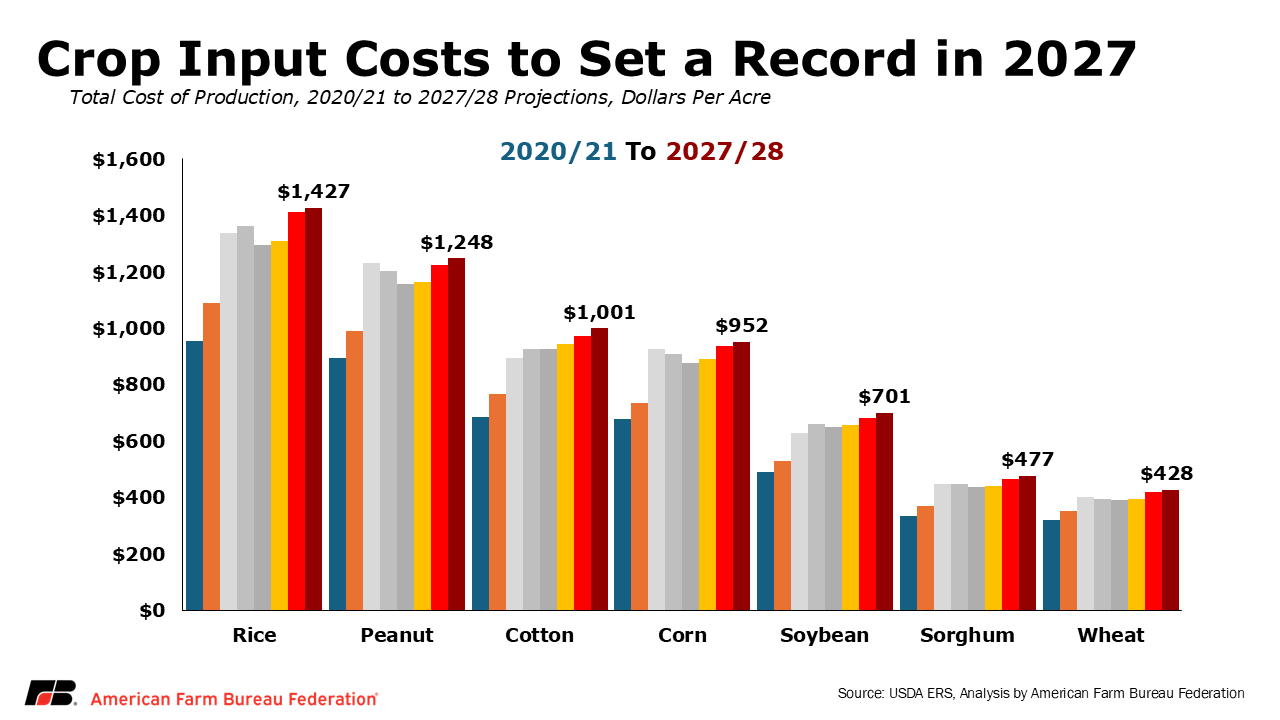
USDA’s new 2027 cost of production forecast reveals farmers may not see meaningful relief from elevated production costs anytime soon. USDA's preliminary 2027 projections show total production costs continuing to rise for most major crops, pushing all commodities to record highs. Higher production costs are driven not by fuel and fertilizer in 2027, but rather by higher prices for seed, chemicals, repairs, labor, machinery and cash rents expenses. USDA’s current estimates for rice production costs are $1,427 per acre in 2027, followed by peanuts at $1,248 per acre, cotton at $1,001 per acre and corn at $952 per acre. Soybeans, sorghum and wheat are also projected to reach record levels.
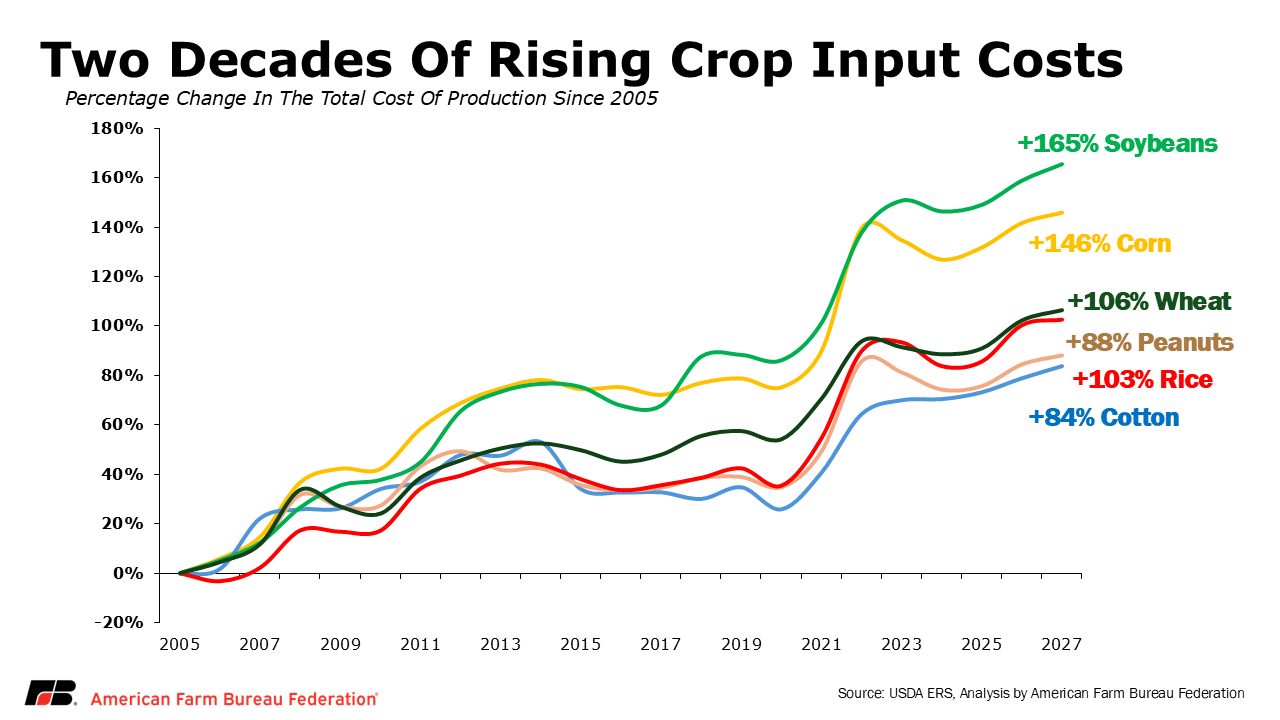
For many crops, projected 2027 costs exceed not only USDA's previous forecasts but also the highs experienced during the supply chain disruptions and inflationary pressures of the early 2020s. Since 2005, total productions costs have more than doubled for several major row crops, including soybeans (+165%), corn (+146%), wheat (+106%) and rice (+103%). While commodity prices often fluctuate from year to year, production expenses have steadily trended higher, leaving farmers increasingly exposed when crop prices decline. The record costs projected for 2027 suggest that rising input expenses are no longer a temporary challenge but a persistent reality facing farmers across the country.
Production Costs Revised Higher
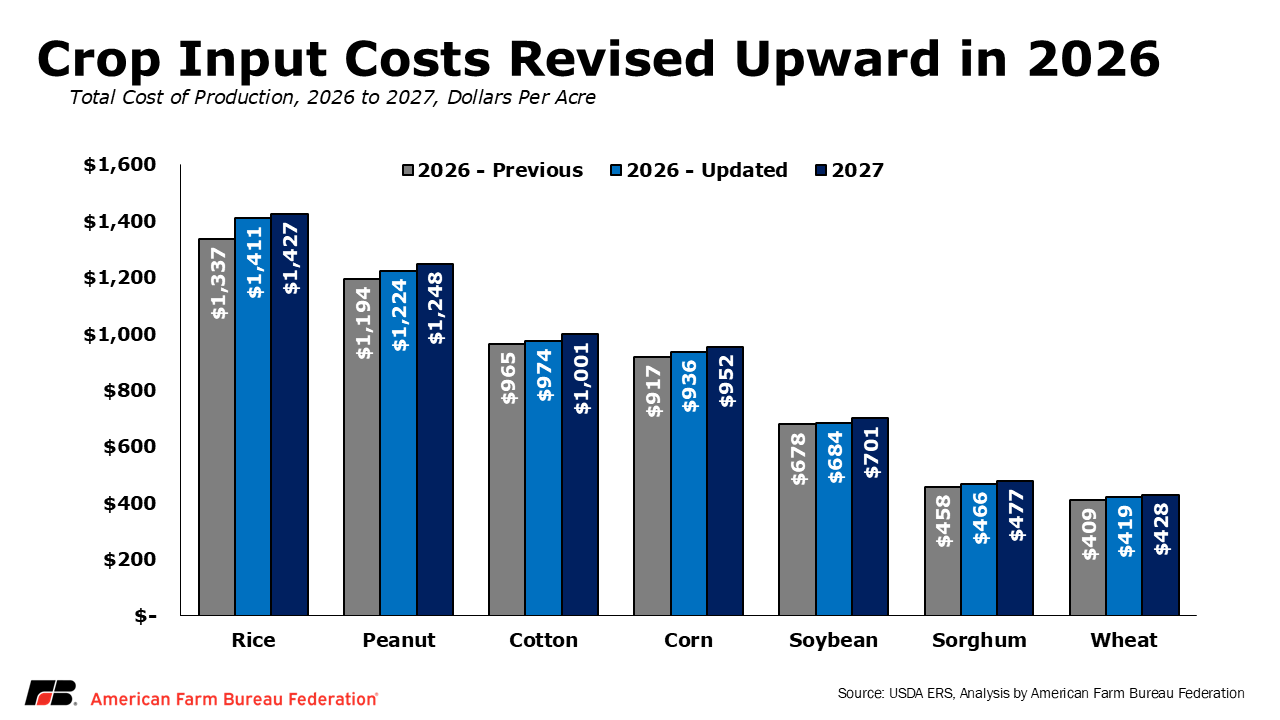
Compared to USDA's earlier 2026 projections, total production costs were revised higher for every major crop included in the report. Rice had the largest increase, with projected costs rising nearly $75 per acre (5.6%), followed by peanuts at nearly $30 per acre (2.5%) and corn at more than $19 per acre (2.1%). While the magnitude varies by crop, production expense forecasts for all major commodities increased in the updated outlook and are projected to climb even higher in 2027.
Fuel and Fertilizer Drive Cost Increases for 2026, Declining in 2027
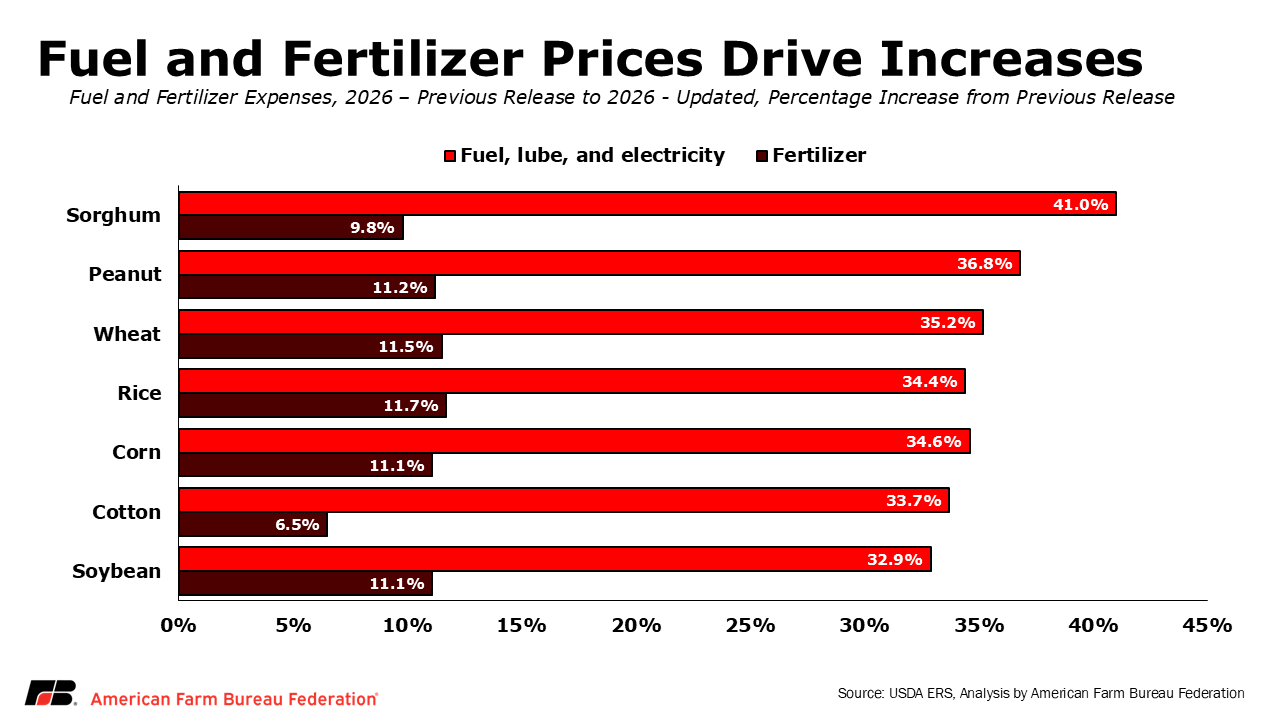
Much of the increase in USDA's updated cost estimates can be traced to higher fuel and fertilizer expenses. Compared to USDA's earlier 2026 projections, fertilizer costs were revised 9% to 13% higher across major crops, while fuel, lube and electricity expenses increased 33% to 41%.
Fuel costs represented the largest upward revision in the report. Projected fuel, lube and electricity expenses increased 41% for sorghum, 36.8% for peanuts and more than 34% for corn, wheat and rice. Fertilizer costs also moved sharply higher, increasing 11.7% for rice and more than 11% for corn, soybeans and peanuts.
However, the recent easing of tensions in the Middle East and the end of the Iran conflict could provide some relief to global energy markets. USDA does project that fuel and fertilizer prices will drop in 2027 as the Strait of Hormuz opens and resumes normal traffic. However, high production expenses in other categories and low commodity prices will likely continue weighing on the economic viability of farms. USDA will revise its forecast in November.
Not all cost categories moved higher in 2026. Seed and chemical expenses were revised lower for most crops, partially offsetting increases elsewhere. However, the magnitude of higher fuel and fertilizer costs outweighed those declines, resulting in cost increases for all crops covered in the report.
Bottom Line
The latest USDA projections highlight the challenges farmers continue to face as input costs remain elevated with historically low commodity prices. Production costs were revised higher for every major crop in 2026, driven largely by increases in fuel and fertilizer expenses. However, fuel and fertilizer costs are projected to decrease in 2027. Other categories will keep 2027 above record levels. At a time when commodity prices remain under pressure and margins are already thin, higher operating expenses will place additional strain on farm viability. Recent policy actions, including economic assistance for farmers and improvements to the farm safety net included in the One Big Beautiful Bill Act, provide important support, while continued progress on a new farm bill and other efforts to strengthen the farm economy could help producers amid ongoing market uncertainty.