Beef Production 101
TOPICS
Beef
Bernt Nelson
Economist
Cameron Castillo
Associate Economist
Key Takeaways
- The beef production cycle is a long-term process that takes several years to complete.
- Cattle farmers’ daily decisions affect the beef supply and prices for years to come.
- America’s beef cattle herd is at its lowest level since the 1970s, reflecting the years of depressed prices, high input costs and persistent drought conditions ranchers have faced.
Americans care about where their food comes from, how it’s raised and what it costs. That’s especially true today as beef prices remain near record highs.
What many people don’t realize is that beef on the grocery store shelves is the result of a production process that takes several years to complete. Along the way, farmers and ranchers are making important decisions that affect how much beef is available, which is a big factor in what consumers pay at the store.
Today’s higher beef prices are the result of challenges that have been building for years, including drought, rising production costs, and the smallest U.S. beef cow herd in more than five decades. Because cattle take time to raise, rebuilding the nation’s beef supply cannot happen overnight. This means that current events that factor into the decisions farmers and ranchers make today can have impacts on beef prices in the future.
To better understand why cattle herd numbers matter and how they affect grocery store prices, as well as how policy decisions can affect future beef supplies, it’s helpful to understand the entire production cycle.
Beef Production Cycle
The process begins when a cow gives birth to a calf. For the first several months of its life, the calf remains with its mother, nursing and grazing while receiving care from farmers. The calf is typically weaned (removed from the care of its mother) at 6 to 10 months of age, when it weighs between 500 and 700 pounds. At this stage, farmers have a big decision to make; they can either retain the calf for breeding or sell it to begin the beef production process. Approximately 70% of the cattle growers have calve in the spring, which means they are marketed in the fall.
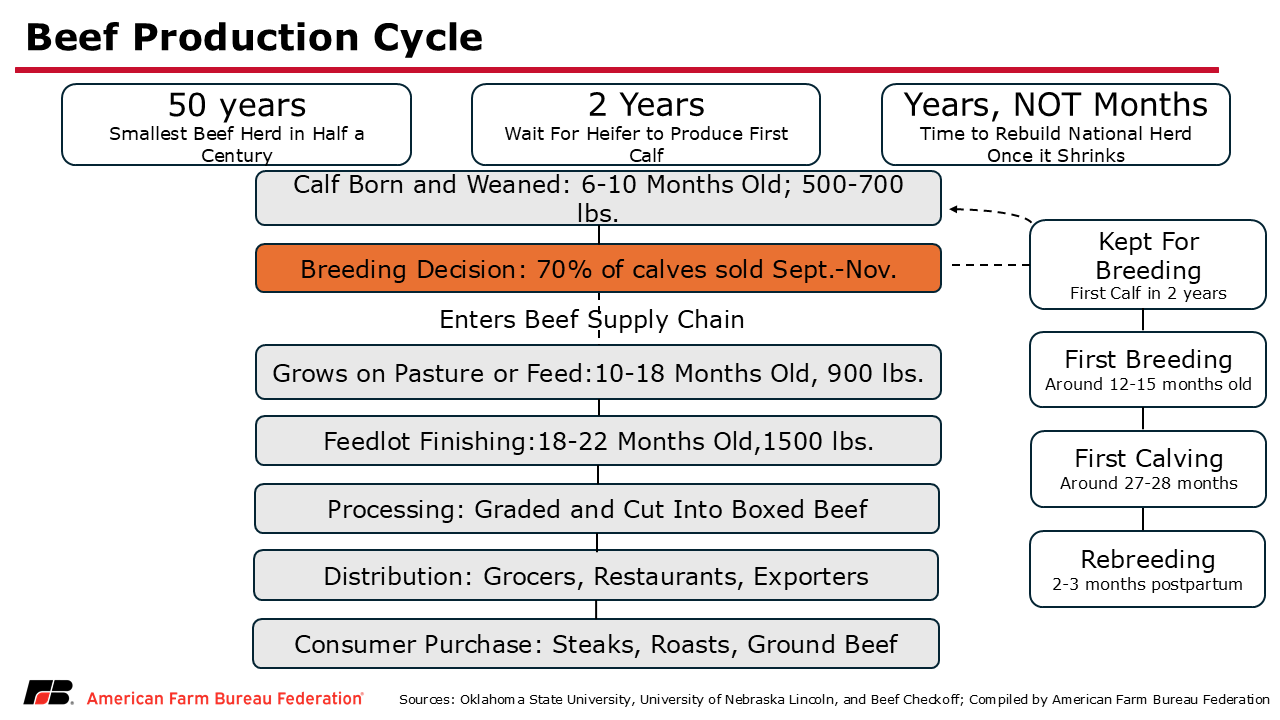
Option #1: Retain the calf for breeding purposes
By retaining the heifer (female) calf, the rancher chooses to expand their herd by way of the heifer’s future calves. In doing so, they forego any revenue they would have received from feeding that animal for beef production. Retention rates have dwindled in recent years due to ongoing drought and rising operating costs, driving ranchers to market their heifer calves for beef production rather than keep them for herd expansion.
At about 12-15 months of age, the heifer will be bred. Ranchers breed their heifers to bulls selected for a variety of genetic factors to maximize the beef production potential while also prioritizing the likelihood of a safe and healthy gestation (pregnancy) period. Once bred, it takes 283 days for a heifer to produce a calf. Once the calf is born, its mother (now considered a cow) will feed and care for it until it reaches its desired weaning weight. At that point, the rancher again decides whether to retain the calf for breeding purposes or market it for beef production. As for the cow, the rancher will typically opt to repeat the cycle, waiting about 85 days to breed her again to maintain a yearly calving interval.
A healthy, well-cared for beef cow can typically produce calves until they are roughly 10 years old. Once the cow reaches that age, the rancher will usually sell it to a feedyard or finishing operation, where it is then sold to a meatpacker for processing.
The retention of bull (male) calves for breeding purposes is less common, as ranchers typically seek to breed their heifers and cows on bulls from other herds. However, if a rancher raises and sells breeding animals with superior genetics (known as seedstock) to other ranchers, they might choose to raise the bull calf separate from their herd, with the hopes of marketing the bull’s semen to other beef operations for breeding purposes.
Option #2: Put the calf into the beef supply chain
If the farmer decides the calf will enter the beef supply chain, it will most likely be placed in a feedlot or on pasture to grow. As the animal develops, it gains weight to around 900 pounds over the next six to eight months, depending the animal’s weight when this step begins. At about 900 pounds and roughly 18 months of age, the animal is then typically finished in a feedlot where it receives a carefully balanced diet designed to support growth and high-quality beef. Today’s cattle are often raised to weights approaching 1,500 pounds before being marketed.
Once cattle reach the desired weight, farmers and ranchers sell them to meat processors (sometimes called packers). The beef is then graded for quality, processed into larger wholesale cuts, and shipped as boxed beef throughout the food system. From there, it moves to grocery stores, restaurants, food distributors and export markets around the world.
The final step is the one consumers see everyday. Beef is cut into familiar products such as steaks and roasts and turned into ground beef for sale at grocery stores and restaurants.
Summary
While this journey may seem straight forward, the decisions made along the way can change the beef supply for years. When drought, rising production costs or adverse market conditions cause ranchers to sell their cattle, it reduces the national herd size. The herd takes years to rebuild and can be a fragile process.
Ranchers can’t afford to risk investing in rebuilding their herd if there’s not at least a solid chance the investment will pay off. When cattle markets are highly uncertain or volatile, the risk is too great, discouraging ranchers from keeping cattle and rebuilding their herds. That’s why today’s beef prices reflect decisions and challenges that began several years ago.