Financing the Farm: A Look at USDA Farm Loan Programs

Faith Parum, Ph.D.
Deputy Chief Economist
Key Takeaways
- Farm bill credit programs help farmers and ranchers access financing when they cannot obtain sufficient credit through traditional commercial lenders.
- Access to credit is increasingly important as farmers face historically high production costs and multiple years of tight or negative margins.
- In fiscal year 2025, FSA obligated $6.74 billion across 27,792 farm loans, up 25% in dollars and 13% in the number of loans from fiscal year 2024.
- Beginning farmers accounted for 15,552 loans totaling $3.53 billion in fiscal year 2025, representing approximately 56% of all FSA farm loans and 52% of dollars obligated.
Farming requires significant capital. Producers pay for seed, fertilizer, feed, fuel and other inputs months and sometimes years before crops are harvested or livestock are sold. Buying farmland, machinery and other long-term assets often require even more financing.
Those needs are growing. USDA projects total production costs for major field crops to reach new highs in 2027. At the same time, commodity prices have not kept pace with expenses. This leaves farmers operating below break-even, or at a loss per acre. Higher costs and several years of weak margins can drain working capital and weaken farm balance sheets, making access to affordable credit increasingly important.
Most agricultural credit comes from private lenders, but not every producer can qualify for enough commercial financing. Beginning farmers may have limited equity or credit history, while established farms can face credit challenges after natural disasters, poor yields or several years of low returns. Title V, the credit titleof the farm bill, helps fill some of these gaps through farm loan programs administered by USDA's Farm Service Agency, or FSA.
How Farm Loan Programs Work
FSA provides credit in two main ways. Direct loans are made and serviced by FSA and generally serve farmers who cannot obtain sufficient commercial financing at reasonable rates and terms. Guaranteed loans are made by private lenders, with FSA guaranteeing up to 90% of most loans and up to 95% in certain cases. This reduces the lender’s risk and can help farmers qualify for financing.
Within those structures, FSA offers several types of financing.
- Farm Ownership Loans provide longer-term financing to purchase or enlarge farms, construct or improve buildings, make certain conservation improvements and cover other eligible real estate expenses.
- Operating Loans provides working capital for the ongoing costs of farming. Eligible uses can include seed, fertilizer, feed, livestock, fuel, equipment and other production expenses.
- Microloans provide smaller direct loans through a more streamlined application process. They provide another financing option for smaller farms, beginning producers and operations with more limited capital needs.
- Emergency Loans provide financing to eligible producers following qualifying natural disasters. They can be used to restore or replace essential property, cover certain production costs and help producers recover from disaster-related losses.
Together, these programs provide different pathways to credit depending on a producer's financing needs and ability to obtain private capital.
FSA Lending Increased Sharply in 2025
In fiscal year 2025, FSA obligated $6.74 billion across 27,792 farm loans, compared with $5.39 billion across 24,555 loans in fiscal year 2024. Total dollars obligated increased 25%, while the number of loans increased 13%. The average amount obligated per loan also increased, rising from approximately $220,000 in fiscal year 2024 to nearly $243,000 in fiscal year 2025.
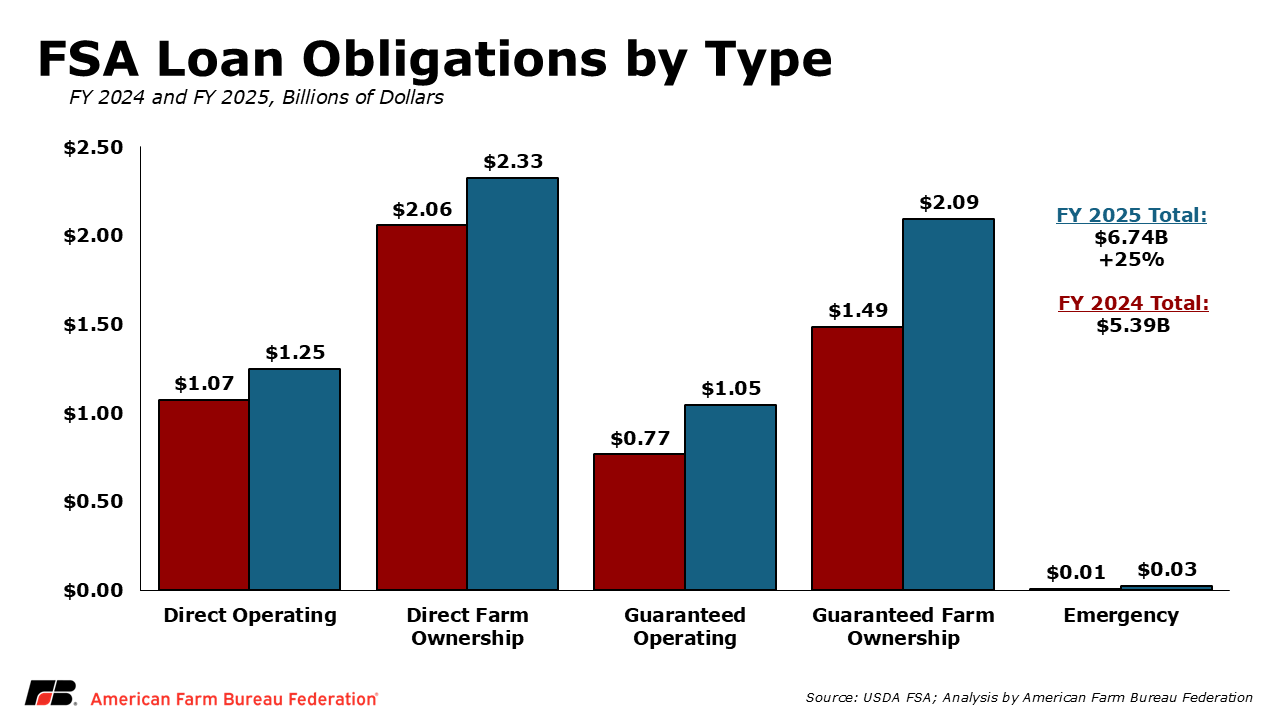
Farm ownership lending accounted for most of the dollars obligated. FSA provided $2.33 billion in direct Farm Ownership Loans and $2.09 billion in guaranteed Farm Ownership Loans. Combined, ownership financing totaled approximately $4.42 billion, or nearly two-thirds of all FSA farm loan dollars obligated during the year.
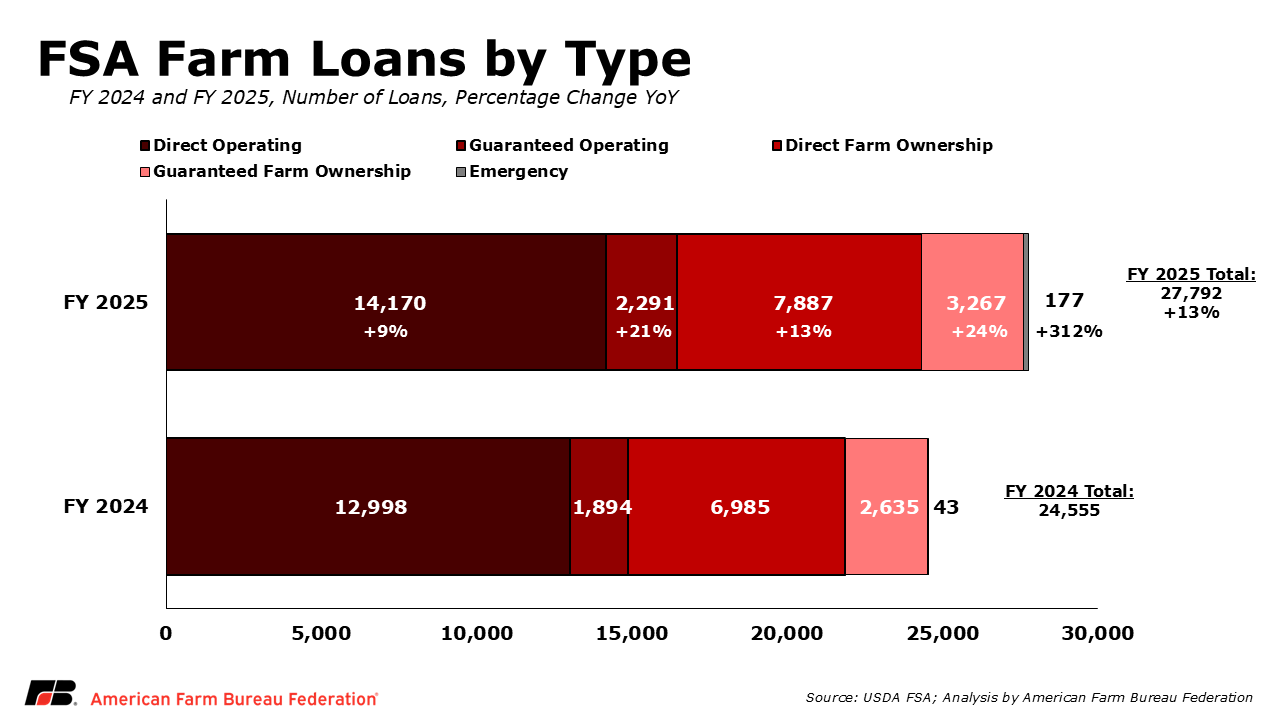
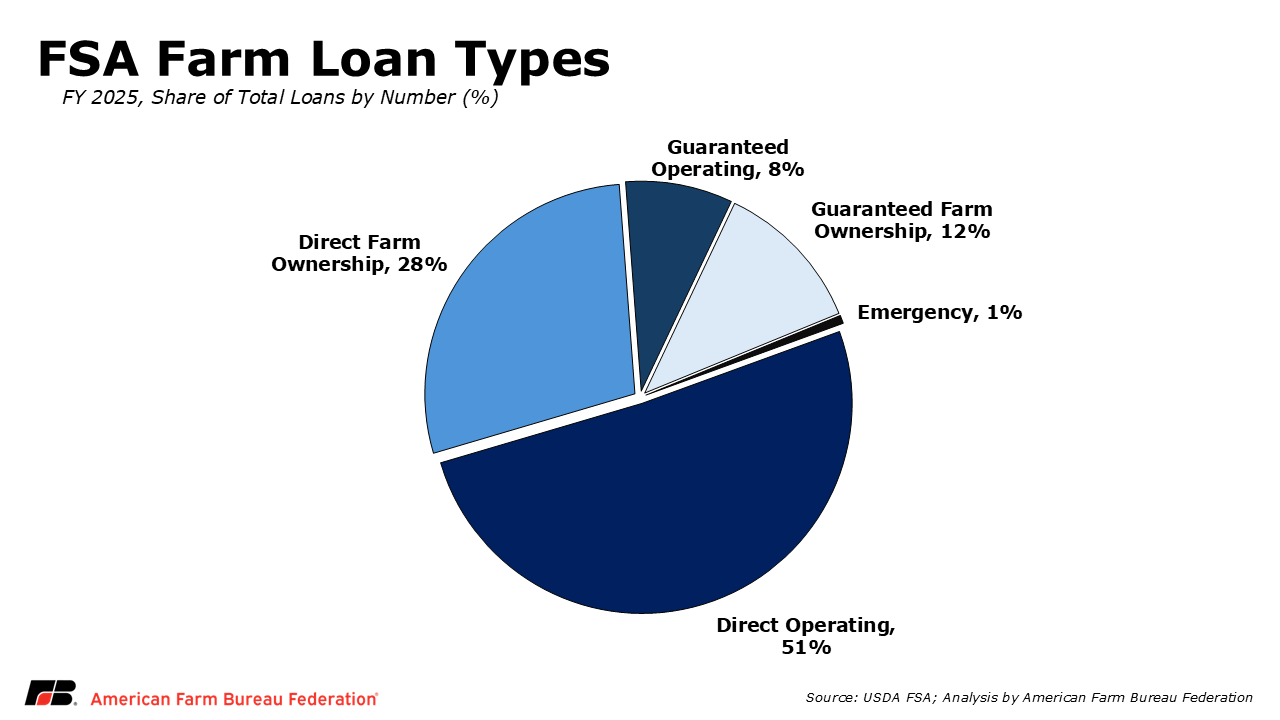
Operating loans, however, represented the largest share of lending by number. FSA made 14,170 Direct Operating Loans and 2,291 Guaranteed Operating Loans in fiscal year 2025. Combined, operating loans accounted for nearly 60% of all FSA farm loans.
Guaranteed lending experienced particularly strong growth. Guaranteed Operating Loan obligations increased 37% from fiscal year 2024, while Guaranteed Farm Ownership Loan obligations increased 41%. The number of guaranteed operating and ownership loans increased 21% and 24%, respectively.
Emergency lending remained a relatively small share of total FSA activity but increased sharply. Emergency Loan obligations rose from approximately $8.5 million in fiscal year 2024 to $26 million in fiscal year 2025, while the number of loans increased from 43 to 177.
Beginning Farmers Are Major Users of FSA Credit
FSA lending is especially important for beginning farmers, who often have less equity, fewer assets for collateral and shorter credit histories than established producers.
In fiscal year 2025, FSA obligated 15,552 loans totaling $3.53 billion to beginning farmers. They accounted for approximately 56% of all FSA loans and 52% of total dollars obligated. Beginning farmers were particularly active in direct lending, receiving about 55% of direct Operating Loans and 65% of direct Farm Ownership Loans. Farm ownership financing accounted for more than 70% of all FSA dollars obligated to beginning farmers, totaling approximately $2.51 billion.
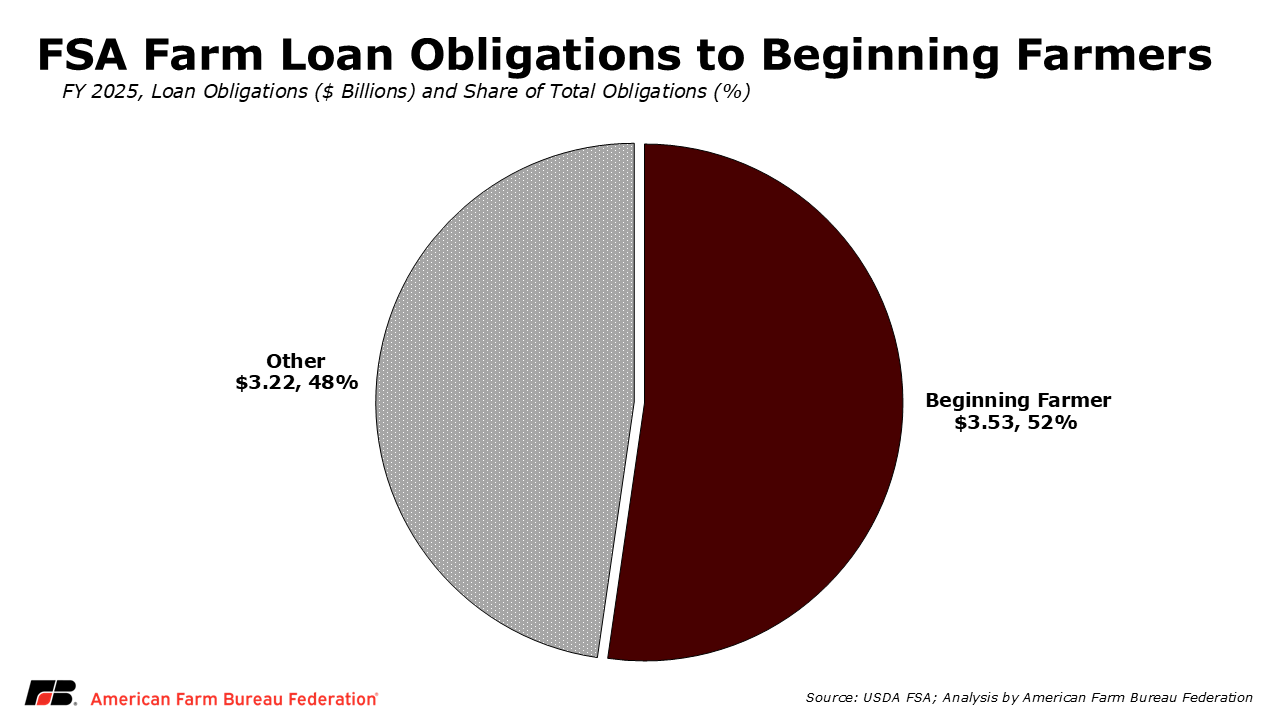
The data highlights the role FSA credit programs play in helping new producers establish operations. Veteran farmers also received 787 loans totaling approximately $141 million in fiscal year 2025. (Note, that borrower classifications can overlap.)
Rising Costs Put More Pressure on Existing Loan Limits
The 2018 farm bill increased direct Farm Ownership Loans to $600,000 and direct Operating Loans to $400,000, while establishing a $1.75 million statutory base for guaranteed ownership and operating loans, adjusted annually for inflation.
Since then, land values and production costs have risen substantially. USDA projects record-high production costs for several major crops in 2027, meaning existing loan limits will cover a smaller share of producers' capital and working capital needs.
The Agricultural Act of 2026 would significantly increase FSA loan limits:
- Direct Farm Ownership: $600,000 to $850,000
- Guaranteed Farm Ownership: $1.75 million statutory base to $3.5 million
- Direct Operating: $400,000 to $750,000
- Guaranteed Operating: $1.75 million statutory base to $3 million
- Microloans: $50,000 to $100,000
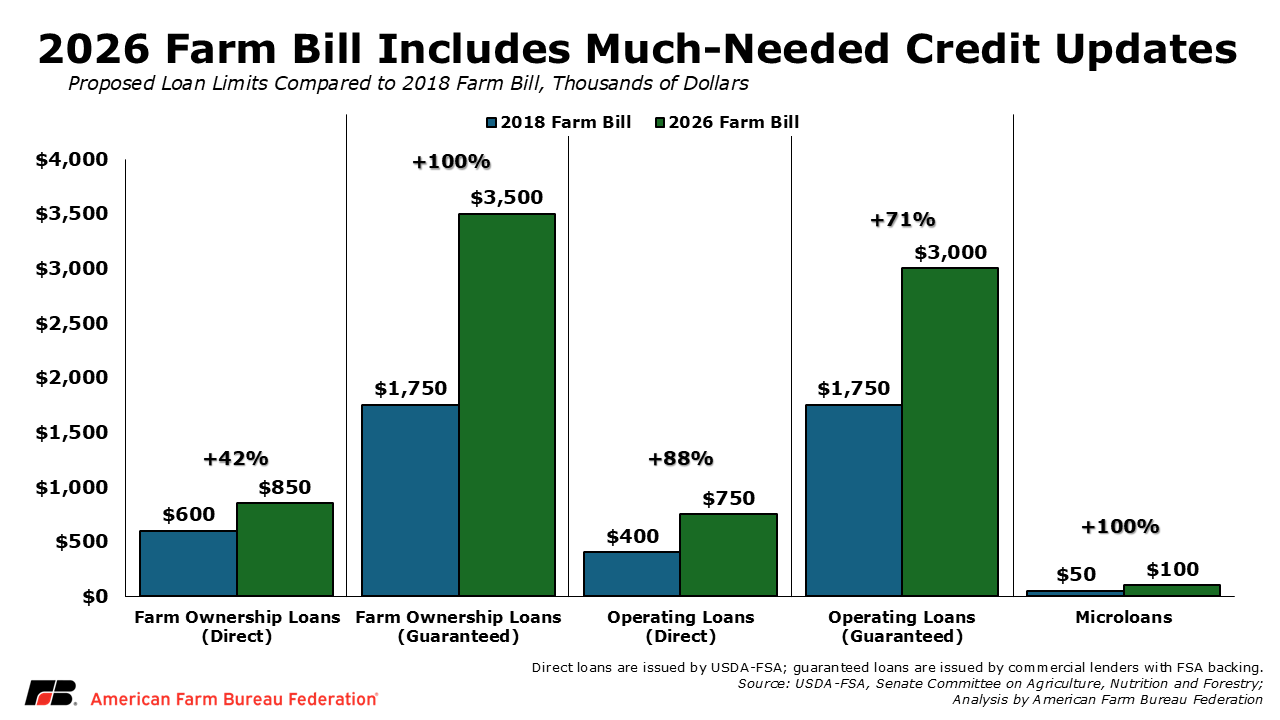
Higher ownership limits would provide more financing capacity for farmland and long-term assets, while higher operating limits would better reflect the growing working capital needed to cover annual production expenses.
The Bottom Line
Farm credit is essential to keep farms operating and investing for the future. Producers need financing to cover annual production costs and purchase land, equipment and other long-term assets, particularly when cash flow is tight.
FSA farm loan programs provide an important source of credit when commercial financing is not sufficient. In fiscal year 2025, FSA obligated nearly $6.75 billion, 25% more than the previous year, and beginning farmers accounted for more than half of all loans.
But the cost of farming has changed substantially since current loan limits were set. Record production expenses, higher land values and several years of tight margins mean those limits do not stretch as far as they once did. Updating the credit title in the next farm bill would help ensure ownership, operating and microloan programs better reflect the capital needs of today’s farm economy. For farmers trying to stay in business, expand an operation or get started in agriculture, access to adequate and affordable credit can be the difference between an opportunity and a closed door.