Increased Beef Imports Have Not Lowered Prices For Consumers

Bernt Nelson
Economist
Faith Parum, Ph.D.
Economist
Key Takeaways
- Record imports along with the suspension of the tariff-rate quota for beef trimmings have not lowered ground beef prices for consumers. In fact, American Farm Bureau analysis reveals that since the presidential proclamation, prices remained the same as before the tariff-rate quota changed in 30 of 41 tracked grocery stores across the U.S.
- The market fundamentals that raised beef prices have not gone away. Tight cattle supplies and strong consumer demand continue to support higher consumer beef prices.
- The August presidential proclamation directs USDA and USTR to monitor whether qualifying imported beef is sold at a discount and allows the quota expansion to be reconsidered if that price relief does not materialize.
In late August, President Trump issued a proclamation to temporarily expand the tariff-rate quota (TRQ) for lean beef trimmings by 300,000 metric tons or about 661 million pounds. Beef began entering the United States under the lower tariff rate on Sept. 1, 2026. The proclamation “encourages” grocery stores to sell the beef at a 25% discount, without any retailer commitments or enforcement mechanism.
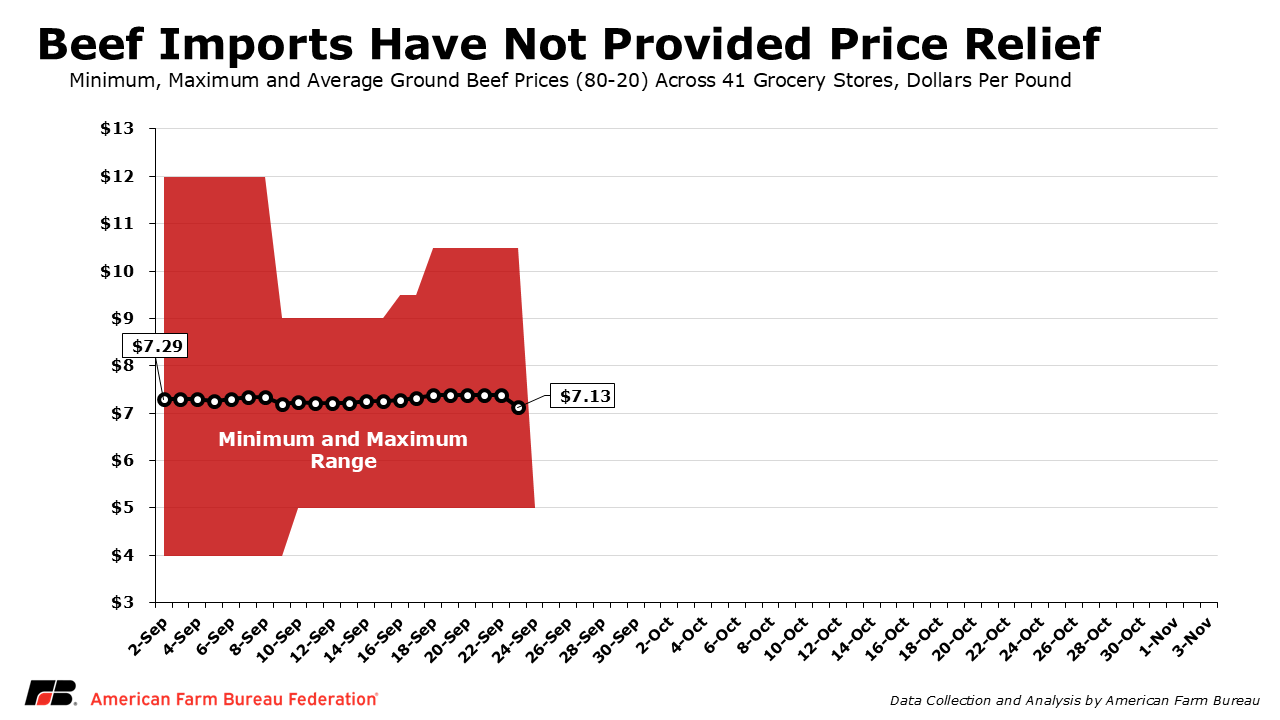
American Farm Bureau Federation tracked daily prices of 80% lean ground beef at 41 grocery stores in 22 states starting Sept. 2, the day after the proclamation went into effect. We selected a variety of chain grocery stores and independent grocers across America, in major cities to rural areas, to see how ground beef prices reacted to the additional supply of beef.
Across our sample, the average price of ground beef barely moved, going from $7.29 a pound on Sept. 2 to $7.13 a pound on Sept. 23 – a reduction of 16 cents or approximately 2%. The chart below tracks the lowest, highest and average price across all stores each day. The average line stays nearly flat for three weeks, never rising above $7.38 or falling below $7.13, even as lower-tariff beef entered the country.
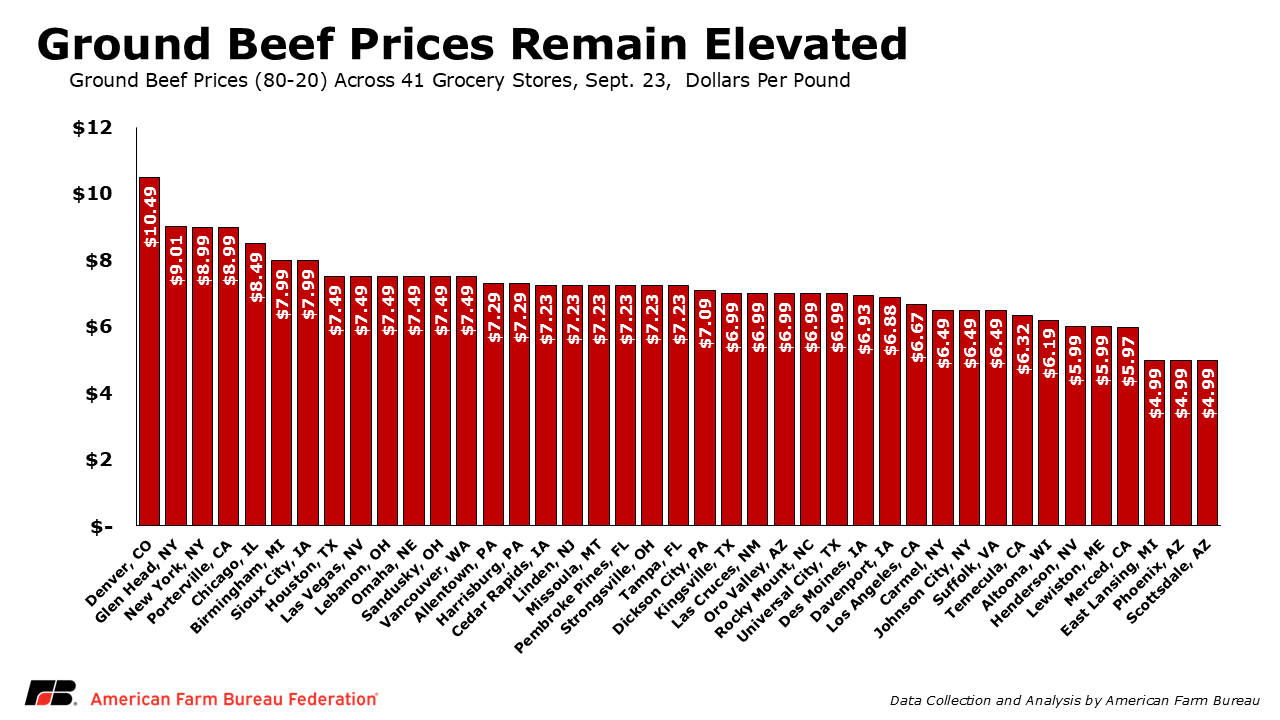
Prices across the 41 stores range from $4.99 to $10.49 per pound, and the typical store charges $7.23. More than half of the stores (22 of 41) charge above $7 per pound, and four charge close to $9 or more, in Denver; Glen Head, New York; New York City and Porterville, California. No store in our sample sells 80% lean ground beef for less than $4.99 a pound, and the lowest prices are found at just three stores, in Michigan and Arizona. Whether shoppers are in a major city or a rural community, they are still paying elevated prices for ground beef.
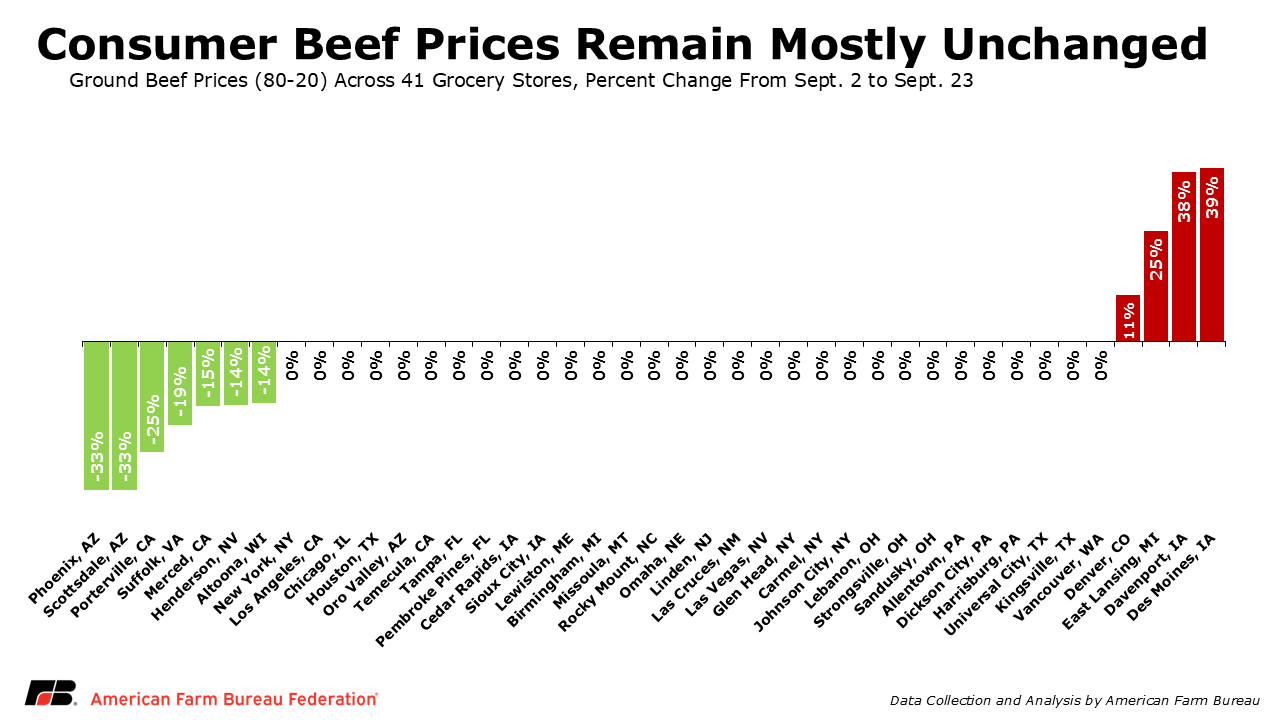
At 30 of the 41 stores, ground beef costs exactly what it did on Sept. 2. Some stores cut prices for a short time and then went back to their Sept. 2 price. Seven stores ended the period lower, but only three reached the 25% discount the proclamation encouraged. Prices rose at stores in four cities: Des Moines and Davenport, Iowa, up 39% and 38%, respectively; East Lansing, Michigan, up 25%; and Denver, up 11%.
Removal or expansion of the TRQ on ground beef does lower the tariff-related (26.4%) price of bringing that additional imported beef into the United States. This, however, has not translated into lower grocery store prices. Retail prices are based on costs throughout the supply chain. This includes cattle prices, but also processing, transportation, labor and retail margins. In fact, according to USDA’s Economic Research Service, U.S. ranchers only receive 3.3 cents per dollar spent on food in the grocery store after accounting for their costs.
What This Means for the U.S. Cattle Industry
Policies intended to increase imports under the assumption that they will bring down prices for consumers have yet to deliver meaningful savings at the meat counter while creating uncertainty for U.S. ranchers.
USDA's latest Cattle on Feed report highlights the reality that the industry’s challenge is not insufficient imports but a shrinking domestic supply of cattle. September feedlot inventories remain relatively high at 11.16 million head, but placements have fallen sharply as fewer calves move through the beef production pipeline. The U.S. calf crop is expected to be record low at 32.5 million head, 3.8 million head smaller than its peak in 2018, tightening feeder cattle supplies and limiting future beef production.
Ground beef prices have remained historically high despite record imports, while cattle and feeder cattle futures have moved sharply lower since the proclamation. Cash cattle prices in many regions have also fallen, with some farmers and ranchers reporting prices $300 to $400 per head below levels seen just two months earlier.
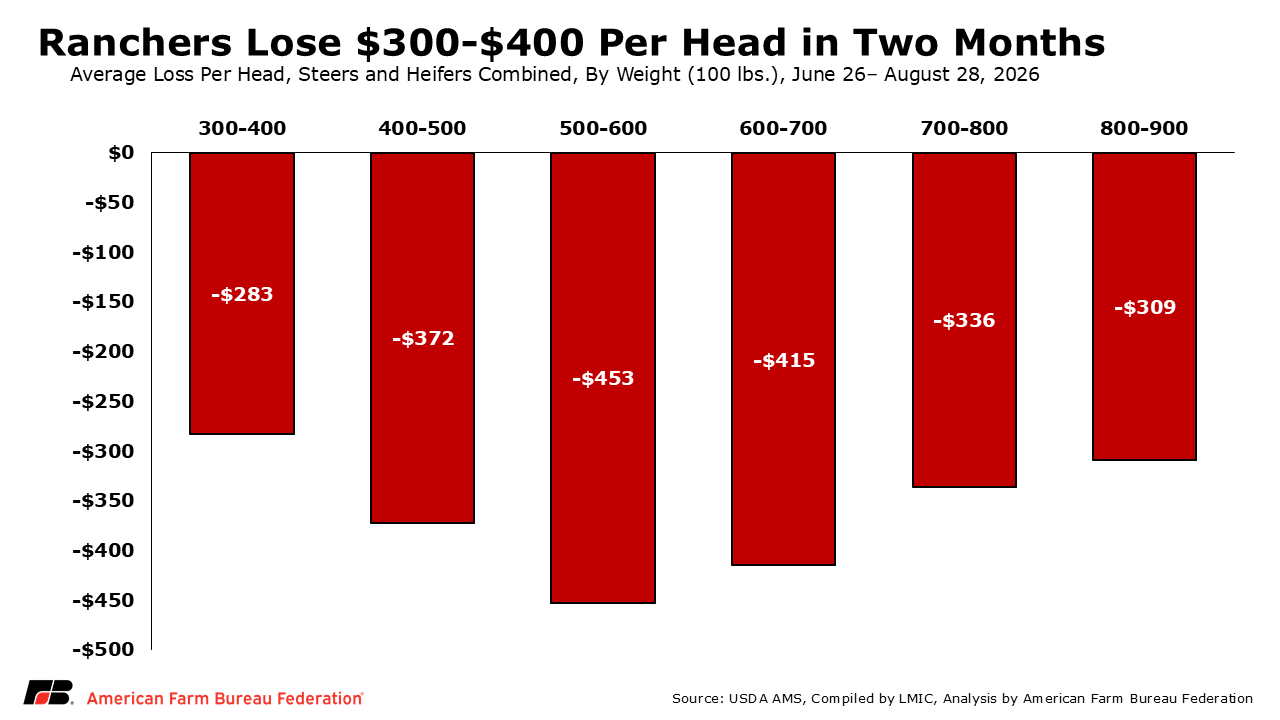
The result is imports are creating excess supplies but are incapable of lowering retail prices given the many business- and supply-chain-related decisions and interactions along the supply chain that moves beef from the farmer to the dinner plate. Meanwhile, lower cattle prices are discouraging the long-term certainty needed to grow the nation’s cattle herd and restore beef supply.
Ultimately the most sustainable path toward greater beef availability and improved price stability is not larger volumes of imported beef, but expansion of the U.S. cattle herd and growth in domestic beef production.
Conclusion
The expanded import quota was believed by some to bring relief at the meat counter. After three weeks of tracking 41 grocery stores, that relief has not materialized. At 30 stores, ground beef prices are unchanged, and the average price fell just 16 cents — far short of the 25% discount encouraged by the proclamation.
Meanwhile, cattle prices have weakened and ranchers are absorbing losses of up to $300 to $400 per head. Imports may help fill short-term supply gaps, but they do not address the underlying problem of a historically small U.S. cattle herd.
The proclamation allows the quota expansion to be reconsidered if savings are not reaching consumers and there is limited relief at the meat counter. The evidence is clear; the proclamation should be rolled back, and ranchers should have the opportunity to respond to free market signals and reduced regulatory burdens to rebuild our nation’s cattle supply.

