Thanksgiving Dinner Cost Ticks Upward in 2026
Associate Economist
Deputy Chief Economist

Cameron Castillo
Associate Economist
Faith Parum, Ph.D.
Deputy Chief Economist
Key Takeaways
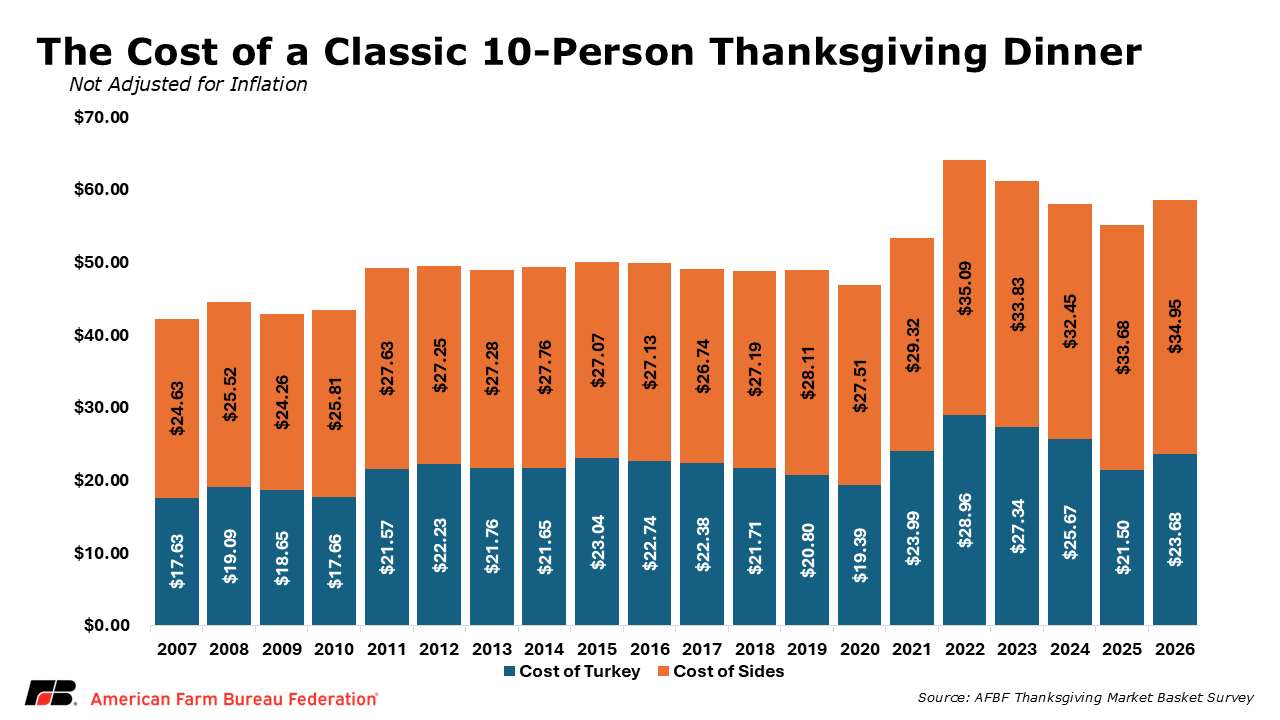
- Americans cooking a Thanksgiving dinner will face higher prices overall this year, with the cost of the average 10-person dinner increasing by 6% from 2025 to $58.63 per person.
- Despite the increase from 2025, the cost of this year's Thanksgiving dinner sits more than 8% lower than the record high experienced in 2022.
- The overall increase for 2026 is largely driven by increased prices for Thanksgiving staples such as turkey, milk, rolls and cranberries.
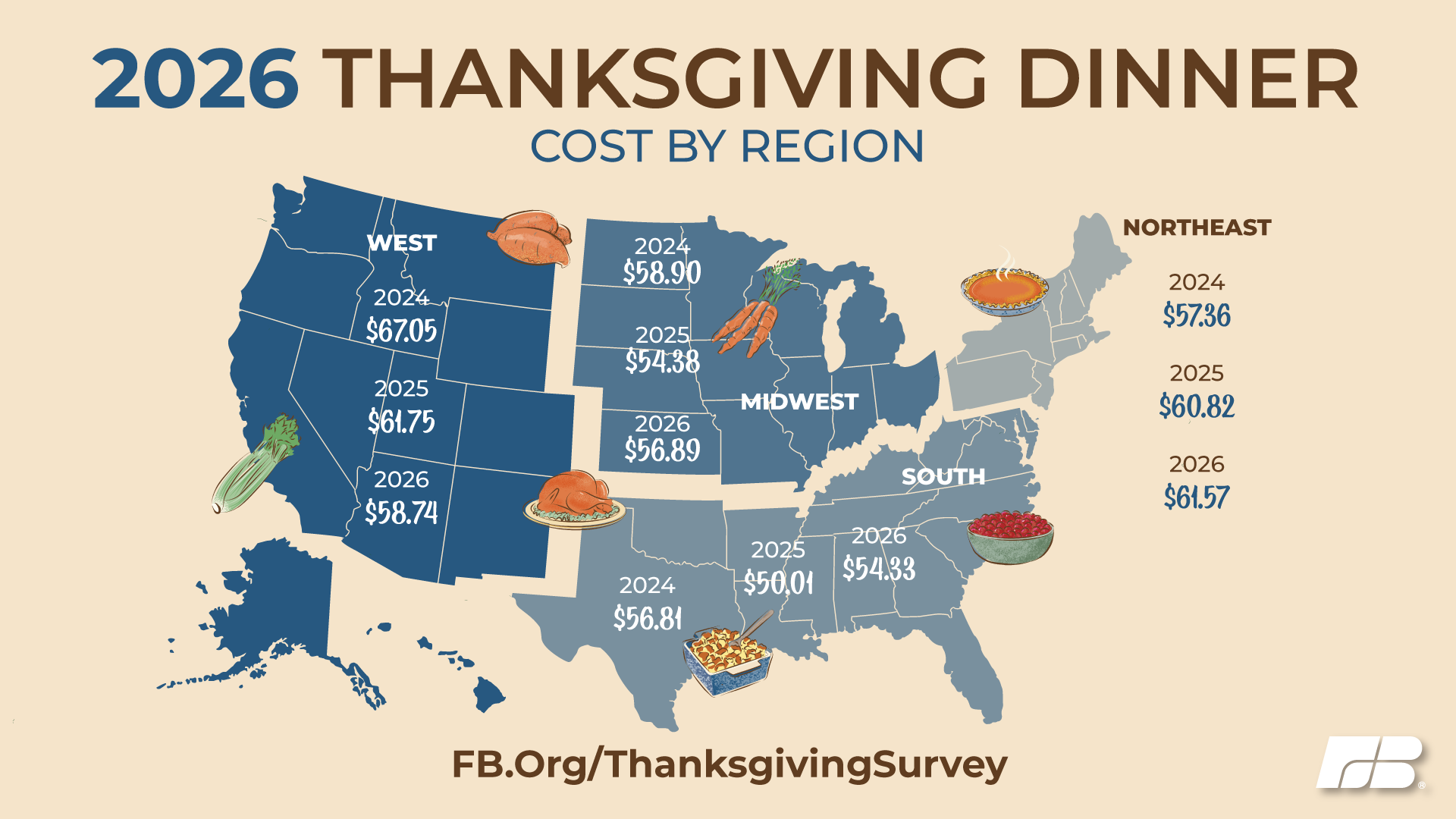
- Thanksgiving dinners in the Northeast are set to be the most expensive; while dinners in the South will again be the least expensive in the country.
For the first time since 2022, American shoppers will see an increase in the price of goods for Thanksgiving dinner. Results from the American Farm Bureau Federation's 41st annual Thanksgiving dinner cost survey indicate that the price of a Thanksgiving dinner for 10 people averages $58.63, up 6% from a year ago.
Over Four Decades of AFBF Thanksgiving Surveys
Each November, as millions of Americans prepare to gather with their family and friends to celebrate Thanksgiving, hundreds of volunteer shoppers from all 50 states and Puerto Rico participate in AFBF's annual Thanksgiving dinner cost survey. Every year since 1986, shoppers have reported prices for a standard list of items at their local grocery store for a variety of ingredients used to craft Thanksgiving favorites. Up until 2018, the survey included carrots, celery, cranberries, cubed stuffing, dinner rolls, frozen green peas, sweet potatoes, pumpkin pie mix, frozen pie crusts, whole milk, heavy whipping cream, and the ubiquitous American holiday staple: turkey. In 2018, AFBF added ham, frozen green beans and russet potatoes to better reflect the price of an all-American Thanksgiving meal.
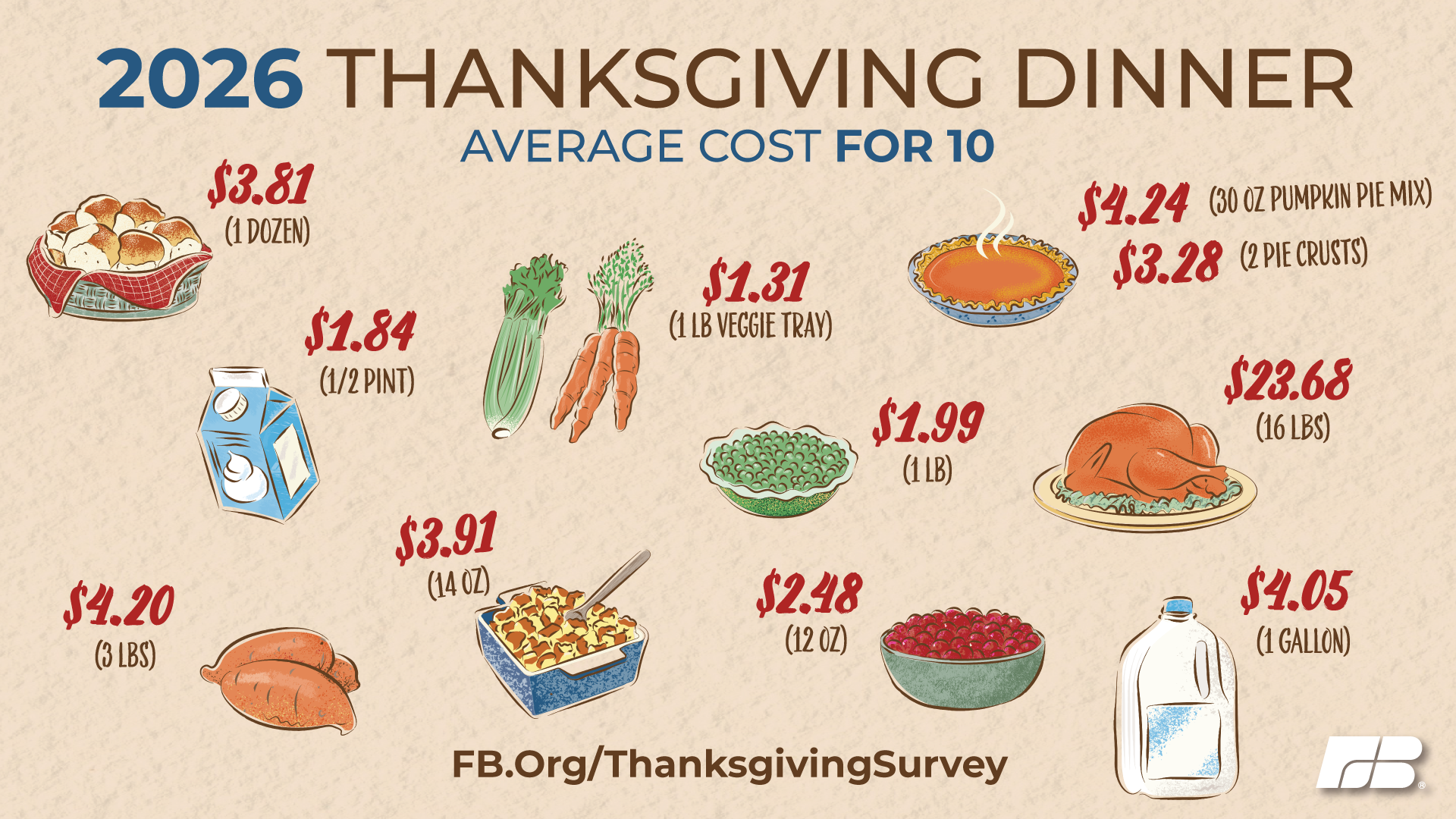
While the overall cost of Thanksgiving dinner ticked upward in 2026, prices for several items included in the survey decreased slightly from 2025. A vegetable tray containing celery and carrots posted the largest percentage decline in this year's survey, with a 3.7% decrease compared to a year ago. In terms of absolute dollar changes, frozen pie crusts had the sharpest decrease, posting a decrease of 9 cents compared to a year ago. The survey bodes well for pumpkin pie enthusiasts, who will enjoy a lower overall cost for their beloved dessert despite an increase in the cost of pumpkin pie mix, as heavy whipping cream is also cheaper in 2026 compared to last year.
Higher Prices for Several Thanksgiving Favorites
The overall cost of a 10-person Thanksgiving dinner increased for 2026, largely fueled by increases in items key to the Turkey Day menu. The most notable increase for 2026 is the turkey itself, with the average price of a 16 pound frozen bird being $23.68, an increase of $2.38 (10%) from 2025. As discussed in a recent Farm Bureau Intel, strong demand and tight inventories have led to increased prices for turkey in 2026.
Apart from turkey, other widely featured Thanksgiving items increased in this year's survey. Grocery store prices for boneless ham, milk, dinner rolls, sweet potatoes, russet potatoes, frozen peas, frozen green beans, cranberries, and cubed stuffing (known in some regions as “dressing”) all increased in 2026.
Higher prices for these items aren't a complete surprise, as the effects of significant spikes in prices for critical inputs throughout the supply chain, like fuel for processing and transportation, have made their way to consumers. America's farmers and ranchers also face significant challenges, with record diesel costs, elevated fertilizer prices, increased labor expenses, and a bigger bill for items like rent and electricity — all of which hurt their ability to breakeven at the end of the year. However, unlike wholesalers and retailers, farmers aren’t able to pass those costs up the supply chain
Thanksgiving Dinner Prices Vary Across the Country
At an average of $61.57 for a 10-person classic Thanksgiving dinner, the Northeast has the highest cost. The Northeast's dinner basket cost is about 5% higher than the national average. The average cost for a Thanksgiving dinner for 10 in the West and Midwest is closer to the national average, at $58.74 and $56.89, respectively. The South's average dinner cost is $54.33.
Some Shoppers May Find Great Deals
Despite the overall increase in the average cost of Thanksgiving dinner this year, some of our shoppers were able to find staggering deals on a variety of items, including turkey, which some shoppers reported finding for as low as 69 cents per pound, nearly half the average nationwide price for a pound of turkey. As Thanksgiving approaches, shoppers will look for deals on a variety of items to bring down the cost of their Thanksgiving dinner grocery list.
Higher Grocery Prices Do Not Mean Higher Farm Profits
Farm Bureau's 2026 Thanksgiving Dinner market basket survey indicates that Americans will pay more to feed family and friends this Thanksgiving. Nearly all items surveyed increased in price compared to 2025, with turkey, milk and cranberries posting some of the largest year-over-year percentage gains. However, higher grocery prices do not necessarily translate into better returns for America's farmers and ranchers.
Farmers and ranchers are largely price-takers, not price-makers, and receive only a small share of what consumers spend at the grocery store. USDA's Food Dollar Series estimates that less than 6 cents of every dollar spent on food goes back to the farm. Even when higher retail prices translate into increased farm revenue, rising production costs can quickly offset those gains. Elevated prices for critical inputs such as diesel, fertilizer and equipment continue to squeeze farm margins.
For example, this year's survey found that a 12-ounce bag of cranberries costs nearly 9% more than last year. That increase does not necessarily mean the Wisconsin cranberry farmer who grew them is receiving a higher price. Even if the farmer does capture some additional revenue, those earnings are needed to cover increased fertilizer, fuel and other production expenses.
As Americans gather around the Thanksgiving table, it's important to remember that higher food prices can place pressure on both consumers and the farmers who produce that food. Wherever and however you celebrate this Thanksgiving, take a moment to thank America's farmers and ranchers, who continue working through challenging economic conditions to provide the food, fuel and fiber we rely on every day.