The Farm Economy Has Changed Since 2018

Faith Parum, Ph.D.
Economist
Cameron Castillo
Associate Economist
This Farm Bureau Market Intel was written by American Farm Bureau Federation in partnership with the American Bankers Association, American Soybean Association, Farm Credit Council, National Association of Wheat Growers, National Corn Growers Association, National Sorghum Producers and USA Rice.
Key Takeaways
- The farm economy has changed significantly in the eight years since the 2018 farm bill was written.
- Farm production expenses have risen sharply, with higher interest rates increasing the cost of financing operations and capital purchases such as equipment and farmland.
- Farm debt continues to climb as producers finance increasingly expensive inputs and assets, while working capital has come under pressure.
- Higher farmland values have strengthened sector balance sheets, but rising land values and cash rents also increase the cost for beginning farmers or farmers who want to expand.
- These trends reinforce the need for farm policy that reflects the current costs, risks and capital requirements of agriculture rather than those of nearly a decade ago.
The 2018 farm bill was written for a very different farm economy. Since then, farmers and ranchers have navigated a global pandemic, supply chain disruptions, historic inflation and rapidly rising interest rates, resulting in a substantial increase in the cost of producing food, fiber and fuel.
While commodity prices have increased at times, those increases do not cover the cost of production. Across several key measures, agriculture has become substantially more expensive and capital intensive since 2018.
Production Costs Outpace Commodity Prices
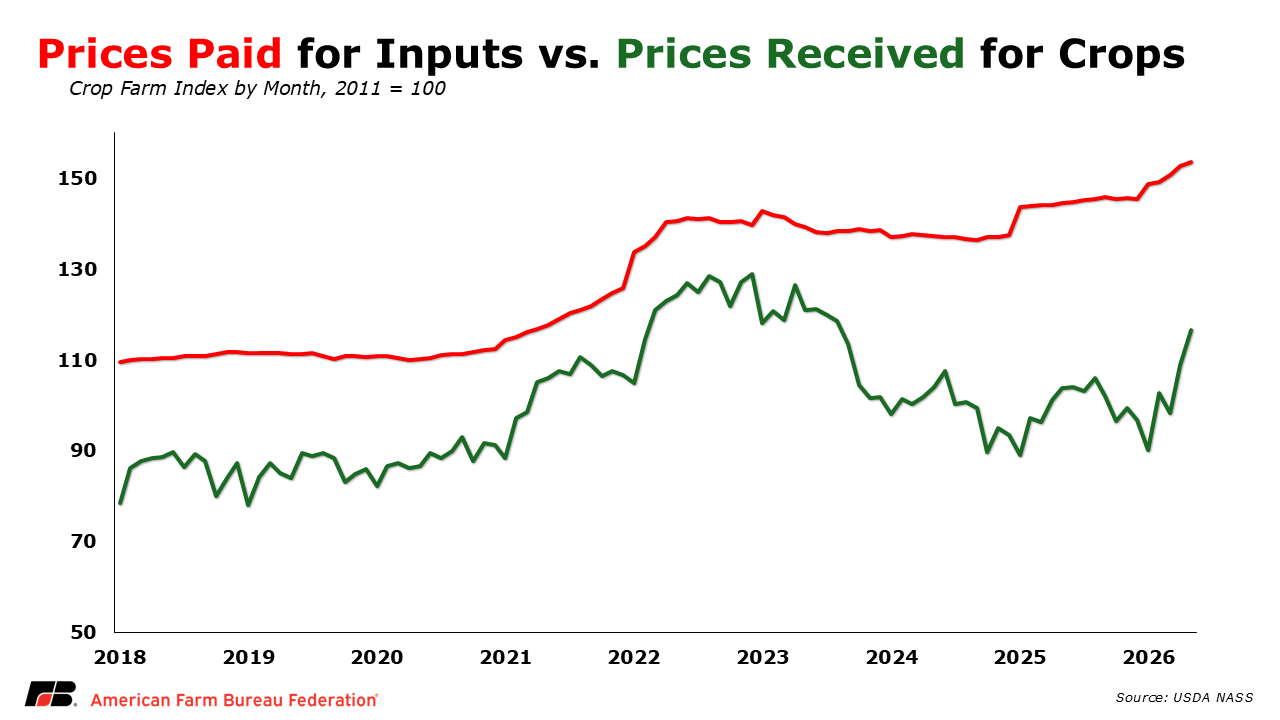
One of the clearest measures of the changing farm economy is the relationship between the prices farmers receive for their products and the prices they pay for what they need to grow their crops. For crop farms, USDA’s prices paid for production inputs index stood at 110.8 in July 2018 and reached 153.4 in July 2026, an increase of more than 38%. Over the same period, the prices received for crop products index increased from 86.5 to 107.0, a gain of about 24%. This widening difference helps explain why higher commodity prices do not necessarily mean stronger margins. When input costs rise faster than the value of what farmers sell, break-even prices increase and producers have less room to absorb market declines or unexpected expenses. Productivity gains can offset some of these higher costs for growers able to increase yields, while producers facing lower yields experience even greater margin pressure.
Production Expenses Are Nearly $150 Billion Higher
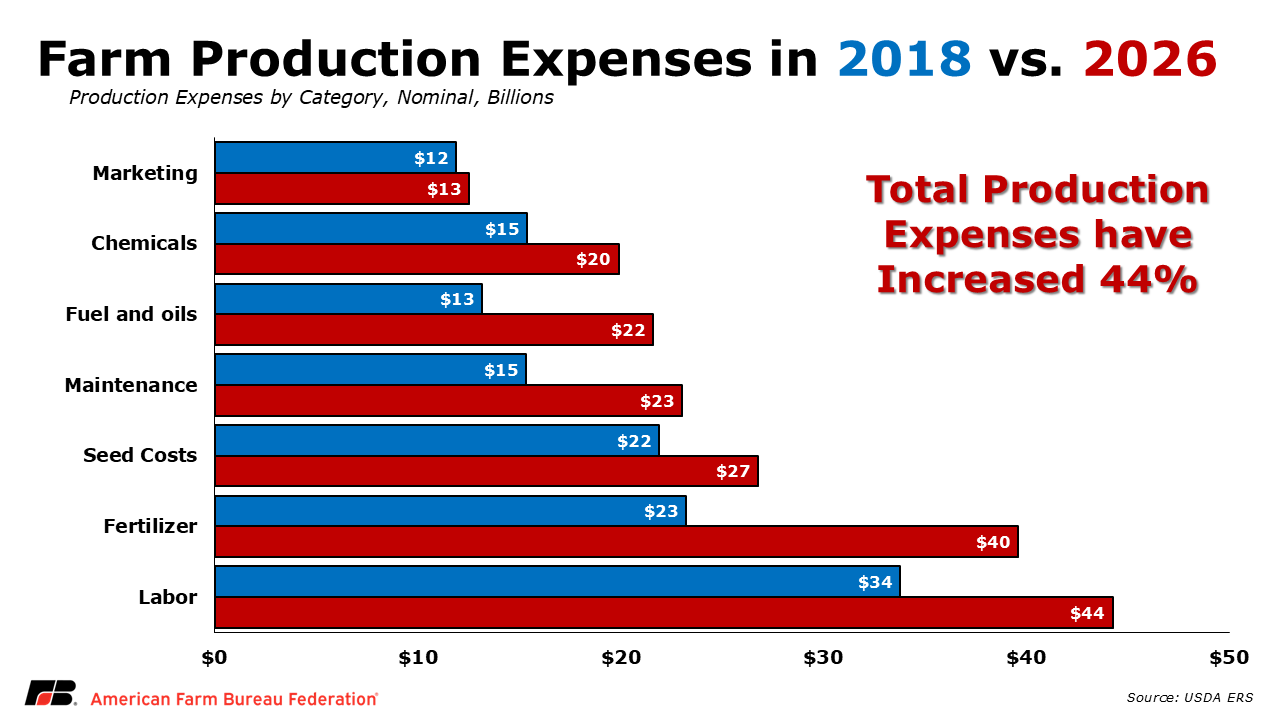
The overall cost of operating a farm has risen sharply since the 2018 farm bill was enacted. In nominal terms, total U.S. farm production expenses increased from approximately $343 billion in 2018 to a projected $492.8 billion in 2026, an increase of nearly 44%, or about $150 billion.
Even after accounting for inflation, production expenses remain substantially higher. Measured in 2026 dollars, expenses increased from approximately $445.6 billion in 2018 to $492.8 billion in 2026, a real increase of more than $47 billion, or nearly 11%.
Higher expenses are spread across nearly every part of the farm budget. Fertilizer, fuel, labor, machinery and other costs have all contributed to the increase. The result is that producers need substantially more capital today simply to plant a crop, raise livestock and maintain normal operations.
Farm Debt has Increased About 50%
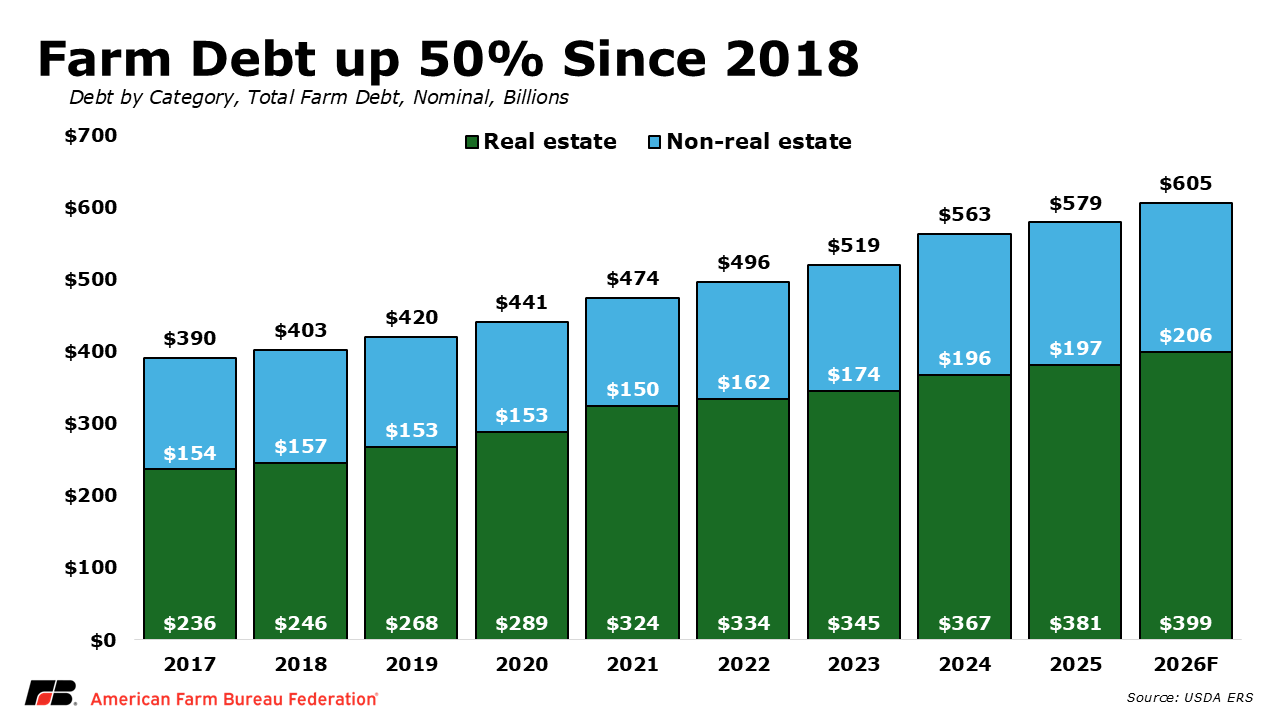
Farm debt has continued to grow alongside those higher capital needs. Total farm sector debt stood at approximately $402.6 billion in 2018 and is forecast to reach $605.1 billion in 2026, an increase of about 50%. USDA expects both real estate and non-real estate debt to increase in 2026.
Debt itself is not necessarily a sign of financial weakness. Agriculture requires substantial investment; Farmers borrow to finance land – often the largest share of a farm’s assets, equipment and operating expenses. But the combination of more debt and higher interest expenses increases debt-servicing requirements and leaves producers more exposed when margins tighten.
Interest Expenses Have Increased More Than 60%
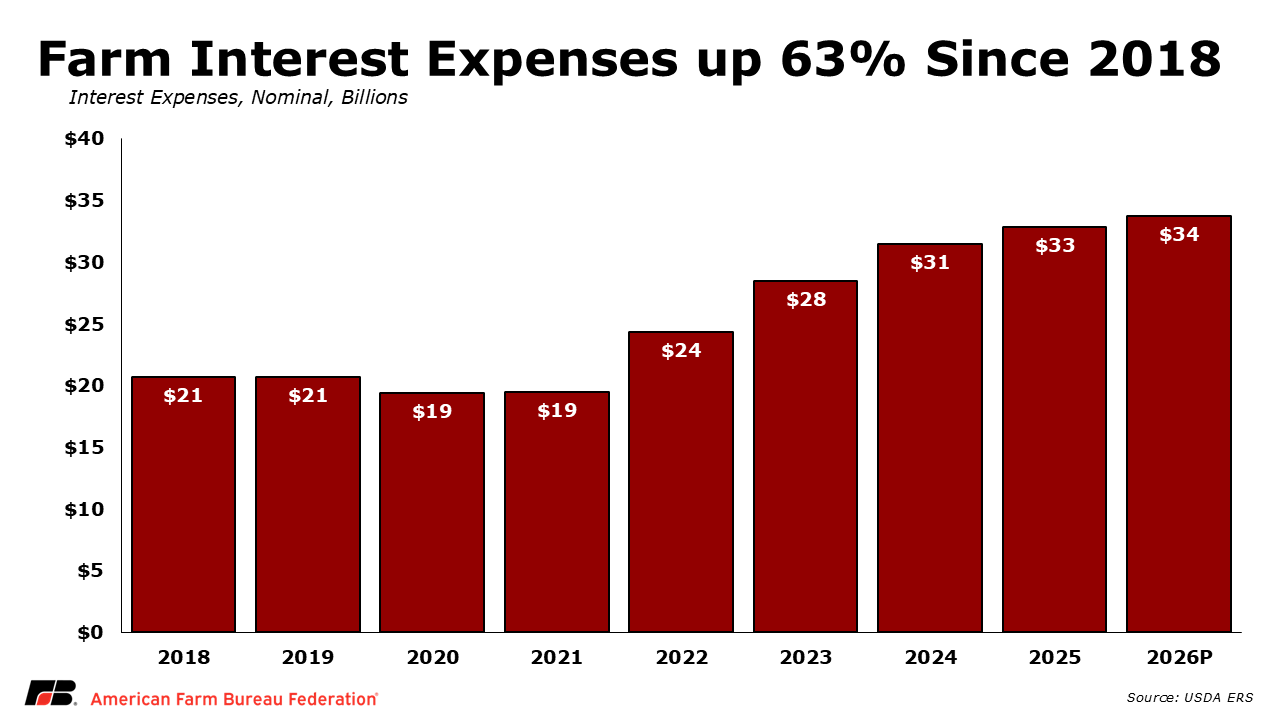
It’s not only more costly to operate a farm or ranch, it’s also more expensive to borrow money to finance those operations. Higher operating costs have coincided with a much more expensive borrowing environment. Farm sector interest expenses increased from approximately $20.7 billion in 2018 to a projected $33.8 billion in 2026, a nearly 63% increase. Farming is a capital-intensive industry, and producers regularly depend on credit to finance land, equipment and annual operating expenses. The increase in interest expenses reflects more than higher interest rates; rising land, equipment and operating costs have also increased producers’ borrowing needs. Together, larger loan balances and higher rates have made financing substantially more expensive.
Land Values Have Risen Nearly 46%
Farmland values have been one of the strongest parts of the agricultural balance sheet. Average U.S. cropland values increased from approximately $4,130 per acre in 2018 to $6,020 per acre in 2026, an increase of nearly 46%. USDA also estimates average farm real estate values reached $4,500 per acre in 2026.
For landowners, rising values increase equity and can strengthen borrowing capacity. But land is not a particularly liquid asset and higher land values can make a farm look stronger on paper without necessarily providing the cash needed to cover operating expenses or service debt. Rising values also make it more expensive for beginning farmers to enter agriculture and for existing operations to expand.
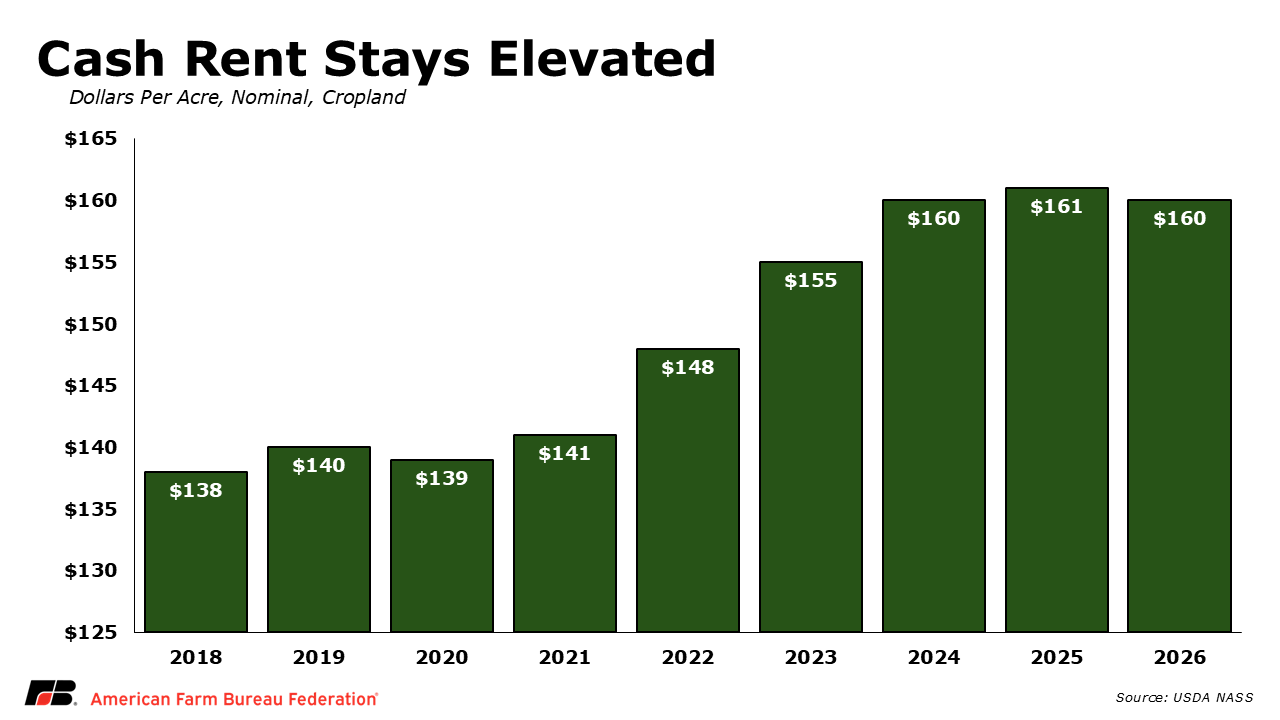
Cash rents have moved higher as well. Average U.S. cropland cash rent increased from about $138 per acre in 2018 to $160 per acre in 2026, roughly a 16% increase. Higher rents represent another fixed expense that must be covered regardless of commodity prices or yields.
Farmers Need a Farm Bill
The farm economy has changed substantially since Congress enacted the 2018 farm bill. Total production expenses are nearly 44% higher, interest expenses have risen nearly 63%, farm debt has increased about 50%, and cropland values have climbed nearly 46%.
At the same time, prices paid by crop farmers to grow crops have risen considerably faster than prices received when selling crops. Strong land values have helped support farm balance sheets, but they do not eliminate the cash flow challenges created by higher operating costs, borrowing expenses and break-even prices.
The result is an agricultural economy that requires significantly more capital to operate than it did in 2018. Farmers need a modernized farm bill that reflects the costs, risks and financial realities they face today rather than those that existed nearly a decade ago. Congress must pass a five-year farm bill this year to deliver support to farmers and ranchers across the country who produce the food, fiber and fuel for America’s families.