Turkey Farmers Recovering From Two Years of Losses

Bernt Nelson
Economist
Key Takeaways
- The U.S. turkey industry is recovering, with turkeys raised and production increasing for the first time since recent disease-related losses reduced supplies.
- Stronger domestic consumption, growing exports and lower cold storage inventories have improved returns for growers.
- Disease continues to challenge turkey growers, impacting flock performance and posing ongoing biosecurity risks.
- Higher feed costs and expanding turkey production could create headwinds for turkey growers in 2027 even as demand remains firm.
After two years of shrinking supplies, the U.S. turkey industry is showing signs of recovery. More birds are being raised, production is increasing and demand remains strong in both domestic and export markets. Those factors have helped support turkey markets and improve returns for growers. However, disease challenges and higher feed costs continue to create uncertainty as the industry works to rebuild.
Supplies & Production
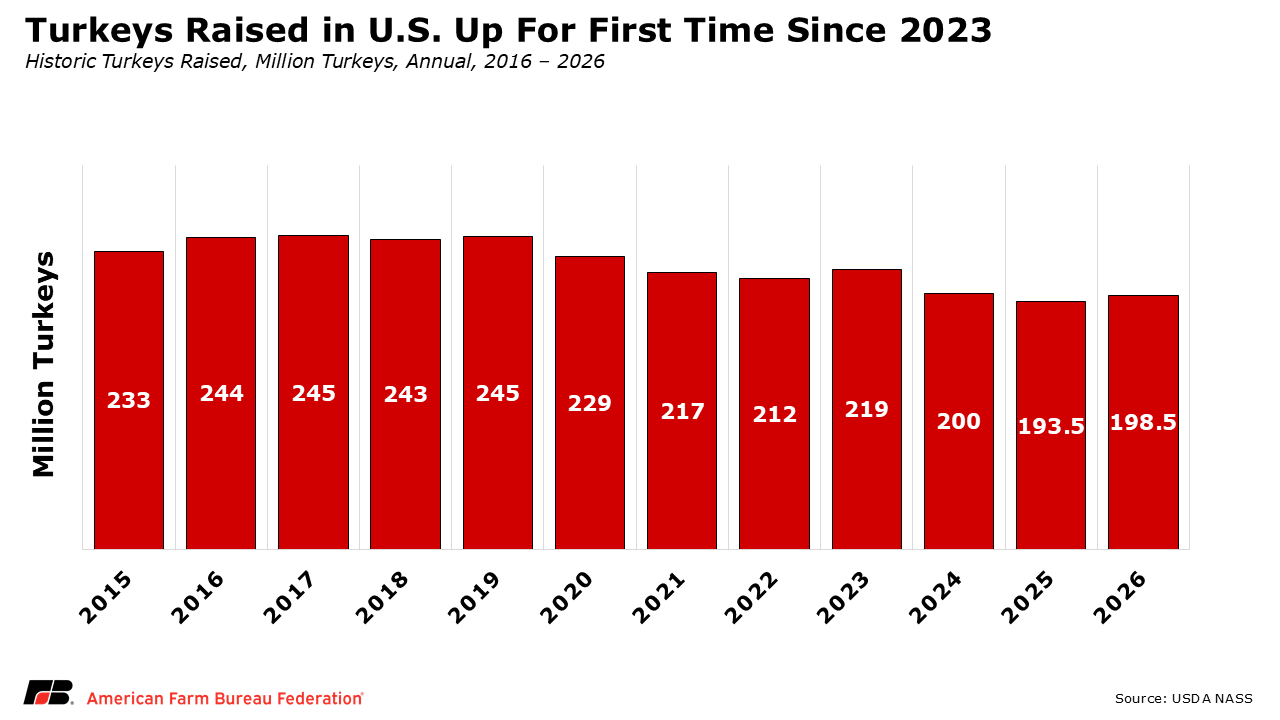
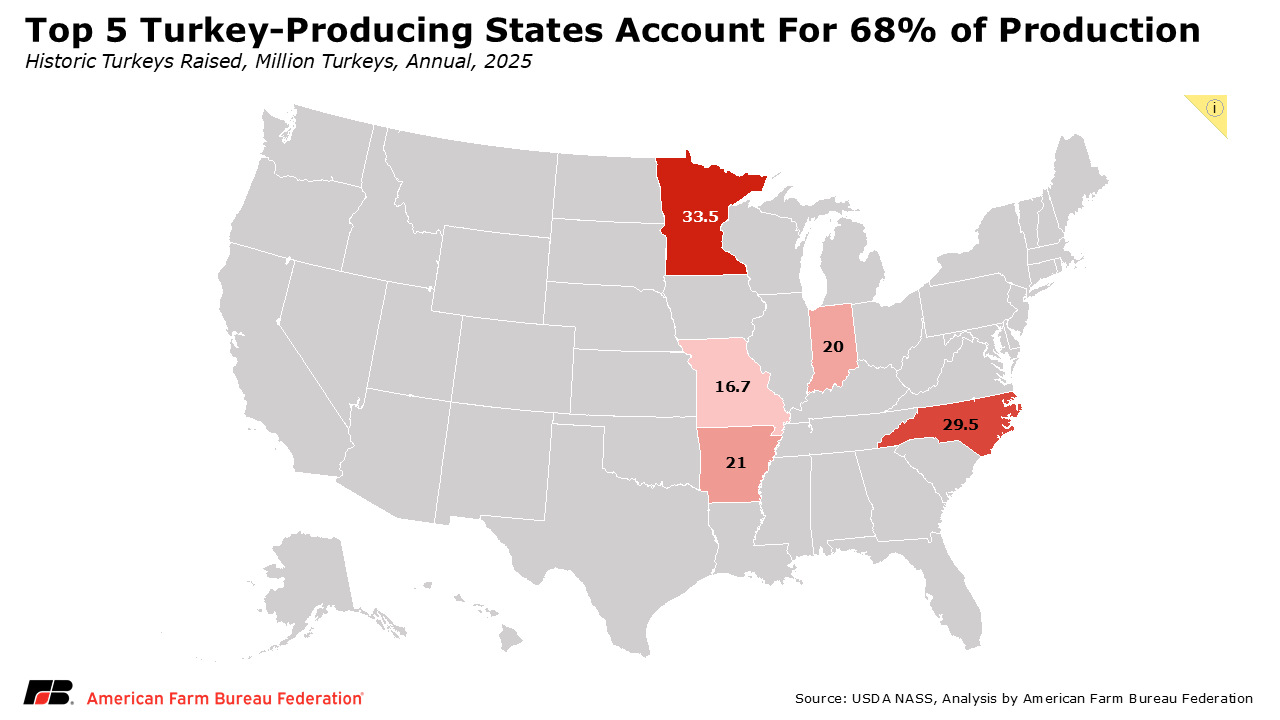
USDA’s Turkeys Raised report estimates U.S. turkey farmers raised about 198.5 million turkeys in 2026, up 5 million birds, or about 3%, from 2025. This marks the first increase in the number of turkeys raised since 2023. Minnesota, North Carolina, Arkansas, Indiana and Missouri accounted for about 68% of all turkeys raised in 2026.
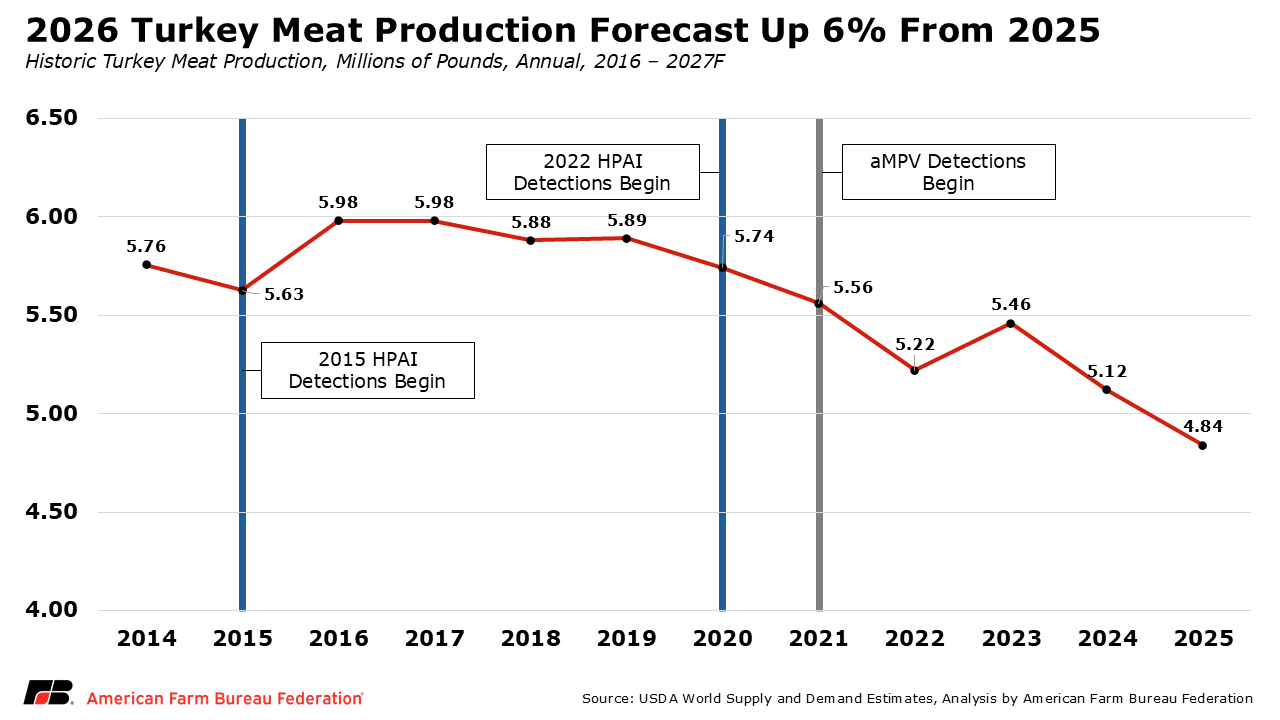
USDA’s October World Agricultural Supply and Demand Estimates (WASDE) projects 2026 federally inspected turkey meat production will be 5.13 billion pounds, up about 290 million pounds, or 6%, from 2025. Production for 2027 was estimated higher at 5.18 billion pounds, up 46 million pounds, or less than 1%, from USDA’s 2026 estimates. While production is recovering, it’s still lower than the 5.46 billion pounds produced in 2023, before multiple diseases issue began adding substantial challenges to the U.S. turkey industry.
Demand & Trade
Turkey demand remains firm in both domestic and international markets. USDA’s latest WASDE estimates 2026 turkey use is about 4.7 billion pounds, up about 4% from 4.59 billion pounds in 2025.
USDA’s October WASDE report also projects 2026 turkey exports will be about 461 million pounds, up 20 million pounds, or 4.5%, from last month’s estimate and up nearly 10% from last year.
As the world’s largest grower and exporter of turkey, the United States relies on export markets to balance supplies and add value to products with limited domestic demand. According to USDA’s Foreign Agricultural Service, Mexico remains by far the largest market for U.S. turkey exports, importing nearly 40 times more turkey than Canada, the second-largest customer. Through August 2026, exports to Mexico were up 6.4% from a year earlier.
Growing domestic consumption and strong exports have reduced turkey inventories, despite rising production. USDA’s October Cold Storage report estimates there were nearly 360 million pounds of turkey in cold storage on Sept. 30, down about 4.5% from 2025 and down nearly 16% from 2024.
Prices
Strong demand and relatively tight inventories have helped support turkey prices despite rising production. USDA Economic Research Service’s (ERS) October Livestock, Dairy, and Poultry Outlook projects wholesale prices for turkey to remain strong through 2026. The annual average wholesale price for frozen whole hen turkeys is forecast at $1.76 per pound, up 30% from 2025 and nearly 88% above the 94 cents per pound average in 2024. This dramatic price increase over the last two years was largely driven by lower production due to the combined disease pressures of Highly Pathogenic Avian Influenza (HPAI) and avian metapneumovirus (aMPV). While wholesale turkey prices are expected to remain elevated in 2026 compared to recent years, USDA projects prices to moderate in 2027, with average wholesale prices at $1.45 per pound, roughly 18% below 2026 levels.
Wholesale turkey prices provide an important market signal, but they do not necessarily reflect what turkey growers are paid. Because the turkey industry is highly integrated, farm-level price data is limited. One of the few publicly available measures comes from USDA’s National Agricultural Statistics Service, which reported growers received an average of $090 cents per pound in 2025, up 60% from 2024. Economists can use the Federal Reserve Bank of St. Louis Producer Price Index for slaughter turkeys to gauge more recent trends. That index suggests growers received the equivalent of roughly $1.39 per pound in 2026, about 21% higher than 2025.
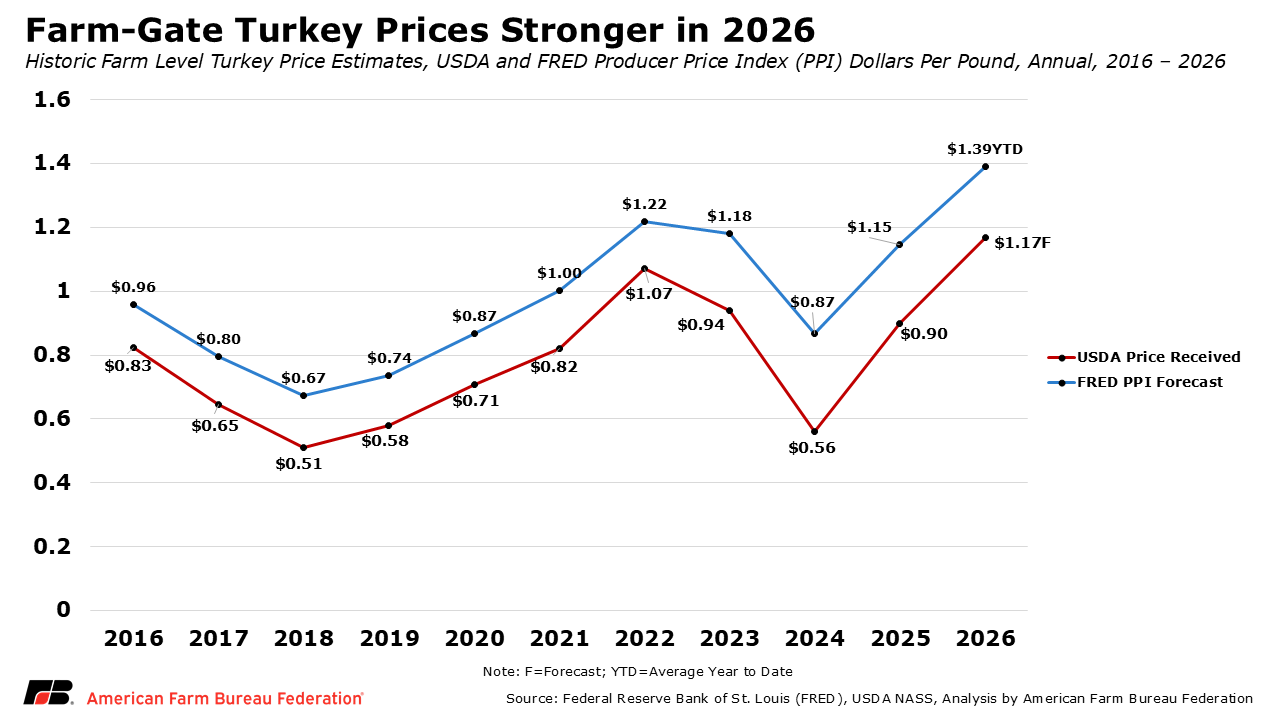
Available indicators suggest growers experienced some of the strongest returns since disease challenges began affecting the industry in 2022. However, those improvements in grower returns do not necessarily translate into higher prices at the grocery store. Grocery store turkey prices are influenced by retailer promotions and local market conditions, particularly during the Thanksgiving season. As a result, changes in wholesale and farm-level prices may not be fully reflected at the checkout counter.
What is Squeezing Margins?
Feed is the largest single cost of production. On average it takes about 75-80 pounds of feed to raise a 38-pound tom turkey, with feed accounting for roughly two-thirds of the total cost of raising a market bird.
Although ERS projects overall feed expenses to decline in 2026, feed markets remain volatile. USDA’s October WASDE estimates the average farm price of corn at $4.70 per bushel, up 13% from 2025, while soymeal is projected to average $340 per ton, up 4.5% from last year. While both commodities have come down from their September highs, prices remain above last year’s levels.
Higher feed costs are especially challenging when paired with disease pressures. Diseases like aMPV can reduce feed efficiency and slow weight gain, increasing the amount of feed and time required to raise birds to market weight. As a result, and even with improved turkey prices, growers continue to face pressure from both costs and these operational risks.
Disease Pressure
Disease pressure has been a major factor behind lower production in recent years and continues to create challenges for turkey growers.
Highly Pathogenic Avian Influenza
Migratory birds are the primary carrier of Highly Pathogenic Avian Influenza (HPAI), making fall migration a period of heightened risk for poultry growers. Historically, turkeys have accounted for about 10% of commercial birds affected by the current HPAI outbreaks in the United States. Although the exact share varies from year to year, turkeys continue to be affected as the virus circulates among wild birds.
As of Oct. 27, USDA’s Animal and Plant Health Inspection Service reported 25 HPAI detections in poultry during October, including seven in commercial turkey flocks, 15 backyard poultry flocks, one table egg flock, and two other poultry flocks. More than 250,000 turkeys have been affected this month, highlighting the importance of biosecurity as fall migration progresses.
The current HPAI outbreak is not the first major avian influenza event to affect turkey growers. During the 2014-2015 HPAI outbreak, about 7.4 million turkeys were affected by the disease, contributing to production disruptions and economic losses across the entire industry.
Avian Metapneumovirus
While HPAI attracts much of the public’s attention, avian Metapneumovirus (aMPV) has emerged as one of the turkey industry’s most significant production challenges. The highly contagious respiratory disease can reduce weight gain, lower feed efficiency and increase production costs, making it particularly costly to growers at a time when feed already accounts for roughly two-thirds of the cost of raising a market turkey.
According to Texas A&M AgriLife Extension, aMPV became the most-reported turkey disease issue in 2024, affecting 60-80% of all U.S. turkey flocks. Researchers estimate the disease led to production declines in both 2024 and 2025 and reduced industry value by $2.88 billion in 2024.
Bottom Line: Looking ahead to 2027
Looking ahead to 2027, USDA expects turkey meat production to increase for a second straight year. The key question is whether demand continues to keep pace with larger supplies. While demand remains firm, USDA expects wholesale prices to moderate as production expands.
Disease is the industry’s biggest wild card. The turkey industry has faced economic losses relating to disease dating back over a decade. Additional HPAI outbreaks, continued challenges from aMPV or both could affect flock performance, production levels and profitability. Feed costs also remain elevated compared to last year, adding pressure to margins.
For turkey growers, profitability in 2027 will depend on maintaining flock health, controlling costs and sustaining demand both at home and abroad.