Fourth of July Cookout Costs Reflect Inflation

Faith Parum, Ph.D.
Economist
Cameron Castillo
Associate Economist
As Americans prepare to celebrate the Fourth of July, and mark the nation’s 250th anniversary, many families will gather in a familiar way: around the grill with burgers, sides, lemonade and dessert.
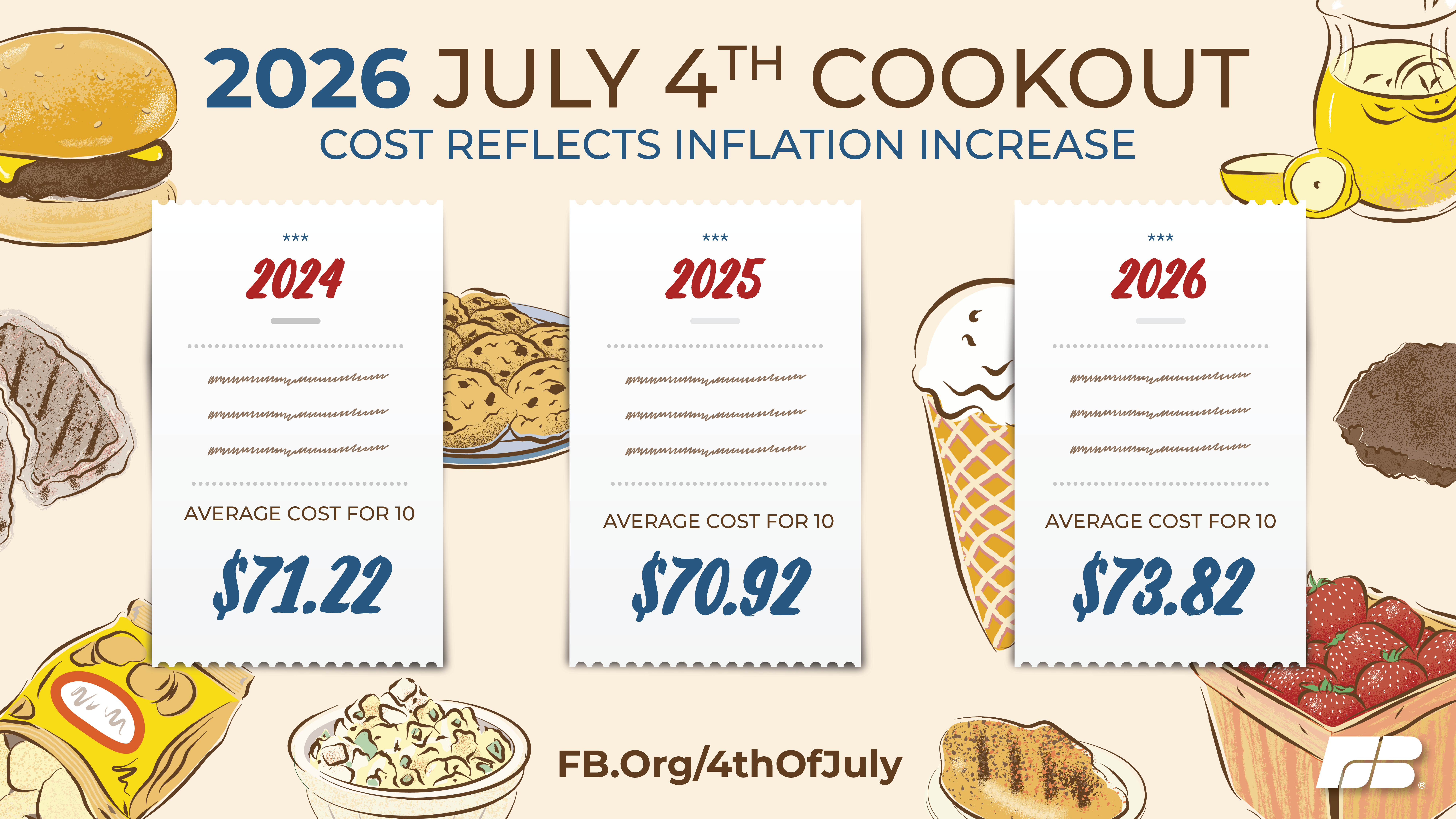
According to the American Farm Bureau Federation’s 2026 Summer Cookout Cost Survey, a classic Independence Day cookout for 10 people will cost $73.82, or about $7.38 per person. That is an increase of $2.90, or 4%, from last year.
The basket includes summer cookout staples such as cheeseburgers, chicken breasts, pork chops, potato chips, pork and beans, fresh strawberries, homemade potato salad ingredients, fresh-squeezed lemonade ingredients, chocolate chip cookies and ice cream.
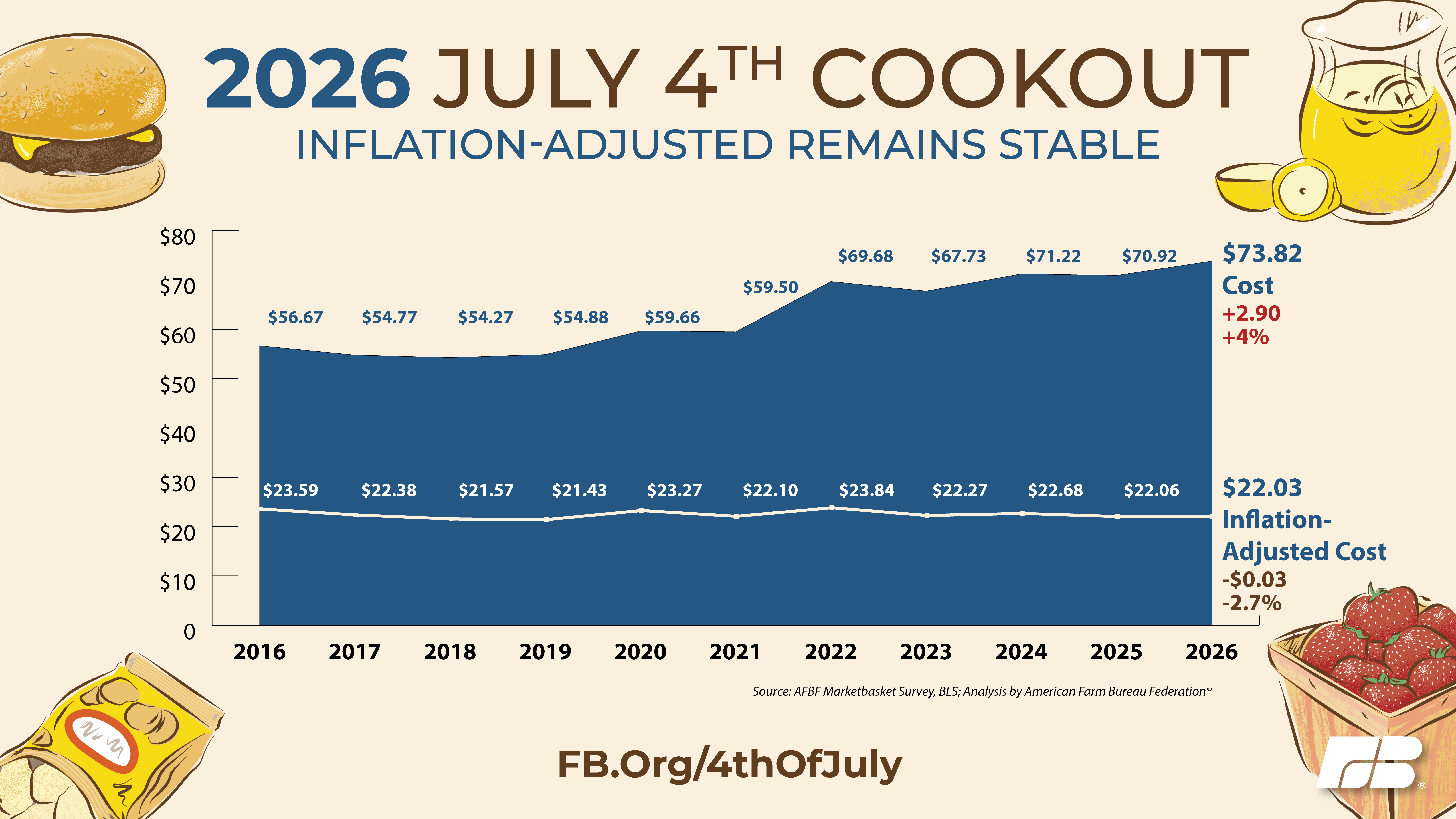
While this year’s total is the highest since Farm Bureau began conducting the summer cookout survey in 2016, the increase closely reflects broader inflation. The cost of the cookout basket rose about 4%, while overall inflation in the United States increased 4.2% over the 12 months ending in May. That means families are seeing higher prices at the grocery store, but this year’s cookout cost is generally moving in line with the broader economy.
Inflation--Adjusted Cost
The sticker price of a Fourth of July cookout is higher this year, but inflation-adjusted figures provide perspective. When deflating the value using the Consumer Price Index (CPI), the cost of the basket is $22.03 in 1982-84 dollars, slightly lower than the$22.06 observed in 2025. On a per-person basis, the inflation-adjusted cost is $2.20, compared to $2.21 last year.
In other words, while families are paying more dollars at checkout, the purchasing-power cost of the basket is nearly flat from last year. Inflation-adjusted cookout costs have also remained relatively stable over the last several years and remain below the peak of $23.84 reached in 2022.
On the Grill
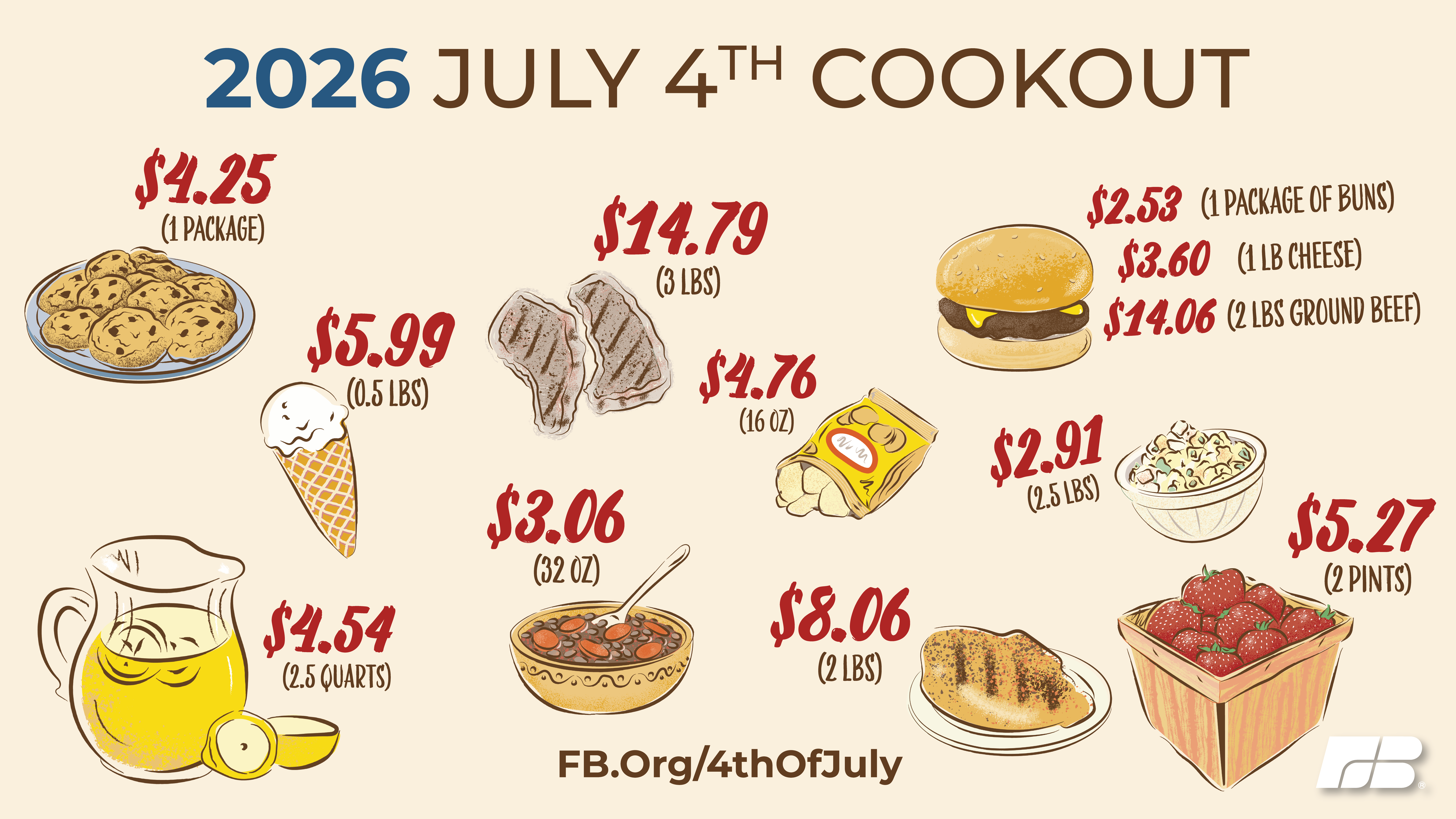
As grills heat up across the country, several of the main proteins on the picnic table are costing more. Two pounds of ground beef increased 73 cents from last year to $14.06, a 5.5% increase and the highest beef price recorded in this survey. Beef prices remain elevated as ranchers continue to face obstacles to rebuilding the cattle herd such as years of severe drought and elevated operating costs . Those drought conditions reduced the size of the national cattle herd and tightened supplies. Rebuilding takes time, so consumers may continue to see higher beef prices.
Other burger staples had smaller but noticeable increases. One pound of cheese costs $3.60, up 6 cents, or 1.7%, from last year. Hamburger buns increased 18 cents to $2.53, a 7.7% rise, reflecting higher production, labor and transportation costs.
Chicken breasts also moved higher. Two pounds now cost $8.06, up 27 cents, or 3.5%, from 2025. Pork chops rose as well after dropping last year. Three pounds of pork chops cost $14.79, up 66 cents, or 4.7%, from 2025. Even with this year’s increase, pork chops remain below the 2024 price of $15.49.
Fourth of July Fixins
Side dishes and summer favorites had some of the biggest changes in this year’s survey. Strawberries posted one of the largest increases in the basket. Two pints cost $5.27, up 58 cents, or 12.4%, from 2025. A damaging frost in Florida affected young strawberry plants early in the spring, while higher labor, fuel, refrigeration and transportation costs also continue to put pressure on fresh fruit and vegetable prices.
Lemonade also costs more this year. Ingredients for 2.5 quarts cost $4.54, up 17 cents, or 3.9%, from last year. Lemon prices increased 18 cents, while sugar held steady at 97 cents per pound. Pork and beans had the largest percentage increase in the basket, rising 13.8% to $3.06 for 32 ounces. Higher aluminum costs raised the production cost of cans, contributing to the increase. Desserts also moved higher. A package of chocolate chip cookies rose 25 cents to $4.25, a 6.3% increase. A half-gallon of ice cream increased 30 cents to $5.99, up 5.3% from last year.
Two tracked items declined in price. Potato salad fell 63 cents to $2.91, a 17.8% decrease from 2025. Lower egg prices were a major factor, as egg-laying flocks have recovered considerably from highly pathogenic avian influenza, which drove egg prices to historic highs in recent years. Four eggs now cost 71 cents, down from $1.34 last year. Lower potato prices helped decrease the cost of both potato salad and potato chips. A 16-ounce bag of potato chips fell slightly to $4.76, down 4 cents, or 0.8%, from 2025.
Fourth of July Fourth of July Across the Country
Where you celebrate this year will also impact your wallet. The West is the most expensive region for a Fourth of July cookout at $80 for 10 people, or $8 per person, more than $6 above the national average.
Grill masters in the Northeast will see the lowest regional cost at $71.35, followed closely by the Midwest at $71.45 and the South at $72.08. These regions came in below the national average of $73.82.
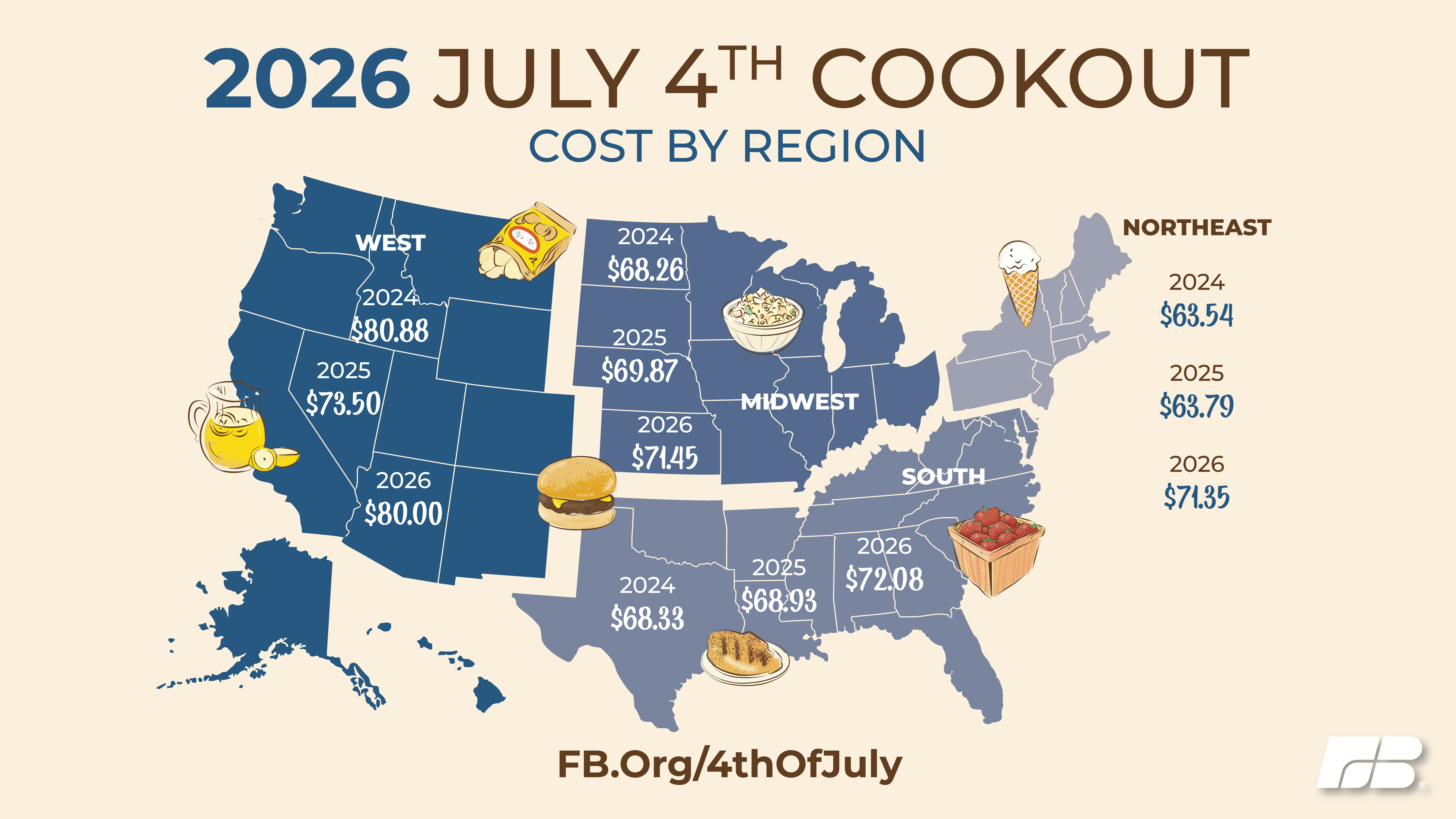
Western shoppers saw the highest prices for several staples, including ground beef, chicken breasts, buns, cheese, chips, cookies, pork and beans, and ice cream. Regional differences also showed up elsewhere: strawberries were most expensive in the Northeast.
The Farmer’s Share
Higher grocery prices do not necessarily mean higher profits for farmers and ranchers. After expenses, farmers receive less than 6 cents of every food dollar. Most of what consumers pay at the grocery store reflects costs that come after the farm gate, including processing, packaging, transportation, marketing and retail.
At the same time, the farmer's cost of production continues to climb. Farmers and ranchers are paying more for labor, fuel, fertilizer, equipment, land, repairs and other inputs, while many commodity prices remain below recent highs. Those pressures make it harder for farms to absorb weather disasters, animal disease, supply chain disruptions and market volatility.
Even in a challenging farm economy, farmers and ranchers remain committed to producing a safe, affordable and abundant food supply. But keeping that food supply strong will require support and stability.
That commitment is especially important as the U.S. celebrates 250 years of independence and looks toward the future. A strong, modernized, five-year farm bill will help provide the support, stability, research investment and risk management tools farmers and ranchers need to keep America’s food supply strong.
Conclusion
This year’s Fourth of July cookout will cost more, with the national average rising to $73.82 for 10 people. Ground beef, pork chops, chicken breasts, strawberries, hamburger buns, pork and beans, cookies and ice cream all contributed to the increase, while lower potato salad and potato chip costs helped offset some of the rise. The broader picture, however, is more balanced. The 2026 cookout basket increased at about the same rate as overall inflation, and CPI-adjusted costs are nearly flat compared to last year.
As families gather for cookouts, parades and fireworks this Independence Day, the meal on the table reflects both the pressures of today’s economy and the strength of America’s food system. Keeping that system strong will require continued investment in the farmers and ranchers who make these traditions possible.

