Diesel Prices Surge as Global Supplies Tighten

Faith Parum, Ph.D.
Economist
Key Takeaways
- Diesel prices are rising as harvest begins across the country. The national average on-highway diesel price reached $6.285 per gallon, up more than $2.50 from the same week last year. Farm diesel prices are also climbing, reaching $5.45 per gallon on Sept. 4, up from $3.02 a year earlier.
- Crude oil prices have increased about 14% since the beginning of September while inventories remain low.
- Higher fuel costs are compounding on already tight budgets. Even as the grain market rallies and crop revenues are projected to improve, increased production costs continue to keep major row crops below breakeven.
Diesel prices are on the rise as harvest begins across the country, adding another cost for farmers during one of the most fuel-intensive times of the year. On Sept. 14, the national average on-highway diesel price reached $6.285 per gallon, up from $5.97 the week before and up more than $2.50 per gallon from the same week last year, an increase of nearly 70% year over year.
Diesel used for farming purposes is generally exempt from the 24.4-cent-per-gallon federal highway fuel tax, with state tax treatment varying by state. Even with that exemption, farm diesel prices have climbed sharply. The average farm diesel price reached $5.45 per gallon on Sept. 4, up from $3.02 a year earlier, an increase of about 80%.
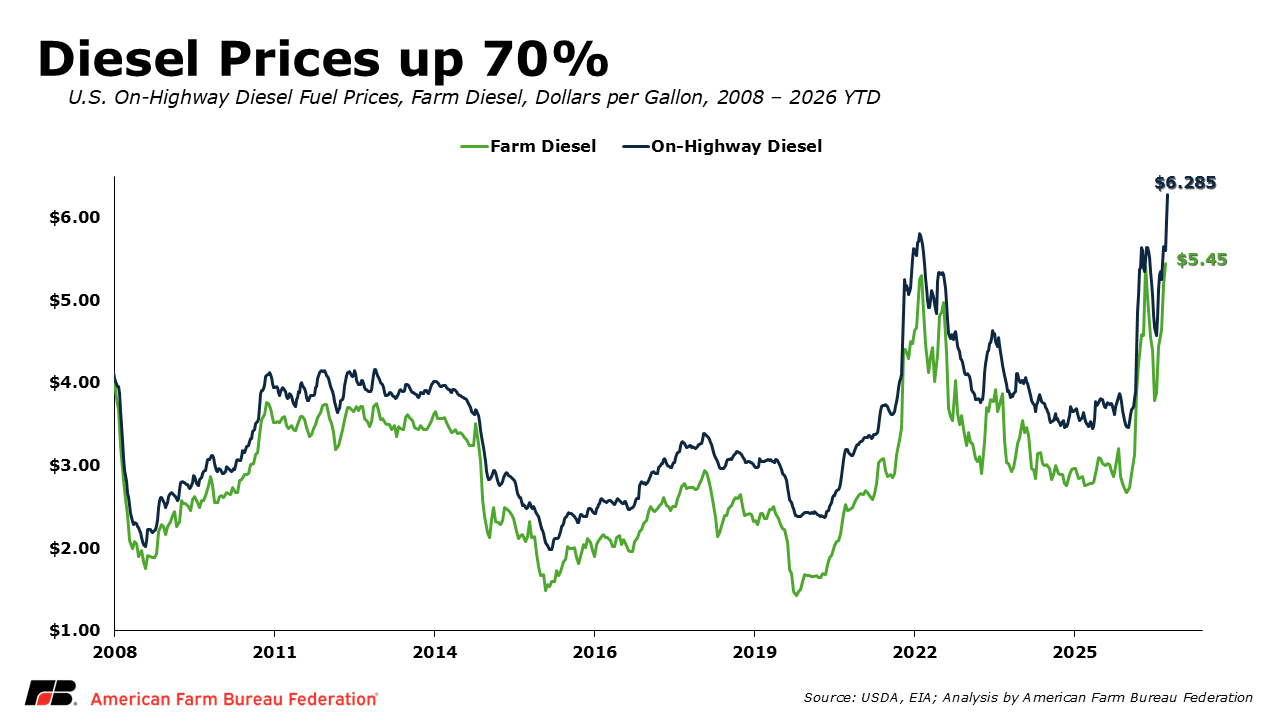
This increase, along with rising fertilizer prices, is due to several disruptions in the global energy markets. First, the closure of the Strait of Hormuz has limited a major shipping route for global oil markets. Additionally, attacks on infrastructure by Houthi rebels in the Bab al-Mandab Strait in the Red Sea, paired with limited refining capacity in Russia due to the ongoing war, continue to reduce global supplies. These major disruptions continue to push crude prices and diesel higher.
Farmers need diesel, especially during harvest season. Tractors, combines and irrigation equipment are all fueled by diesel, and once crops leave the field, it's critical to transportation throughout the agricultural supply chain. Higher diesel prices drive costs higher for farmers and throughout the supply chain as transportation gets more expensive.
This shock comes at a time when margins are already thin, and farmers are facing record-high production costs. USDA forecasts farm fuel and oil expenses at approximately $22 billion in 2026, up nearly 29%, or almost $5 billion, from 2025. Despite increased grain prices, farmers are expected to operate below breakeven once again. This could potentially carry over into the 2027 crop year as the disruptions continue.
Crude Oil Moves Above $100 a Barrel
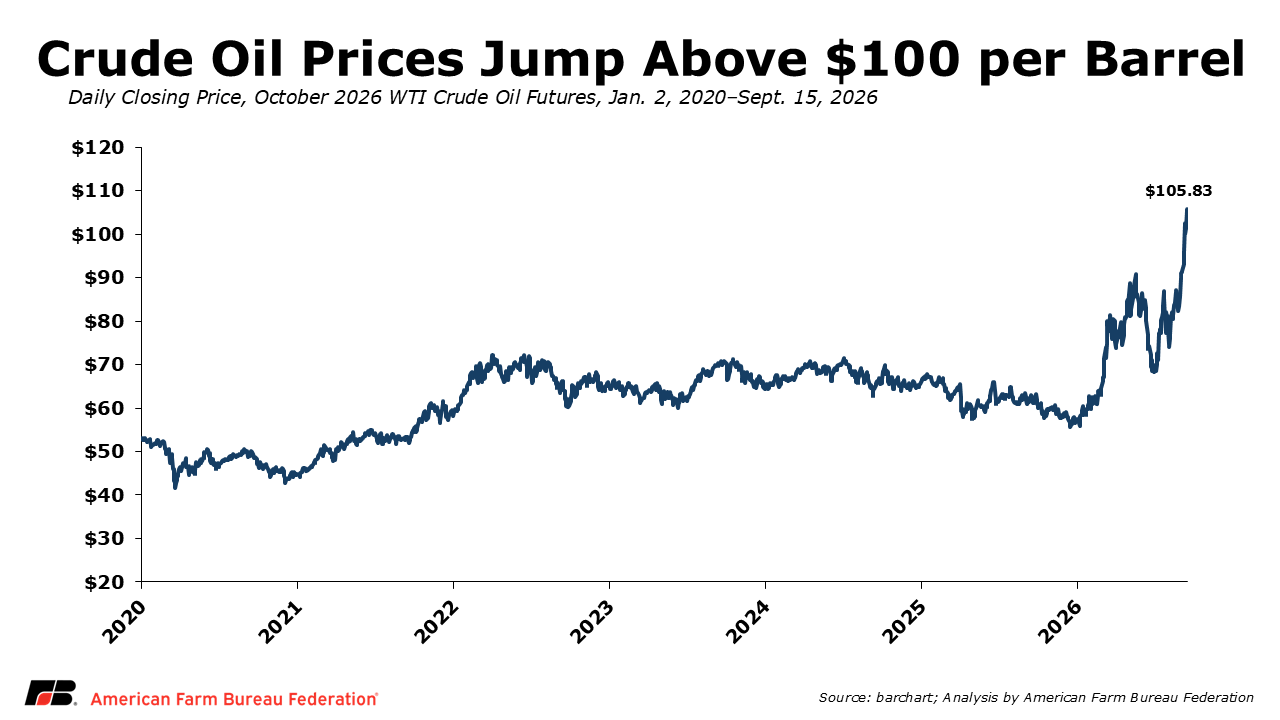
Crude oil prices continue to rise, reaching over $100 a barrel in September. October West Texas Intermediate crude oil futures closed at $102.56 per barrel on Sept. 16, down from $105.83 the previous day. October WTI futures were $90.22 per barrel on Sept. 1, an increase of roughly 14% in just over two weeks. The increase follows prices near $70 per barrel earlier this summer.
Crude prices, however, are not solely responsible for rising diesel prices. Diesel prices also reflect refinery capacity, inventories and demand for the finished product. When supplies of refined fuel are tight, diesel prices can increase faster than crude oil and can remain elevated even when crude prices temporarily retreat.
U.S. Distillate Inventories Remain Tight
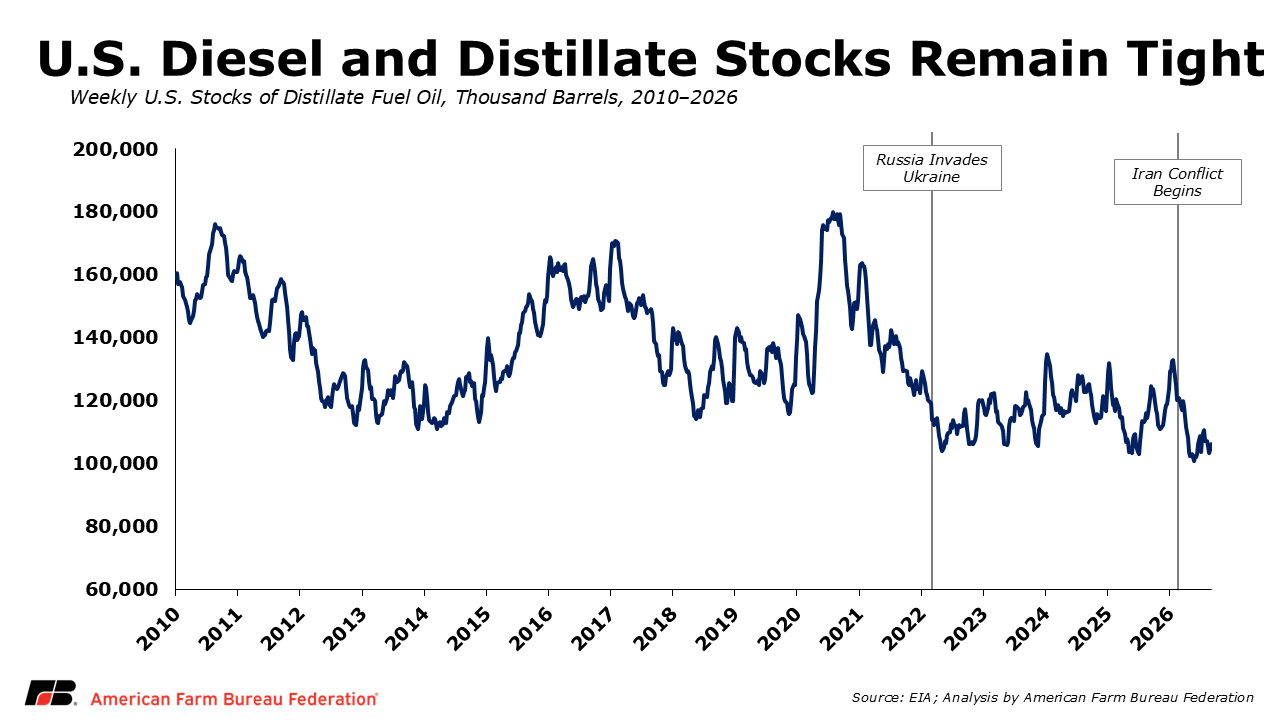
U.S. inventories provide relatively little cushion against those market disruptions. Distillate fuel inventories, which include diesel and heating oil, fell from approximately 127.2 million barrels in January to 109.4 million barrels in June, a decline of nearly 18 million barrels, or about 14%.
When stocks are high, the market has more flexibility to respond to refinery outages, transportation disruptions or stronger demand. When inventories are already tight, those same disruptions can translate into larger and faster price movements.
Current stocks are also low compared with levels during much of the past decade. U.S. distillate inventories regularly exceeded 140 million barrels during portions of the 2010s and climbed well above that level in 2020. Since then, inventories have generally remained much tighter.
U.S. Fuel Supplies Serve a Global Market
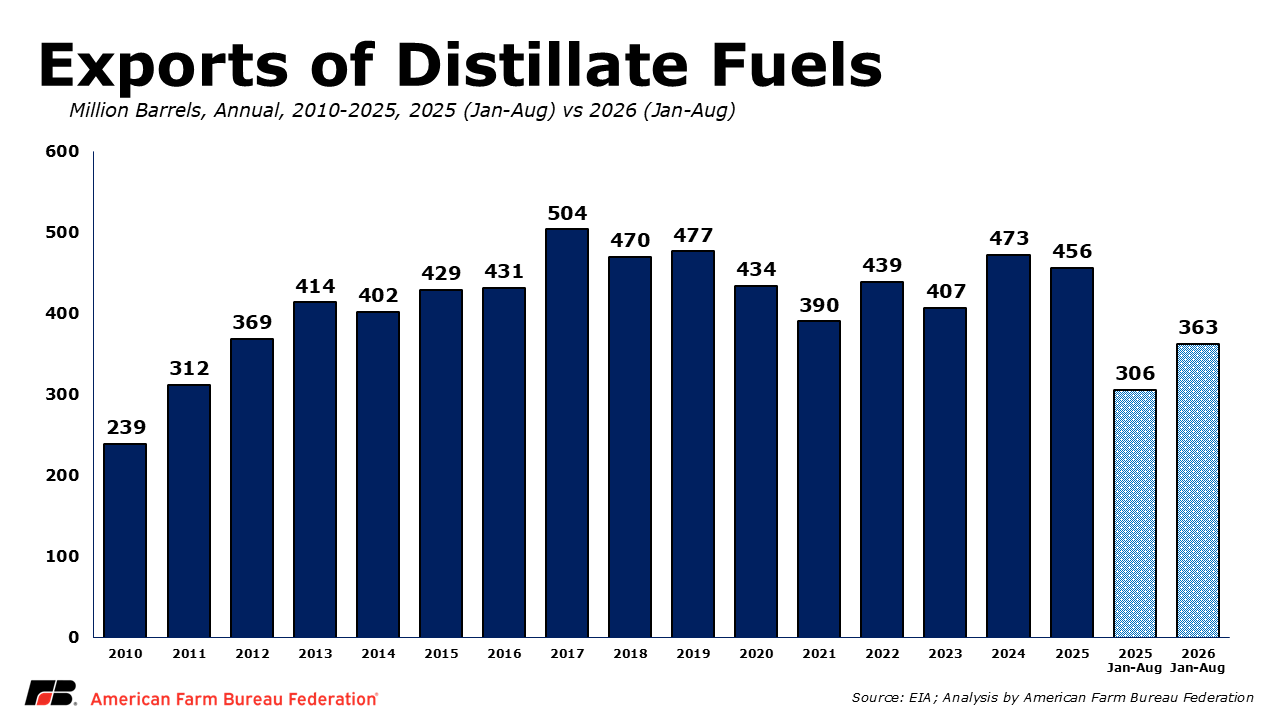
At the same time, U.S. refiners are supplying a significant amount of distillate fuel to international markets. The United States exported approximately 456 million barrels of distillate fuel in 2025, compared with about 473 million barrels in 2024. Imports totaled only about 58 million barrels in 2025. Mexico remained the largest market for U.S. distillate exports in 2025, accounting for about 17% of total exports. Other major destinations included Chile, Brazil, the Netherlands and the United Kingdom.
That trade reflects the structure of the U.S. refining system, particularly along the Gulf Coast where refineries are closely connected to international markets. Exports themselves are not new, but they become more important to watch when global fuel supplies tighten. Higher international prices can increase demand for U.S.-produced fuel at the same time domestic inventories are already limited.
Bottom Line
The timing of the diesel price increase is particularly challenging for agriculture. Harvest requires long hours of equipment use, and crops must then be transported from fields to elevators, processors and ports. Those fuel costs can accumulate quickly across an operation.
Farmers have also entered this period with limited room to absorb another increase in expenses. Commodity prices have struggled to keep pace with elevated production costs, making increases in diesel another hit to already tight margins. Until crude prices ease, global fuel supplies improve or U.S. inventories rebuild, diesel is likely to remain a significant source of cost uncertainty for farmers heading through harvest and into the 2027 production year.